Have you ever tried to send a simple transaction on Ethereum and watched your gas fees skyrocket past $15? You aren't alone. During peak congestion periods, the network becomes expensive and slow, pushing users away. This is where Optimistic Rollups are a Layer 2 scaling solution for Ethereum that processes transactions off-chain while maintaining security through fraud proofs. Also known as Optimistic L2s, they have become the backbone of modern decentralized finance, handling millions of transactions daily at a fraction of the cost.
If you are looking to use DeFi apps without burning cash on fees, understanding how these networks work is essential. They offer a sweet spot between speed, cost, and compatibility. But there is a catch: you have to wait seven days to withdraw your funds safely. Let's break down exactly how this technology works, why it dominates the market right now, and what it means for your crypto assets in 2026.
How Optimistic Rollups Actually Work
To understand optimistic rollups, you first need to grasp the core assumption behind them: optimism. Unlike other systems that prove every transaction is valid immediately, optimistic rollups assume all transactions are correct by default. They only check for errors if someone complains. This approach saves massive amounts of computational power.
Here is the step-by-step process:
- Transaction Submission: You send a transaction to the Layer 2 (L2) network, like Arbitrum or Optimism. A sequencer (a centralized server for now) orders these transactions.
- Batching: The sequencer groups thousands of transactions into a single batch. For example, Arbitrum aggregates about 4,000 to 6,000 transactions per batch.
- Data Posting: This compressed data is posted to the Ethereum mainnet (Layer 1). This costs gas, but because it is one big bundle instead of individual transactions, the cost per user drops by 80-90%.
- The Challenge Period: Once the data is on Ethereum, a 7-day window opens. During this time, anyone can challenge the validity of the state update.
- Fraud Proofs: If a validator spots an error, they submit a fraud proof. The system then runs an interactive verification game to pinpoint the exact invalid instruction. If the proof is successful, the bad transaction is reverted, and the malicious actor loses their bond.
This mechanism allows the network to inherit Ethereum's security without doing the heavy lifting for every single swap or transfer. It is efficient, but that 7-day window is critical. It is the price you pay for lower fees.
Key Players: Arbitrum vs. Optimism
Two networks dominate the optimistic rollup space. Knowing which one to use depends on your specific needs. Both launched in late 2021 and have since processed over 5 million transactions daily combined.
| Feature | Arbitrum One | Optimism |
|---|---|---|
| Launch Date | August 31, 2021 | December 16, 2021 |
| EVM Compatibility | 99.8% | High (OP Stack) |
| Avg. Transaction Fee | $0.02 - $0.15 | $0.02 - $0.15 |
| Withdrawal Time | 7 Days (Standard) | 7 Days (Standard) |
| Recent Upgrade | Stylus (Parallel Execution) | Bedrock (Decentralization Focus) |
Arbitrum currently holds a slight edge in total value locked (TVL), capturing 34% of the L2 market share as of late 2025. It is particularly popular for complex DeFi interactions due to its high throughput. Optimism, holding 28% of the market, focuses heavily on the "Superchain" vision, allowing other chains to build using its open-source OP Stack. Both networks charge significantly less than Ethereum mainnet, where fees can range from $1.50 to $15 depending on congestion.
Optimistic Rollups vs. ZK-Rollups
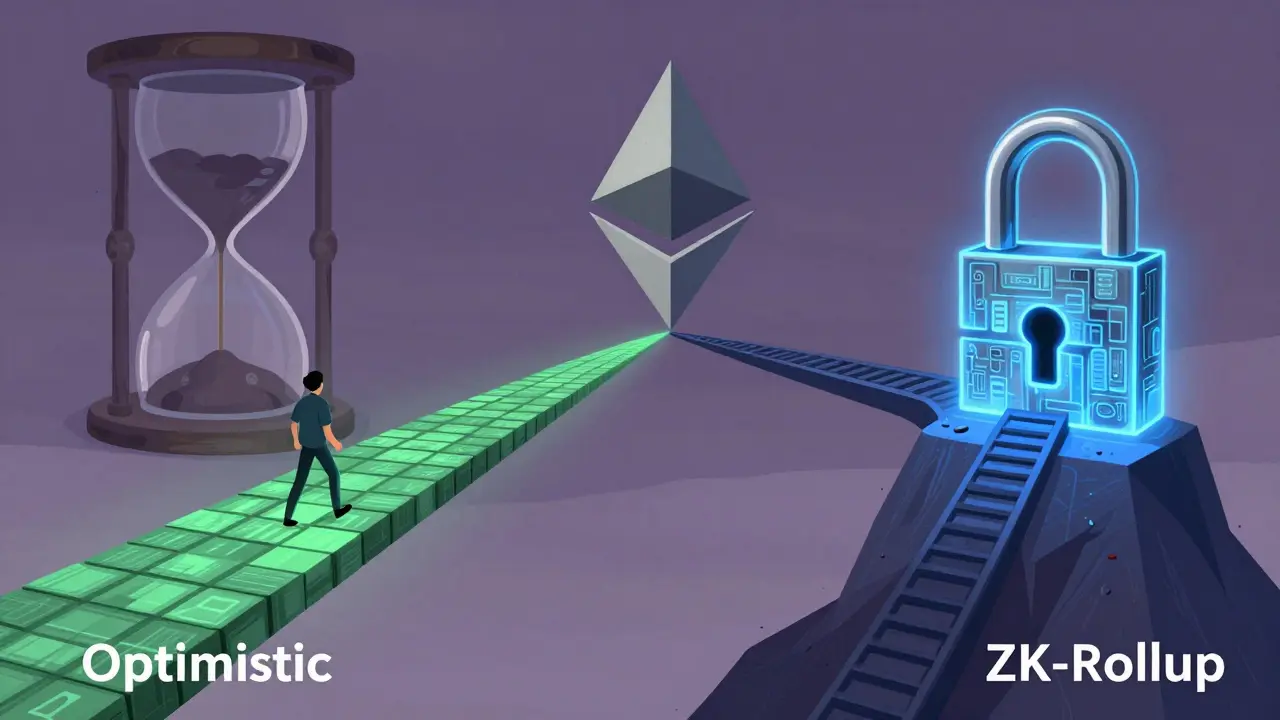
You will often hear about ZK-Rollups (Zero-Knowledge Rollups) as the alternative. So, which one is better? It depends on whether you prioritize speed of withdrawal or ease of development.
ZK-Rollups use complex cryptography to prove validity instantly. This means near-instant withdrawals. However, building for ZK-Rollups is harder. Early ZK implementations struggled with EVM compatibility, supporting only about 85% of standard Ethereum smart contracts compared to Arbitrum's 99.8%. If you are a developer deploying a standard Uniswap fork, optimistic rollups are easier. If you are a user who hates waiting a week to get your money back, ZK-Rollups might feel smoother.
However, the gap is closing. Newer ZK technologies are improving compatibility, and optimistic rollups are introducing faster fraud proofs. As of 2026, optimistic rollups still command 62% of the L2 market share by TVL, but ZK-Rollups are growing faster, with a 45% quarterly growth rate versus 28% for optimistic solutions.
The Withdrawal Problem: Why Wait 7 Days?
The biggest complaint among users is the 7-day challenge period. When you initiate a withdrawal from Arbitrum or Optimism to Ethereum mainnet, your funds are locked for a week. This isn't a bug; it is a feature designed to prevent hacks. If the sequencer tries to steal funds, validators have seven days to detect it and stop the exit.
For casual users, this is frustrating. Imagine trying to sell ETH during a market crash and being stuck in limbo for a week. Trustpilot reviews highlight this pain point, with withdrawal delays cited in 63% of negative feedback. However, there are workarounds. Instant bridge services like Synapse Protocol allow you to withdraw immediately by borrowing liquidity from providers, charging a small fee (around 0.3%). This solves the UX issue but introduces counterparty risk-you are trusting the bridge provider, not just Ethereum.
Developer Experience and Integration
If you are a developer, optimistic rollups are friendly. Because they are nearly fully EVM-compatible, you don't need to rewrite your Solidity code. Experienced Ethereum developers typically take 2-3 weeks to become proficient with L2 specifics, such as cross-domain messaging.
Key integration steps include:
- Deploying contracts to both L1 and L2 environments.
- Using standard interfaces like
CrossDomainMessengerfor communication between layers. - Handling the withdrawal logic in your frontend to inform users about the 7-day delay.
Documentation quality is high across the board. Arbitrum scores 4.5/5 in developer surveys, while Optimism scores 4.2/5. Community support is robust, with active Discords and forums answering questions within 24 hours. This low barrier to entry is why 87% of top DeFi protocols have deployed on at least one optimistic rollup.
Security Risks and Centralization Concerns
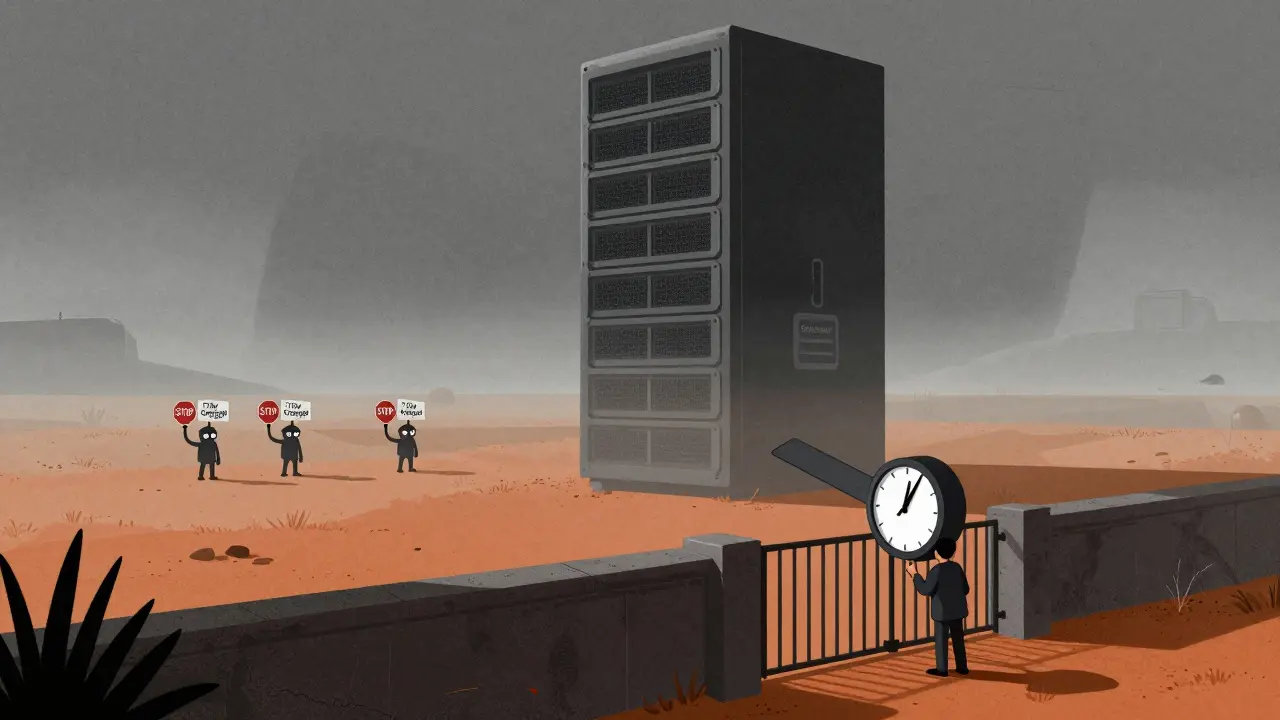
While optimistic rollups inherit Ethereum's security for finality, they introduce new risks. The primary concern is centralization. Currently, sequencers are operated by single entities. If the sequencer goes offline, transactions stall. Worse, a malicious sequencer could censor transactions or reorder them to extract MEV (Maximal Extractable Value).
Research from UC Berkeley identified a 12.3% increase in MEV opportunities on optimistic rollups compared to mainnet. Additionally, if no validator monitors the chain during the 7-day window, a fraudulent state update could pass unnoticed. This is why running a node or relying on professional validators is crucial. Projects like Espresso Systems are working on decentralized sequencer networks to mitigate this risk, aiming to remove the single point of failure.
Future Outlook: Are They Transitional?
Vitalik Buterin has suggested that optimistic rollups might be transitional technology. He argues that while they provided a necessary bridge while ZK-prover technology matured, the 7-day UX limitation is fundamental. By 2028, analysts predict ZK-Rollups may surpass optimistic ones in market share due to better user experience.
However, optimistic rollups are evolving. Arbitrum Nova introduced "single-round fraud proofs" in 2025, reducing challenge times to 60 minutes for certain transactions. Upgrades like Optimism's Bedrock and Arbitrum's Stylus aim to decentralize sequencers and boost throughput to 10,000 TPS. Hybrid models combining optimistic assumptions with occasional ZK-proofs may extend their relevance well into the next decade. For now, they remain the most practical choice for scaling Ethereum applications.
What is the main difference between Optimistic and ZK-Rollups?
The main difference lies in how they verify transactions. Optimistic rollups assume transactions are valid and only check for fraud if challenged, leading to a 7-day withdrawal period. ZK-Rollups use cryptographic proofs to verify validity instantly, allowing near-immediate withdrawals but requiring more complex computation and historically having lower EVM compatibility.
Why do I have to wait 7 days to withdraw from Arbitrum or Optimism?
The 7-day period is a security measure called the challenge window. It gives validators time to detect and dispute any fraudulent transactions submitted by the sequencer. If no fraud is detected within this period, the withdrawal is finalized on Ethereum mainnet. This ensures the security of the entire system relies on Ethereum's consensus.
Are optimistic rollups safe to use?
Yes, they are considered very safe because they inherit Ethereum's security model. However, risks exist regarding centralization of sequencers and potential bugs in smart contracts. Users should always verify contract addresses and consider using instant bridges with caution, as they introduce counterparty risk.
Which optimistic rollup is best for developers?
Both Arbitrum and Optimism are excellent choices. Arbitrum offers slightly higher EVM compatibility (99.8%) and larger TVL, making it ideal for complex DeFi apps. Optimism provides the OP Stack, which is great for building interconnected chains (Superchain). Choice often depends on ecosystem incentives and specific tooling preferences.
Can I withdraw instantly from an optimistic rollup?
Not directly through the native bridge, which requires 7 days. However, third-party services like Synapse Protocol or Stargate Finance offer instant withdrawals by using liquidity pools. These services charge a small fee (typically around 0.3%) and allow you to access your funds immediately, though you are taking on trust risk with the bridge provider.