Imagine getting paid just for keeping a computer running. It sounds too good to be true, but that is exactly how blockchain nodes are the computers that form a blockchain's backbone, verifying transactions and keeping networks operational through financial motivation. work. You provide security and uptime; the network pays you back in tokens or fees. This simple exchange forms the bedrock of decentralized finance.
But here is the catch: it is not as simple as plugging in a USB drive. The economic landscape for node operators has shifted dramatically by 2026. With regulatory clarity improving and new incentive models like Project King Safety emerging, the question is no longer "can I run a node?" but "which node makes financial sense?" Let’s break down the real money, the hidden costs, and the risks involved in becoming part of the blockchain infrastructure.
The Core Mechanics: How Node Operators Get Paid
To understand the returns, you first need to understand where the money comes from. Unlike traditional jobs with a fixed salary, node rewards come from three distinct buckets. Knowing which bucket your chosen project relies on helps predict stability.
- Transaction Fees: Every time someone sends money or interacts with a smart contract, they pay a small fee. Validators who process these blocks keep these fees. This model works best on busy networks like Ethereum or Bitcoin Layer-2s.
- Staking Rewards (Inflation): New tokens are created out of thin air and distributed to validators to secure the network. This is common in Proof-of-Stake chains. The yield depends on how many people are staking; fewer participants mean higher individual rewards, and vice versa.
- MEV (Maximal Extractable Value): This is the advanced tier. Validators can reorder transactions within a block to profit from arbitrage opportunities. While lucrative, MEV is complex and often requires sophisticated software setups to capture effectively.
In 2024, Ethereum’s validator count surpassed one million. Why? Because the combination of stable transaction fees and predictable staking yields created a reliable income stream. However, not every chain has reached that maturity. Some newer projects offer flashy high yields but lack the transaction volume to sustain them long-term.
Real-World Examples: What Are the Yields in 2025-2026?
Let’s look at specific numbers because generalizations don’t help you make decisions. Two projects stand out for their accessible entry points and clear economic structures during this period.
| Network | Minimum Stake | Estimated Annual Yield | Key Requirement | Risk Factor |
|---|---|---|---|---|
| Gnosis Chain | 1 GNO Token | ~13% | Erigon 3 Upgrade (Low Hardware) | Downtime Penalties |
| Flux Titan | 50 FLUX Tokens | Variable (Lock-up dependent) | Zelcore Wallet | Non-guaranteed Rewards |
| Ethereum | 32 ETH | 3-5% + MEV | High Technical Skill | Slashing Risk |
Gnosis Chain offers an interesting case study. With a minimum stake of just one GNO token, it lowers the barrier to entry significantly. The estimated annual yield hovers around 13%, which is attractive compared to traditional savings accounts. They’ve also implemented resource-efficient upgrades like Erigon 3, meaning you don’t need a supercomputer to participate. However, the trade-off is strict penalties for downtime. If your server goes offline, you lose rewards. It’s a low-barrier, high-responsibility model.
Flux Titan takes a different approach. You only need 50 FLUX tokens to start, but the rewards aren't fixed. They vary based on how long you lock up your funds. This flexibility appeals to those who want liquidity options, but it requires using the specific Zelcore wallet, adding a layer of dependency. Always remember: if the reward isn't guaranteed, the risk lies with you.
The Algorand Case Study: Solving Economic Sustainability
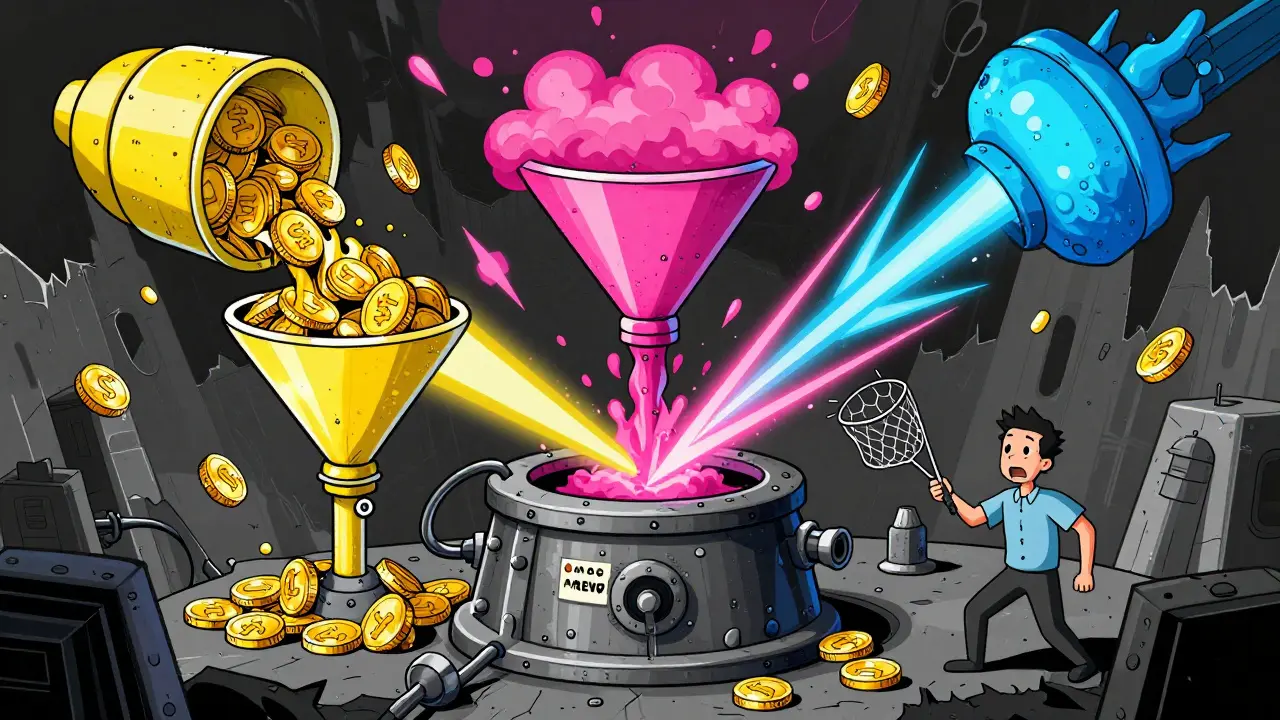
Not all networks get it right immediately. Algorand is a blockchain platform facing evolving nature of blockchain incentives due to fee structure constraints. faced a classic problem: its fee structure didn’t generate enough revenue to incentivize stakers adequately, and it had a hard cap on its total token supply (10 billion ALGO). You can’t just print more tokens forever without causing inflation that devalues existing holdings.
To fix this, Algorand launched Project King Safety is a strategic initiative named after a chess concept aiming to guarantee long-term economic incentives to protect network security. Named after a defensive chess strategy, this project aims to diversify reward sources. Instead of relying solely on inflation, they plan to integrate fee-based and MEV-based incentives. The Algorand Foundation released a position paper late in 2025, with full implementation rolling out in 2026. This is a crucial lesson for investors: look for projects that actively manage their tokenomics rather than those that rely on endless issuance.
Hidden Costs: It’s Not Just About Staking Tokens
When calculating profitability, most beginners forget the overhead. Here is what actually eats into your margins:
- Hardware Depreciation: Even with efficient clients like Erigon 3, servers wear out. Budget for replacing hardware every 3-5 years.
- Electricity & Bandwidth: A node needs 24/7 internet access. In regions with expensive power, this can cut yields by 10-20%.
- Technical Maintenance: Software updates happen weekly. If you miss an update, your node falls behind. If you apply it incorrectly, you might get slashed (penalized). Do you have the skills to troubleshoot Linux servers at 3 AM?
- Opportunity Cost: The tokens you stake are locked. If the price of GNO or FLUX drops by 50%, your 13% yield doesn’t save you. You’re still down in fiat terms.
Expert analysis consistently shows that market risks-specifically token volatility-outweigh operational risks. A successful node operator treats their setup like a business, tracking expenses meticulously.

Regulatory Tailwinds: The 2026 Shift
For years, regulatory uncertainty kept DeFi protocols from sharing revenue directly with token holders. Fear of being classified as securities stopped many projects from implementing robust economic incentives. That changed in 2025 and 2026.
New SEC leadership signaled a collaborative approach, and pro-crypto legislation provided clearer guidelines for value capture. This means we are seeing a rise in revenue-sharing mechanisms where governance tokens transform into yield-generating assets. For node operators, this is bullish. It legitimizes the income stream and attracts institutional capital, which stabilizes prices and increases transaction volumes (and thus fees).
Who Should Run a Node?
Running a node is not for everyone. Ask yourself these questions before buying hardware:
- Are you technically proficient? Can you configure firewalls and manage SSH keys?
- Do you have redundant internet? One ISP outage could cost you weeks of rewards.
- Is your goal passive income or active participation? If you want passive, consider liquid staking derivatives instead. If you want to govern the network and earn direct rewards, run a node.
The peer-to-peer nature of these systems reduces systemic risk associated with centralized exchanges. By running a node, you’re not just earning money; you’re ensuring the network remains censorship-resistant. But you must be willing to do the work.
What is the minimum investment to run a profitable blockchain node?
It varies wildly. On Gnosis Chain, you can start with 1 GNO token (often under $100 depending on market price) plus basic hardware costs. On Ethereum, you need 32 ETH, which represents a significant capital commitment. Profitability depends less on the initial stake and more on your ability to maintain 99.9% uptime and minimize electricity costs.
Can I lose money by running a blockchain node?
Yes. First, through 'slashing,' where the protocol penalizes you for malicious behavior or severe downtime. Second, through opportunity cost: if the token price crashes while your funds are locked in staking, the value of your rewards may not offset the loss in principal. Always calculate yields against potential downside risk.
How does MEV affect node operator earnings?
MEV (Maximal Extractable Value) allows validators to profit from reordering transactions within a block. For major networks like Ethereum, MEV can add 20-50% to base staking rewards. However, capturing MEV requires specialized software and high-performance infrastructure, making it competitive and technically demanding.
Is Project King Safety relevant to other blockchains?
While Project King Safety is specific to Algorand, its principles are universal. Any blockchain with a fixed supply and low transaction fees faces similar sustainability challenges. The shift toward diversified incentives (fees + MEV + grants) is a trend likely to spread across the industry as networks mature.
Do I need a powerful computer to run a node in 2026?
Not necessarily. Upgrades like Erigon 3 on Gnosis Chain have drastically reduced hardware requirements. Many modern nodes can run on modest VPS (Virtual Private Server) instances or even Raspberry Pi devices for lighter chains. However, high-throughput networks like Ethereum still require dedicated SSDs and significant RAM.


Erik Kirana
It is absolutely imperative that one understands the nuances of these incentive structures before deploying capital. The article fails to mention the regulatory overhead in certain jurisdictions which can be quite burdensome for individual operators. One must consider the tax implications of receiving tokens as income versus capital gains, a distinction that many casual readers overlook entirely. Furthermore, the reliance on MEV is precarious given the centralization tendencies of searchers and relays. It is not merely about uptime; it is about legal compliance and financial literacy. 😬