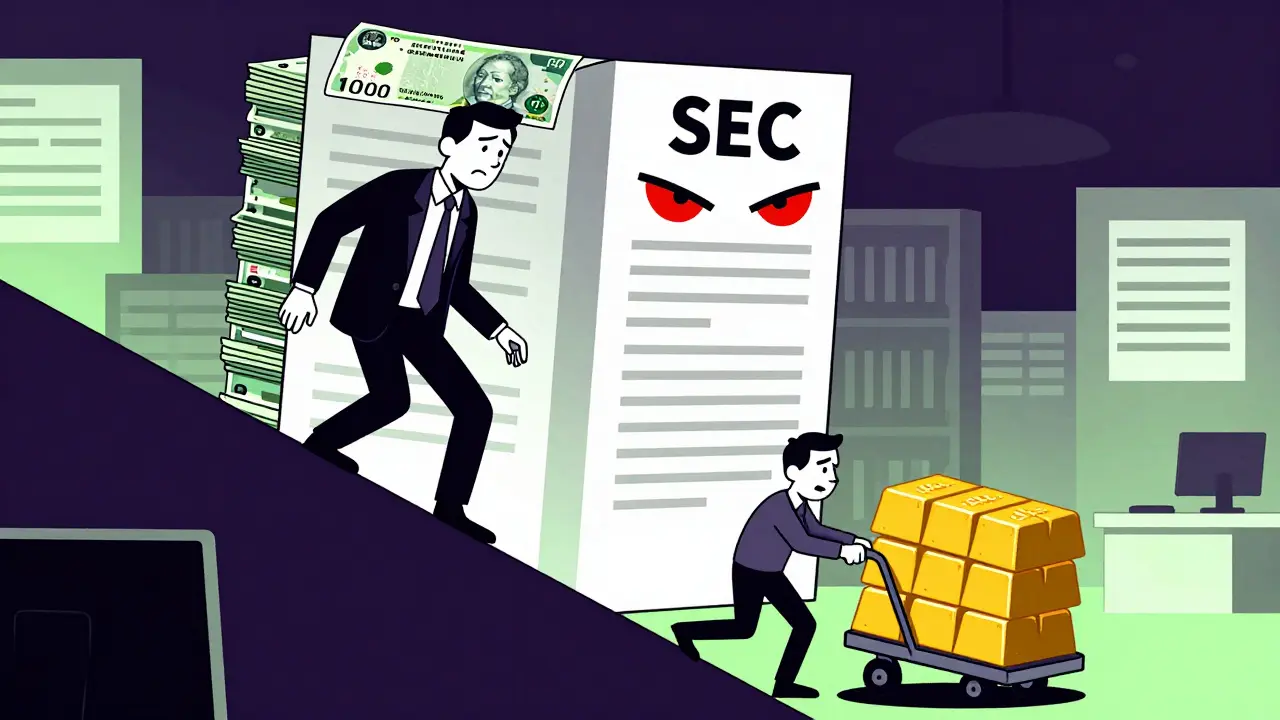
If you are a cryptocurrency exchange or service provider looking to operate in the Philippines, the rules have changed dramatically. As of mid-2025, the Securities and Exchange Commission (SEC) of the Philippines is the primary regulatory body overseeing corporate registration and securities offerings in the country, now extended to digital assets has enforced strict licensing requirements for all Crypto Asset Service Providers (CASPs). Gone are the days when international platforms could serve Filipino users without local authorization. The new framework, established through SEC Memorandum Circular No. 04 and No. 05, Series of 2025 is a comprehensive set of regulations issued on May 30, 2025, mandating mandatory licensing for all crypto service providers operating in or targeting Filipino users, requires domestic incorporation, significant capital reserves, and rigorous compliance protocols.
The enforcement began on July 5, 2025, marking a pivotal shift from an unregulated landscape to one of the most comprehensive regulatory frameworks in Southeast Asia. This guide breaks down exactly what these requirements mean for your business, how to comply, and the consequences of ignoring them.
Who Needs a CASP License?
Under the new rules, any entity acting as a Crypto Asset Service Provider (CASP) is any person or entity that provides services related to crypto-assets, including exchanges, wallet providers, and custodians must register with the SEC. This applies if you:
- Operate a crypto-to-fiat or crypto-to-crypto exchange platform.
- Provide digital wallet services for storing crypto assets.
- Offer custody or brokerage services for digital tokens.
- Target Filipino residents, even if your servers are located abroad.
The definition is broad. If your platform allows users in the Philippines to buy, sell, trade, or hold cryptocurrencies, you fall under this jurisdiction. The SEC clarified that the rules do not prohibit trading itself but strictly regulate the intermediaries facilitating it. This means individual investors can still trade, but they must use licensed platforms.
Core Licensing Requirements: Capital and Structure
The barrier to entry is high, designed to filter out small operators and ensure financial stability. To obtain a CASP license, you must meet specific structural and financial criteria.
1. Domestic Incorporation
You cannot operate as a foreign branch. You must register as a domestic corporation with the SEC. This involves setting up a legal entity within the Philippines, complete with local directors and officers who are accountable under Philippine law.
2. Minimum Paid-Up Capital
The requirement is PHP 100 million (approximately $1.8 million USD). Crucially, this capital must be in fiat currency or equivalent non-crypto assets. You cannot count crypto holdings toward this minimum. This ensures the company has liquid assets to cover operational costs and potential liabilities without relying on volatile digital asset values.
3. Physical Presence
A physical office in the Philippines is mandatory. Remote-only operations are no longer acceptable. This office serves as the hub for regulatory oversight, allowing the SEC to conduct inspections and audits if necessary.
The Registration Process: Step-by-Step
Applying for a CASP license is not a simple form submission. It is a detailed vetting process managed by the PhiliFintech Innovation Office is a specialized unit within the SEC responsible for overseeing fintech innovations, including the registration and supervision of CASPs. Here is how to navigate it:
- Prepare Documentation: Gather your business plan, corporate documents, and details of your technical infrastructure.
- Submit AML/KYC Systems: Provide evidence of robust Anti-Money Laundering (AML) and Know Your Customer (KYC) procedures. These systems must align with standards set by the Anti-Money Laundering Council (AMLC) is the Philippine government agency responsible for preventing, detecting, and investigating money laundering activities.
- Risk Control Mechanisms: Demonstrate how you will manage operational, cybersecurity, and market risks.
- Disclosure Plans: Submit plans for investor disclosure, which must be filed 30 days before launching any marketing campaigns.
- Pay Fees: Registration and supervision fees are calculated based on your projected gross revenue.
The entire process requires proactive engagement with the PhiliFintech Innovation Office. Expect thorough scrutiny of your technological capabilities and compliance frameworks.

Ongoing Compliance: Reporting and Marketing
Getting the license is just the beginning. The SEC mandates continuous adherence to strict operational standards.
Monthly Financial Reporting
Licensed CASPs must submit detailed monthly financial reports to the SEC. This transparency allows regulators to monitor the financial health of crypto businesses in real-time, preventing sudden collapses that could harm investors.
Segregation of Funds
One of the most critical rules is the separation of customer funds from company assets. You must maintain separate accounts for user deposits. This protects customers in the event of insolvency or fraud, ensuring their crypto is not used to pay company debts or salaries.
Marketing Restrictions
Under MC 4-2025, marketing crypto assets is heavily regulated. You cannot make speculative claims about future prices. Any offering of crypto assets for sale requires a disclosure document filed with the SEC and published on your website and social media channels at least 30 days prior to launch. Prohibited assertions include guaranteed returns or predictions of value appreciation unless specifically allowed under Section 5.3 of the regulations.
Enforcement and Penalties
The SEC has shown zero tolerance for non-compliance. The crackdown began in earnest in August 2025, when public advisories targeted ten major international exchanges, including OKX, Bybit, KuCoin, and Kraken, for operating without licenses. Earlier, in 2024, Binance was blocked from the Philippine market after a 90-day exit period for users.
If you operate without a CASP license, the penalties are severe:
- Fines: Ranging from PHP 50,000 to PHP 10 million per violation.
- Daily Penalties: An additional PHP 10,000 for each day the violation continues.
- Blocking: Internet service providers may be ordered to block access to non-compliant platforms.
- Criminal Liability: Directors and officers can face personal liability for fraud or negligence.
The message is clear: the cost of compliance is far lower than the risk of enforcement. The SEC views these actions as necessary to protect investors from fraud, fund losses, and money laundering.
| Aspect | Pre-July 2025 | Post-July 2025 (Current) |
|---|---|---|
| Licensing Requirement | None for many international exchanges | Mandatory CASP license for all providers |
| Capital Requirement | No specific mandate | Minimum PHP 100 million paid-up capital |
| Physical Presence | Not required | Mandatory local office and incorporation |
| Reporting Frequency | Ad-hoc or none | Monthly financial reports to SEC |
| Marketing Rules | Largely unregulated | Strict disclosure requirements, no speculative claims |
| Penalties | Minimal enforcement | Fines up to PHP 10M, daily penalties, site blocking |
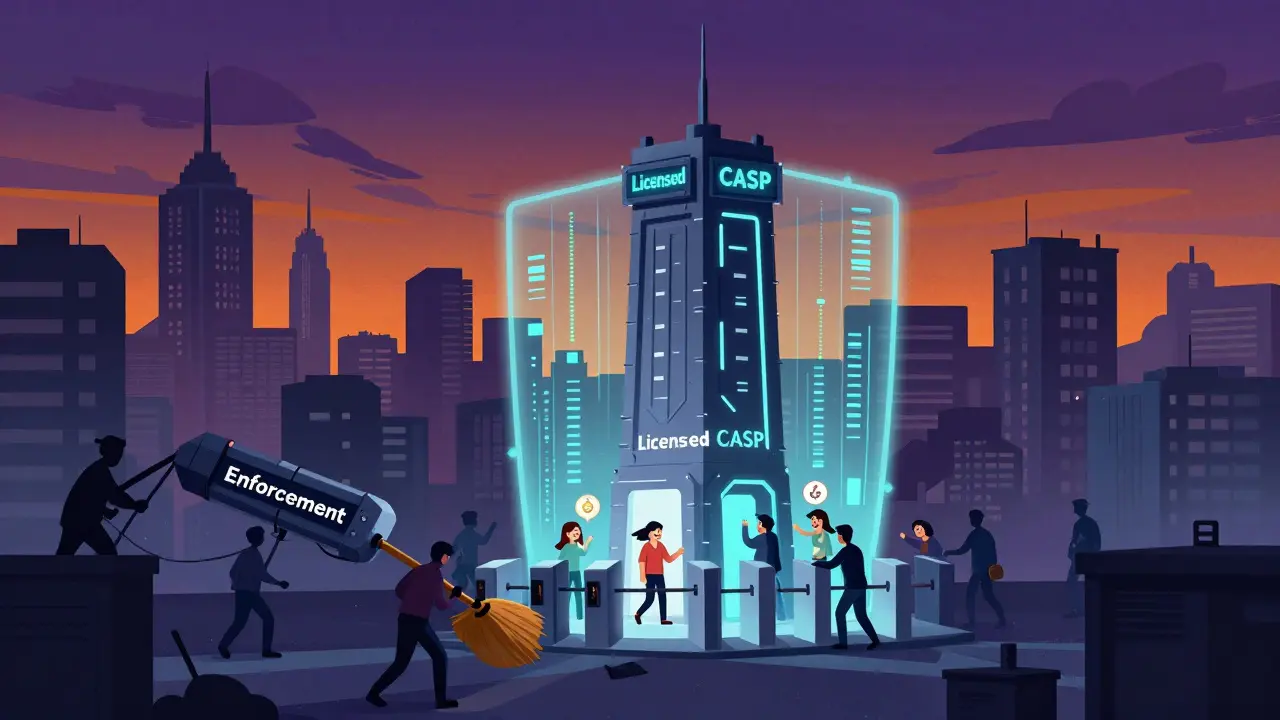
Impact on the Market and Competition
The high capital and operational requirements create significant barriers for smaller international exchanges. Platforms like Bit Get and Bigone have adapted by implementing enhanced security protocols and pursuing compliance, positioning themselves as trusted options. In contrast, giants like Binance faced removal, reshaping the competitive landscape.
Despite stricter rules, the market continues to grow. Crypto adoption in the Philippines is projected to reach 10.86% penetration by 2026, with 12.79 million users. The government’s approach aims to balance investor protection with market development, potentially establishing the Philippines as a regional hub for compliant crypto innovation.
Next Steps for Operators
If you are currently serving Filipino users without a license, you should immediately begin the process of domestic incorporation and capital raising. Consult with legal experts specializing in Philippine fintech law to prepare your AML/KYC documentation. Engage with the PhiliFintech Innovation Office early to understand specific expectations for your business model. Ignoring these rules is no longer a viable strategy; the SEC is actively monitoring and enforcing compliance.
What is the minimum capital required for a crypto license in the Philippines?
The minimum paid-up capital required is PHP 100 million (approximately $1.8 million USD). This amount must be in fiat currency or non-crypto assets and cannot include cryptocurrency holdings.
Can foreign companies operate crypto exchanges in the Philippines?
Foreign companies cannot operate directly as branches. They must incorporate a domestic corporation in the Philippines, establish a physical office, and appoint local directors to comply with SEC regulations.
What happens if I don't get a CASP license?
Operating without a license results in fines ranging from PHP 50,000 to PHP 10 million per violation, plus daily penalties of PHP 10,000. The SEC may also order internet service providers to block access to your platform.
When did the new crypto regulations take effect?
The enforcement of SEC Memorandum Circulars No. 04 and No. 05 began on July 5, 2025. Prior to this, many international exchanges operated without formal local authorization.
Do I need to report my finances monthly?
Yes, licensed CASPs are required to submit detailed monthly financial reports to the SEC's PhiliFintech Innovation Office to ensure ongoing transparency and regulatory oversight.
Are there restrictions on marketing crypto assets?
Yes, marketing is strictly regulated. You must file disclosure documents with the SEC 30 days before any offering. Speculative claims about future prices are prohibited unless explicitly allowed under specific sections of the regulation.
Which agencies oversee crypto regulations in the Philippines?
The Securities and Exchange Commission (SEC) handles licensing and corporate oversight via its PhiliFintech Innovation Office. The Anti-Money Laundering Council (AMLC) oversees compliance with anti-money laundering laws.






Lee Paige
The SEC is just a front for global financial control. They want to track every single transaction you make so they can tax you into oblivion. It is not about safety, it is about power. The Philippines is selling out its citizens to foreign banks and tech giants who dictate the rules. We are losing our sovereignty bit by bit. Do not trust these institutions. They will take your money and then blame you for losing it. Wake up before it is too late.