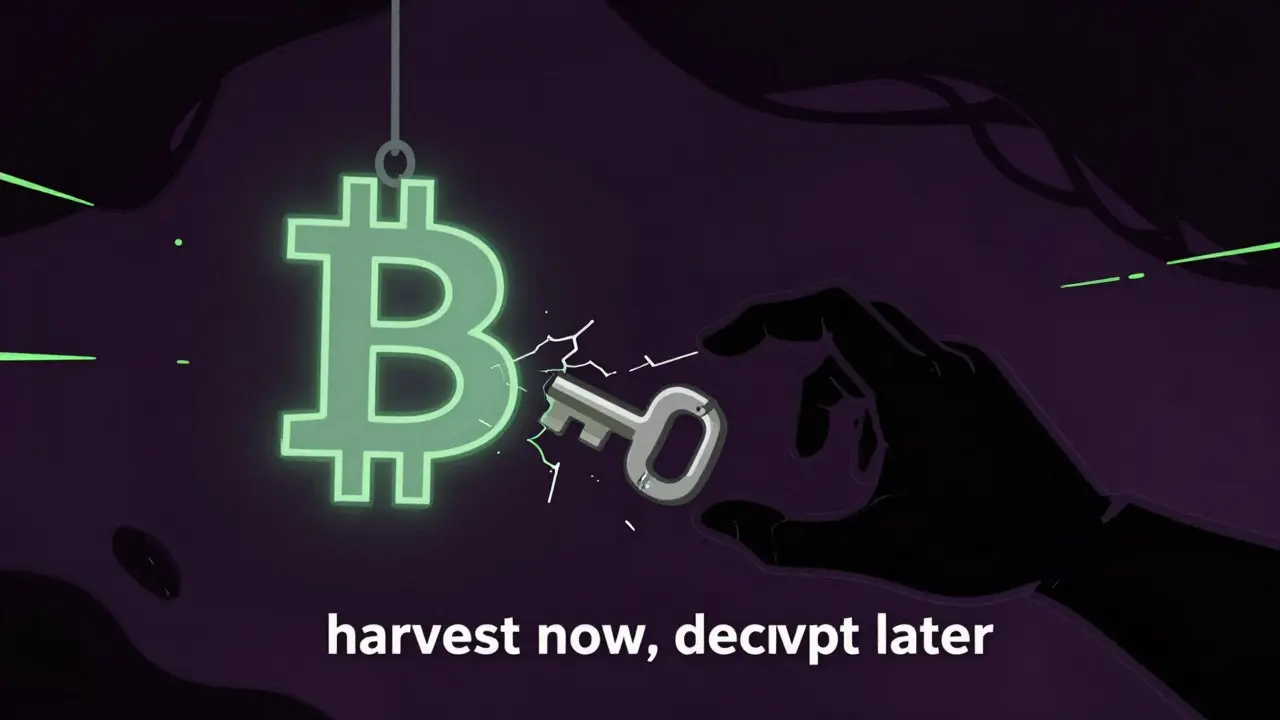
Imagine holding a digital vault key that is unbreakable today but could be snapped in seconds by a machine that doesn't even exist yet. That is the reality facing every Bitcoin and Ethereum holder right now. The rise of post-quantum cryptography is a set of algorithms designed to protect data from both classical and quantum computers is no longer just theoretical physics-it is an urgent survival strategy for the crypto industry. While quantum computers capable of breaking current encryption are still years away, the threat of "harvest now, decrypt later" attacks means adversaries are already collecting transaction data to exploit once the technology matures.
The stakes are incredibly high. An estimated $1.2 trillion in global cryptocurrency value sits in addresses vulnerable to quantum attacks. If a major breach occurs, it won’t just wipe out individual wallets; it could trigger a total loss of confidence in the entire blockchain ecosystem. Understanding how post-quantum cryptography works, why it matters for your assets, and what steps you can take today is essential for anyone serious about long-term digital asset security.
Why Current Crypto Security Is Vulnerable
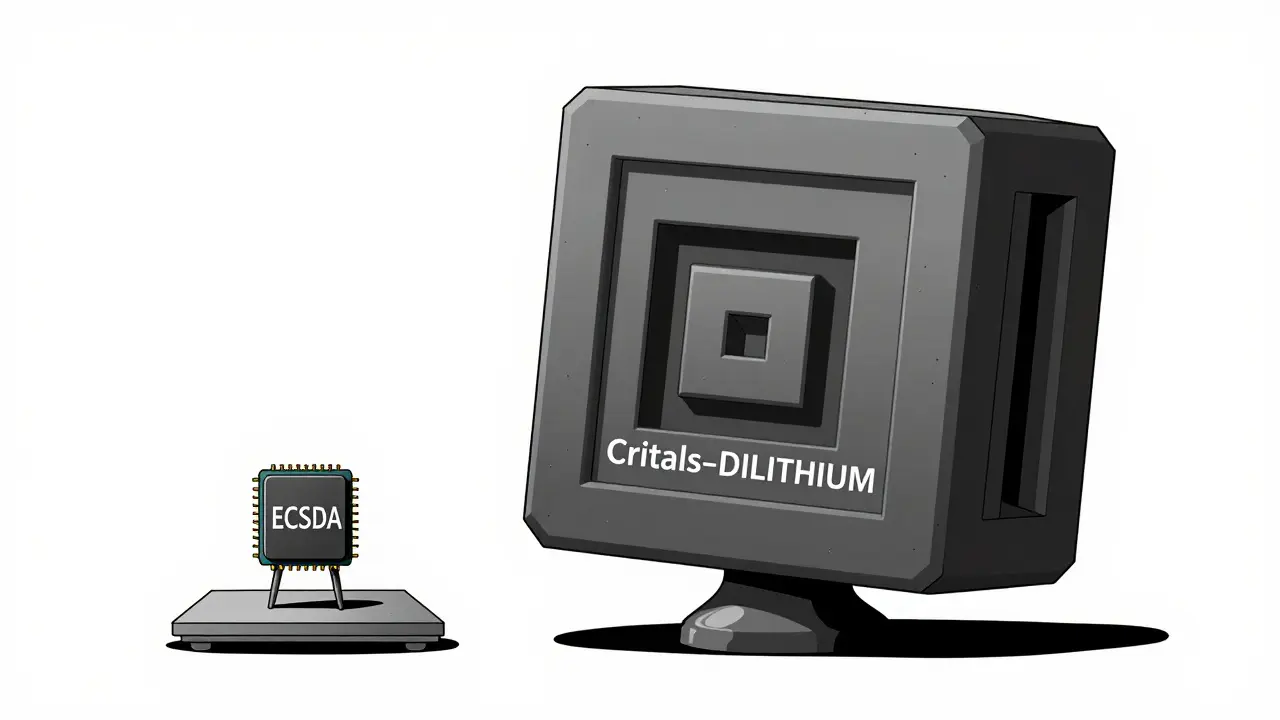
To understand the solution, we first need to look at the problem. Most major cryptocurrencies, including Bitcoin and Ethereum, rely on Elliptic Curve Digital Signature Algorithm (ECDSA) for securing transactions. ECDSA uses 256-bit keys to create compact signatures-just 72 bytes for a typical Bitcoin transaction. This efficiency has made blockchains scalable and fast, but it comes with a critical flaw: it is not quantum-resistant.
Quantum computers operate on fundamentally different principles than classical computers. They use qubits instead of bits, allowing them to process vast amounts of information simultaneously. Specifically, Shor’s algorithm-a mathematical method designed for quantum processors-can efficiently solve the discrete logarithm problem that underpins ECDSA. In simple terms, if a powerful enough quantum computer exists, it could derive your private key from your public address, effectively stealing your funds.
The danger isn’t immediate theft. It’s the "harvest now, decrypt later" strategy. State actors and sophisticated hackers are currently scanning blockchain ledgers, copying public keys and transaction data. They store this information securely, waiting for quantum technology to advance enough to break the encryption. Once that threshold is crossed, they can retroactively access any funds held in those addresses. According to Chainalysis data from September 2023, approximately 4 million BTC (worth around $114 billion) remain in legacy p2pkh addresses that are particularly vulnerable to this type of attack.
What Is Post-Quantum Cryptography?
Post-quantum cryptography (PQC) is cryptographic algorithms specifically designed to secure networks against attacks from both classical and quantum computers. Unlike traditional methods based on factoring large numbers or elliptic curves, PQC relies on mathematical problems that quantum computers cannot easily solve. These include lattice-based problems, hash-based functions, multivariate equations, and code-based cryptography.
The National Institute of Standards and Technology (NIST) has been leading the standardization effort since 2016. After years of rigorous testing and peer review, NIST finalized two primary standards in 2022-2024:
- Crystals-KYBER: Used for key encapsulation (securely exchanging keys).
- Crystals-DILITHIUM: Used for digital signatures (verifying transactions).
These lattice-based schemes are considered the frontrunners for widespread adoption because they offer a good balance between security and performance. However, other approaches like SPHINCS+ (hash-based) and Rainbow (multivariate) also exist, each with unique trade-offs.
The Trade-Offs: Security vs. Scalability
If PQC is so much more secure, why hasn’t everyone switched yet? The answer lies in size and speed. Post-quantum algorithms are significantly heavier than their classical counterparts.
| Algorithm | Signature Size | Public Key Size | Signing Speed | Quantum Resistance |
|---|---|---|---|---|
| ECDSA (Current Standard) | 72 bytes | 33 bytes | 0.02-0.05 ms | No |
| Crystals-DILITHIUM Level 3 | ~2,420 bytes | 2,500-4,000 bytes | 0.8-1.2 ms | Yes |
| SPHINCS+ | ~8,000 bytes | ~32 KB | Slower | Yes |
Notice the difference? A single Crystals-DILITHIUM signature is roughly 33 times larger than an ECDSA signature. For Bitcoin, which has a block size limit of 1MB (effectively 4MB with SegWit), this creates a massive bottleneck. Currently, a block can handle around 3,000 ECDSA transactions. With DILITHIUM, that number drops to just 120-250 transactions per block. SPHINCS+ would reduce it further to only about 50 transactions.
This scalability issue directly impacts user experience. Higher signature sizes mean larger blocks, slower propagation times, and higher transaction fees. Research from the Ethereum Foundation suggests that without significant protocol changes, implementing PQC could increase average transaction fees from $1.50 to over $50. This is why most projects are exploring hybrid solutions or layer-2 scaling technologies to mitigate these costs.
Who Is Leading the Charge?
While no major cryptocurrency has fully migrated to PQC yet, several projects are pioneering the space. Quantum Resistant Ledger (QRL) is a blockchain platform launched in June 2018 that uses hash-based signatures to resist quantum attacks. QRL was one of the first to implement a fully quantum-resistant architecture using SPHINCS+. Despite its early start, QRL faces challenges with transaction speed and fee structure, averaging $0.85 per transaction compared to Bitcoin’s $0.10.
Other notable players include:
- Ethereum: Researchers have proposed EIP-3037 for quantum-resistant signatures, and the foundation lists quantum resistance as a long-term priority in their roadmap.
- JPMorgan Chase: Filed a patent in January 2023 for quantum-resistant distributed ledger technology, signaling institutional interest.
- IPFS: Announced quantum-resistant storage options in February 2023, focusing on data integrity rather than transaction signing.
However, adoption remains slow. Less than 0.1% of the total cryptocurrency market capitalization currently uses quantum-resistant cryptography. The barrier isn’t lack of awareness-it’s the complexity of upgrading decentralized networks without causing hard forks or fragmentation.
Timeline and Expert Predictions
When will quantum computers actually break Bitcoin? Experts disagree, but the consensus leans toward caution. Dr. Michele Mosca, Deputy Director of the Institute for Quantum Computing at the University of Waterloo, published findings in the *Journal of Cryptology* stating there is a 1 in 7 chance that quantum computers will break ECDSA by 2026, and a 50% chance by 2031. Conversely, some skeptics like Dr. Craig Wright argue that practical quantum attacks are decades away.
NIST takes a middle ground, noting that "quantum computers employing many thousands of qubits will be needed to break present-day encryption." Current estimates suggest we may see fault-tolerant quantum machines capable of running Shor’s algorithm within the next 5-15 years. But again, the "harvest now, decrypt later" threat means you don’t have to wait for the machine to exist-you just have to worry about the data being collected today.
Booz Allen Hamilton predicts that the first major cryptocurrency hard fork implementing hybrid PQC will occur between 2026 and 2028. This timeline aligns with Gartner’s forecast that 20% of crypto projects will implement quantum-resistant features by 2025, rising to 60% by 2028.

What Should You Do Now?
You don’t need to become a cryptographer to protect yourself. Here are practical steps to reduce your exposure:
- Migrate to Native Segwit Addresses: Legacy p2pkh addresses expose your public key before spending, making them easier targets. Native Segwit (bech32) addresses keep your public key hidden until you initiate a transaction, adding a layer of obscurity.
- Use New Addresses for Each Transaction: Reusing addresses increases the risk of key exposure. Always generate a fresh address for incoming funds.
- Monitor Project Roadmaps: Follow updates from Ethereum, Bitcoin Core, and other networks you hold. Look for announcements regarding PQC integration or hybrid signature schemes.
- Consider Quantum-Resistant Wallets: Some hardware wallets are beginning to support experimental PQC features. While not mainstream yet, staying informed helps you prepare.
For developers and enterprises, the path is clearer. Start evaluating hybrid cryptographic systems that combine ECDSA with PQC algorithms. NIST recommends this transitional approach to ensure compatibility while building resilience. Organizations like the Open Quantum Safe project provide open-source tools and guides to help integrate these protocols into existing infrastructure.
The Future of Secure Blockchains
The transition to post-quantum cryptography is inevitable. It won’t happen overnight, and it will come with growing pains-larger blocks, higher fees, and complex upgrades. But the alternative is far worse: a future where your digital assets are accessible to anyone with a quantum computer.
Regulatory pressure is also mounting. The European Union’s Cyber Resilience Act proposes requiring quantum-safe cryptography for critical infrastructure, which may eventually encompass major exchanges and custodial services. As governments and financial institutions recognize the threat, compliance will drive adoption.
We are in a race against time. The technology to break current encryption is advancing faster than many realize. By understanding the risks, supporting projects that prioritize security, and taking simple protective measures today, you can help ensure that cryptocurrency remains a safe haven for value in the quantum age.
Will quantum computers steal my Bitcoin tomorrow?
No, not tomorrow. Current quantum computers are not powerful enough to break ECDSA encryption. However, attackers are already collecting public key data today to decrypt later when quantum technology advances. This "harvest now, decrypt later" strategy makes proactive security important even before quantum computers become practical.
What is the best post-quantum algorithm for cryptocurrency?
NIST has standardized Crystals-DILITHIUM for digital signatures and Crystals-KYBER for key exchange. These lattice-based algorithms offer a strong balance of security and performance. Hash-based schemes like SPHINCS+ are also highly secure but produce much larger signatures, impacting scalability.
How do I make my Bitcoin wallet quantum-resistant?
You cannot change Bitcoin’s core protocol yourself, but you can reduce risk by using native Segwit (bech32) addresses, which hide your public key until you spend. Avoid reusing addresses and consider moving funds from legacy p2pkh addresses to newer formats. Full protection requires network-level upgrades to PQC algorithms.
Why are post-quantum signatures so large?
PQC algorithms rely on complex mathematical structures like lattices or hashes that require more data to prove authenticity securely. For example, a Crystals-DILITHIUM signature is ~2,420 bytes compared to ECDSA’s 72 bytes. This size increase impacts block capacity and transaction fees, necessitating scaling solutions.
When will major cryptocurrencies adopt post-quantum cryptography?
Experts predict the first major hard forks implementing hybrid PQC will occur between 2026 and 2028. Ethereum and Bitcoin are actively researching solutions, but widespread adoption depends on solving scalability issues and achieving community consensus on protocol changes.







Jay Sharma
The whole 'harvest now, decrypt later' narrative is just a psyop designed to scare retail investors into moving their coins to centralized exchanges where the government can actually seize them. They want you to think quantum computers are coming to save you or destroy you, but really it's about control. The NSA has had quantum capabilities for decades, they just don't talk about it because it would panic the markets. Move your assets to cold storage and ignore the mainstream crypto news.