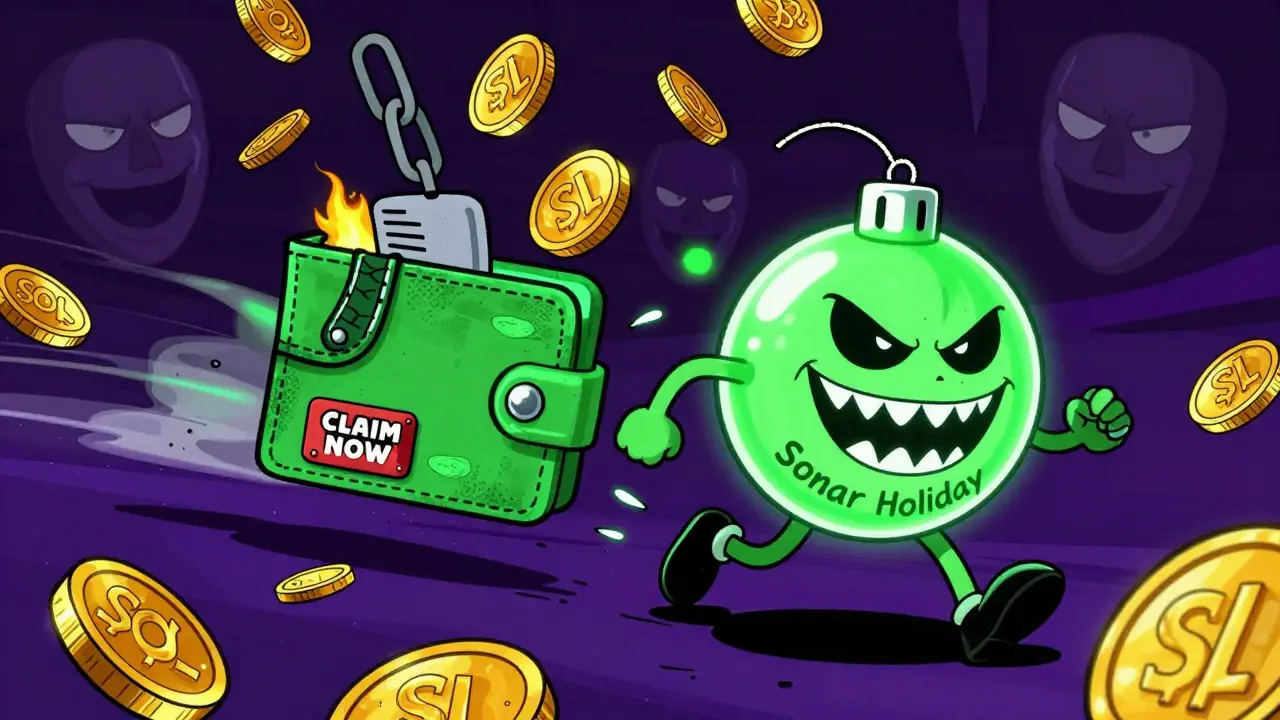
There’s no such thing as a Sonar Holiday airdrop-at least not one that’s real, verified, or officially announced. If you’ve seen posts online claiming you can claim free tokens from a project called ‘Sonar Holiday,’ you’re likely being targeted by a scam. The name doesn’t show up in any official blockchain announcements, crypto news outlets, or verified project websites. It’s not listed on Solana’s official ecosystem page, CoinGecko, CoinMarketCap, or any reputable airdrop tracker. And yet, people are still clicking links, connecting wallets, and sharing screenshots of fake airdrop portals. Why? Because the promise of free crypto is powerful. But in this case, it’s a trap.
Why the Sonar Holiday Airdrop Doesn’t Exist
The Solana blockchain had a busy end to 2024 and a strong start to 2025. Major airdrops like Magic Eden (ME) on December 10, 2024, and Pudgy Penguins (PENGU) on December 17, 2024, distributed millions in value to active users. Doodles (DOOD) followed in May 2025. These were real, documented, and announced weeks in advance through official channels. None of them were called ‘Sonar Holiday.’ There’s no team behind ‘Sonar Holiday.’ No whitepaper. No Twitter account with verified checkmarks. No Discord server with active moderators. No GitHub repo. No token contract address on Solana Explorer. If a project can’t be found on any public blockchain explorer or listed on a trusted airdrop calendar, it’s not real. And if it’s being pushed through Telegram groups or TikTok videos with flashing ‘CLAIM NOW’ buttons, it’s almost certainly fake.How Scammers Use Fake Airdrop Names
Scammers don’t invent names out of thin air. They steal words from real projects and mix them with holiday themes or trending buzzwords to make them sound legitimate. ‘Sonar’ sounds like ‘Sonar Protocol,’ a real Solana-based DeFi project. ‘Holiday’ taps into the end-of-year hype, when people are more likely to check their wallets for free tokens. Combine them, and you get ‘Sonar Holiday’-a name designed to look like a seasonal bonus from a trusted brand. These scams usually work in three steps:- You see a post saying, ‘Claim your Sonar Holiday airdrop before it’s gone!’
- You click a link that asks you to connect your Phantom or Solflare wallet.
- Once connected, the scammer drains your funds-often by tricking you into approving a malicious token swap or signing a transaction that gives them full access to your wallet.
Real Solana Airdrops in 2025 You Can Actually Trust
If you’re looking for real airdrops, here are the confirmed ones for 2025:- SonicSVM - Launched January 7, 2025. Required interaction with Solana DEXs or NFT marketplaces.
- Sanctum - Season 2 airdrop for users who staked SOL or used its liquid staking product.
- DeBridge - Distributed tokens to users who bridged assets between chains using their protocol.
- Drift - Airdropped to traders who used their perpetuals platform before January 1, 2025.
- Grass - Paid users for sharing unused bandwidth, with airdrop claims opening in February 2025.
- Kamino Season 3 - Expected mid-2025, targeting users who participated in liquidity mining.
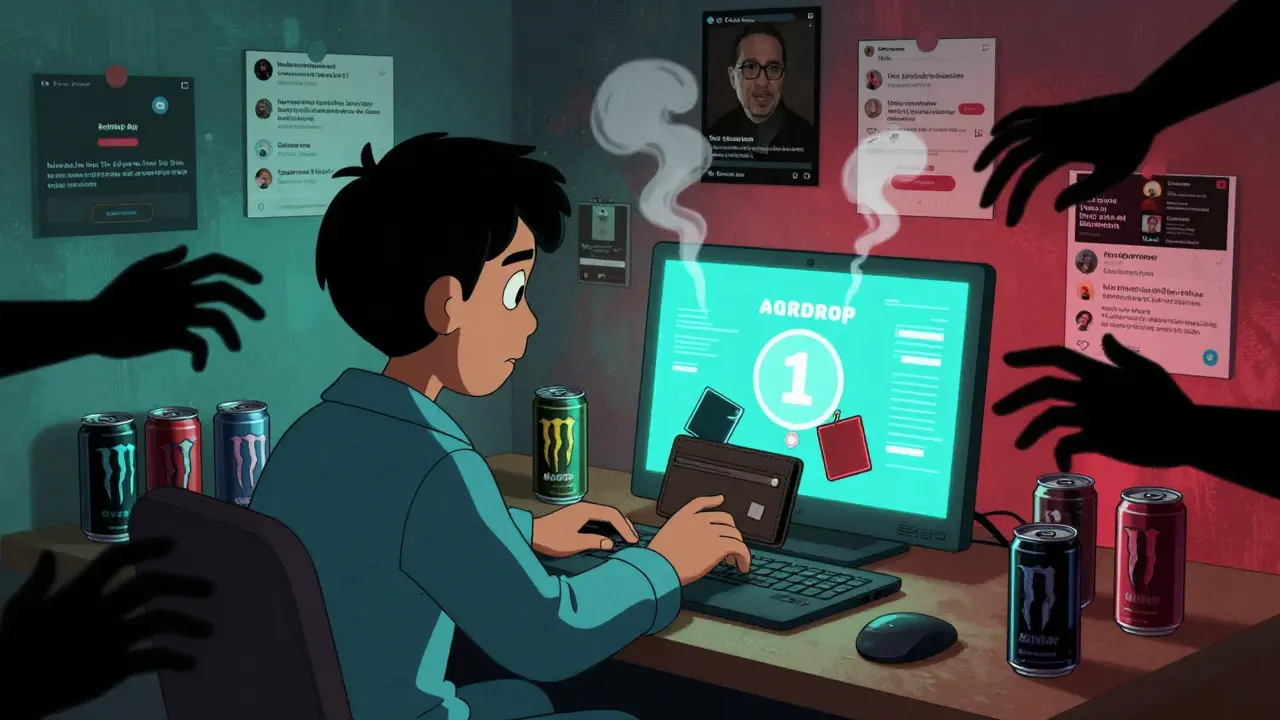
How to Spot a Fake Airdrop
Here’s how to protect yourself:- Check the official website - If the site looks like a template from 2018, has broken links, or no contact info, walk away.
- Look for verified social accounts - Real projects have Twitter/X and Discord accounts with blue checks and thousands of followers. Scam accounts often have 50 followers, no posts, or copied profile pictures.
- Never connect your wallet to an airdrop site - Legitimate airdrops don’t require wallet connection until after you’ve claimed via their official portal. If a site asks you to connect before showing you anything, it’s a red flag.
- Search for the token contract - Go to Solana Explorer and paste any token address you’re asked to interact with. If it’s not listed, or if the token has zero transactions, it’s fake.
- Use a burner wallet - If you’re testing a new project, use a separate wallet with just a few SOL. Never use your main wallet for unverified airdrops.
What Happens If You Get Scammed
Once your wallet is drained, recovery is nearly impossible. Blockchain transactions are irreversible. You can report the wallet address to blockchain analytics firms like Chainalysis or Elliptic, but they won’t get your money back. Your only real protection is prevention. Some people think, ‘I’ll just send a little SOL to see if it works.’ That’s how scams thrive. Even sending 0.01 SOL to a fake contract can trigger a malicious script that drains your entire wallet. There’s no such thing as a ‘safe test.’
Why People Fall for These Scams
It’s not about being gullible. It’s about timing and emotion. At the end of the year, people are hopeful. They’ve seen friends claim airdrops. They’ve read stories about people turning $10 into $10,000. The fear of missing out is real. Scammers exploit that. They use fake countdown timers, screenshots of ‘claimers’ with huge balances, and fake testimonials from ‘verified users.’ The truth? Most people who claim airdrops never see a dime. And those who do? They earned it by using a protocol for months-not by clicking a link on a random Telegram group.What to Do Instead
If you want to participate in real airdrops, here’s what to do:- Follow trusted sources: @Solana, @CoinGecko, @AirdropAlert, @CryptoSlate.
- Use only official project websites-double-check URLs. Scammers use .xyz, .io, or .app domains that look like .com.
- Interact with real protocols: Swap on Raydium, stake on Marinade, lend on Solend. Real airdrops reward activity, not clicks.
- Wait for announcements. Real airdrops are announced days or weeks in advance-not the night before.
Is the Sonar Holiday airdrop real?
No, the Sonar Holiday airdrop is not real. There is no official project by that name, no verified team, no token contract, and no announcement from any trusted crypto source. It is a scam designed to steal crypto from unsuspecting users.
How do I know if an airdrop is legitimate?
Legitimate airdrops are announced on official websites and verified social media accounts. They don’t ask you to connect your wallet upfront. They provide clear eligibility rules, token contract addresses, and timelines. Always check Solana Explorer for the token contract and search for the project on CoinGecko or CoinMarketCap before doing anything.
Can I get my money back if I got scammed?
Almost certainly not. Blockchain transactions are irreversible. Once funds are sent from your wallet, they cannot be recovered. Reporting the scam to blockchain analysts may help prevent others from being targeted, but it won’t return your crypto. Prevention is your only protection.
What are the real Solana airdrops for 2025?
Confirmed Solana airdrops for 2025 include SonicSVM, Sanctum, DeBridge, Drift, Grass, and Kamino Season 3. These projects have public announcements, verified team members, and documented eligibility criteria. Always verify details on their official websites before participating.
Why do scammers use holiday-themed names?
Holiday-themed names like ‘Sonar Holiday’ exploit emotional triggers-hope, urgency, and FOMO. People are more likely to act quickly at the end of the year, especially when they’ve seen others claim rewards. Scammers use these names to make fake airdrops look like seasonal bonuses from real projects.


Shawn Roberts
Bro just got scammed last week on a 'Solana Christmas Bonus' link 😭 Thought I was gonna be rich now my wallet's empty and I feel like an idiot