Benefits of Social Tokens for Communities
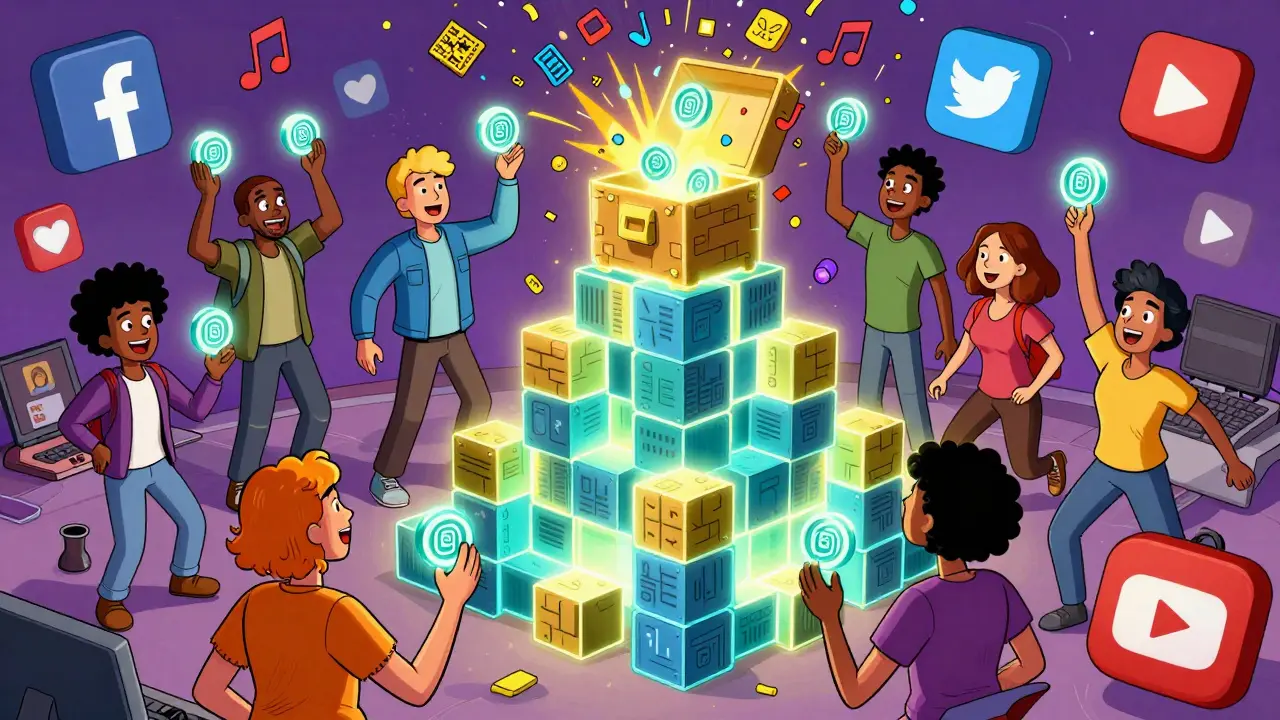
Social tokens let communities own their value, govern decisions, and earn from growth - turning passive members into active stakeholders in a new Web3 economy.
When you hear community ownership, a model where users collectively control a project through tokens and voting, not just investment. Also known as decentralized governance, it flips the script on traditional companies where CEOs and investors call the shots. In crypto, it’s not about who has the most money—it’s about who shows up to vote, contribute, and build. This isn’t theory. It’s happening right now in platforms where you can earn tokens just for using the app, and those tokens give you a say in upgrades, fees, or even who gets hired.
Look at DAOs, decentralized autonomous organizations that run on smart contracts and member votes. Also known as token-governed collectives, they’re the engine behind community ownership. You don’t need a boardroom. You need a wallet and a vote. The social tokens, digital assets issued by creators or communities that represent membership or influence. Also known as tokenized communities, they turn fans into stakeholders. Think of it like owning a piece of a band’s tour, not just buying a ticket. Projects like Rally and Roll let creators launch these tokens, and holders get perks, voting rights, or even a cut of revenue. But here’s the catch: most of these tokens fail because no one actually uses them. Real community ownership needs action—not just airdrops.
And that’s where things get messy. Some projects promise ownership but deliver nothing. The XGT airdrop, a token that was supposed to give users control over Xion Finance’s platform but never launched. Also known as phantom governance, it’s a warning sign. Others, like Vulcan Forged (PYR), a token used to govern a gaming ecosystem where players vote on new features. Also known as play-to-earn governance, it’s one of the few that actually works. The difference? Real utility. Real participation. Real consequences when you vote poorly.
Community ownership isn’t magic. It’s messy, slow, and often ignored by the people who claim to care. But when it works, it changes everything. You’re not just holding a coin—you’re holding a vote. And that’s why you’ll find posts here on how DAOs actually function, how social tokens succeed or crash, and why some tokenized real estate deals are smarter than others. You’ll see what happened with DMC, why AZBIT collapsed, and how Nigerian traders are navigating ownership in a gray zone. This isn’t about hype. It’s about who really controls the future—and whether you’re part of it, or just along for the ride.
4 December
Social tokens let communities own their value, govern decisions, and earn from growth - turning passive members into active stakeholders in a new Web3 economy.