BtcPro Crypto Exchange Review: Is It Legit or a Scam?
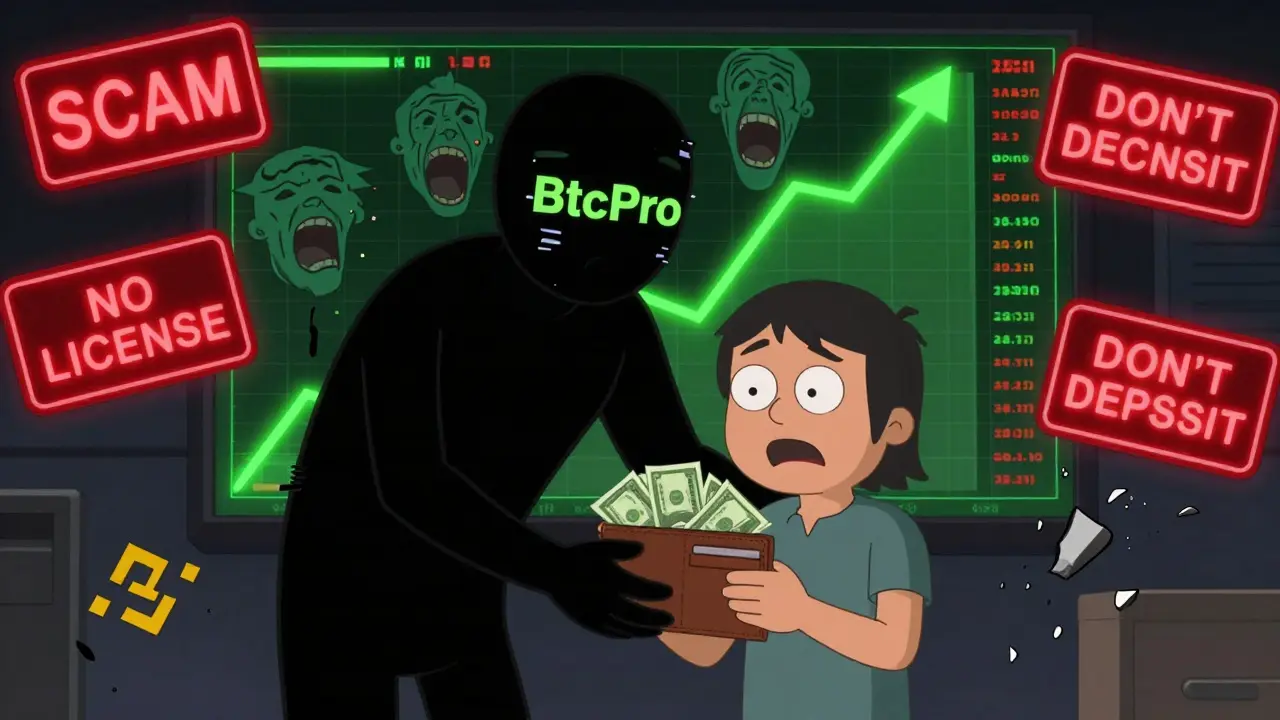
BtcPro is not a legitimate crypto exchange. It's a scam mimicking real platforms to steal funds. Learn how to spot fake exchanges and which trusted platforms to use instead.
When you hear about a crypto exchange scam, a fraudulent platform designed to steal user funds by mimicking legitimate trading services. Also known as fake crypto exchange, it often promises high returns, low fees, or exclusive access—then vanishes with your money. These aren’t just theoretical risks. In 2025, over 30 new scam exchanges popped up targeting new crypto users, and many more disguised themselves as legitimate platforms like Binance or Kraken. The most dangerous ones look real: they have professional websites, fake customer support, and even fake testimonials. But behind the polished UI is a black hole where your crypto disappears the moment you deposit.
How do these scams actually work? Most start with a lure—free tokens, airdrops, or exaggerated trading bots. You sign up, deposit a small amount, see fake profits, and are told to deposit more to unlock withdrawals. Then, the site goes dark. Some even fake withdrawal requests, showing you a "processing" screen for days. Others, like CreekEx, a platform exposed in 2025 as a fraudulent exchange with no backend infrastructure, didn’t even bother hiding. Then there are Woof Finance, a token scam wrapped in the illusion of an exchange, designed to drain wallets through fake staking and liquidity pools. These aren’t anomalies—they’re the new normal. And they’re getting smarter. Some now use AI-generated voices for customer service, fake YouTube reviews, and even cloned domain names that look identical to real exchanges.
What separates a real exchange from a scam? Real ones have clear regulatory status, transparent team members, public audits, and long-term track records. Scams have none of that. They avoid naming their legal entity, hide their headquarters, and never publish security reports. If you can’t find a license from a known authority like the FCA, OJK, or FINMA, walk away. Also, if the platform pushes you to use a wallet they control instead of your own, that’s a giant red flag. Legit exchanges never ask you to send crypto to an address they own—they give you a deposit address you can verify on-chain.
You don’t need to be a tech expert to avoid these traps. Just follow three rules: never trust unsolicited offers, always verify the domain name (scams use .xyz, .info, or misspellings like "binance-exchange.com"), and check independent reviews—not the ones on the site itself. Look for posts like the one on CreekEx or Woof Finance—they’re not just warnings, they’re case studies in how scams unfold.
Below, you’ll find real-world examples of crypto exchange scams that have been exposed, platforms that turned out to be fake, and how users lost thousands—even when they thought they were being careful. These aren’t stories from 2018. These are 2025 cases. And they’re still happening every week.
25 December
BtcPro is not a legitimate crypto exchange. It's a scam mimicking real platforms to steal funds. Learn how to spot fake exchanges and which trusted platforms to use instead.

18 November
Armoney is not a real crypto exchange. This review breaks down the truth behind the name, exposing it as a likely misspelling of Harmony (ONE) or the scam platform BTC Armani Nova. Learn how to spot fake exchanges and where to trade safely in 2025.