Crypto Financial Inclusion: How Blockchain Is Opening Doors for the Unbanked
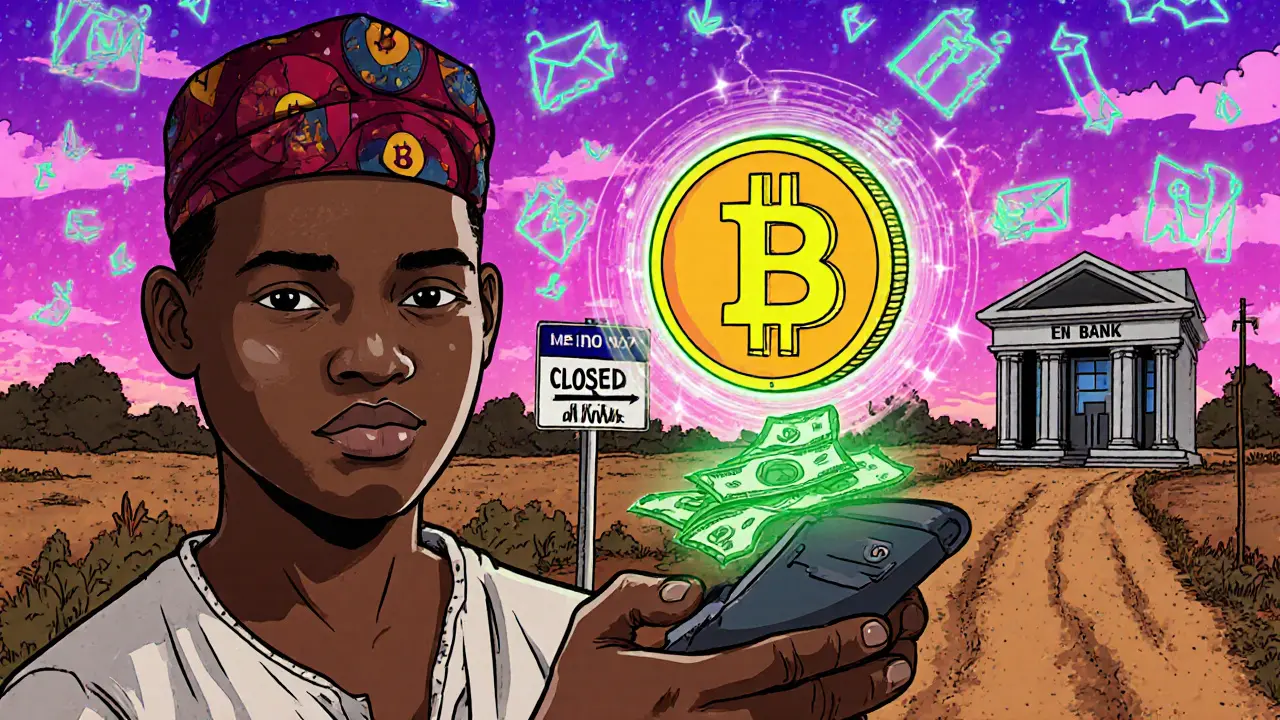
When we talk about crypto financial inclusion, the use of blockchain and cryptocurrency to provide financial services to people without access to banks. Also known as decentralized finance access, it’s not just about sending money faster — it’s about giving people in places like Nigeria, Bangladesh, and Venezuela real control over their money for the first time.
Traditional banks turn away millions because they lack ID papers, credit history, or a physical address. But crypto doesn’t care about any of that. All you need is a phone and an internet connection. That’s why people in countries with shaky banks or strict capital controls — like Nigeria, where crypto restrictions are messy but trading is still alive, or Bangladesh, where users rely on VPNs to reach Binance — are turning to crypto as their only option. DeFi platforms, decentralized financial applications that let users lend, borrow, and trade without banks like Ref Finance on NEAR let people swap tokens for less than a penny in fees, something no traditional bank in rural areas could ever match.
It’s not perfect. Many projects claiming to help the unbanked are scams — like CreekEx or Woof Finance — pretending to be exchanges but designed to steal funds. Others, like Project Quantum or TajCoin, have no real product, no team, and no users. But the real winners are the platforms that actually work: regulated exchanges like COREDAX in South Korea, or crypto policies that clarify rules without crushing access, like Indonesia’s OJK oversight or Vietnam’s strict but legal virtual asset framework. Even state-controlled mining in Venezuela, though heavy-handed, shows governments are finally recognizing crypto’s role in survival.
And it’s not just about trading. Airdrops like SoccerHub’s SCH tokens or BUNI from Bunicorn give people in low-income regions a chance to earn crypto just by joining a community — no upfront cash needed. These aren’t get-rich-quick schemes; they’re entry points. For someone earning $2 a day, getting free tokens could mean paying for a phone bill, buying food, or sending money home — things banks refused to let them do.
So what’s the real story behind crypto financial inclusion? It’s not hype. It’s a quiet revolution happening in phone screens across the Global South. People aren’t waiting for permission. They’re building their own systems — using tools like blockchain, DeFi, and peer-to-peer exchanges to bypass broken institutions. Some of these tools are flawed. Some are dangerous. But the movement itself? It’s real. And the posts below show exactly how it’s playing out — from Nigeria’s tangled regulations to Bangladesh’s VPN networks, from failed tokens to legit platforms that actually work. You’ll see who’s getting left out, who’s finding a way, and what’s next for the people banking never reached.