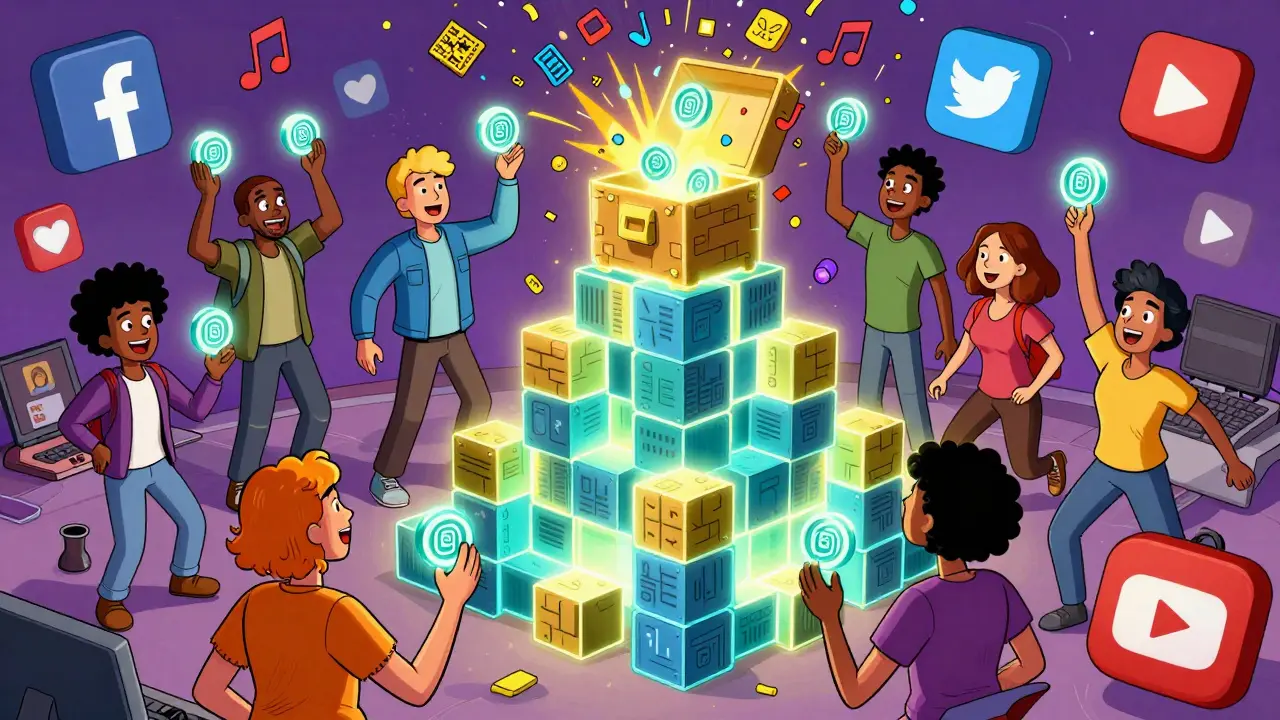
Benefits of Social Tokens for Communities
Social tokens let communities own their value, govern decisions, and earn from growth - turning passive members into active stakeholders in a new Web3 economy.
When you think about who runs a cryptocurrency project, you might picture a CEO in a suit. But in crypto, decentralized governance, a system where token holders vote on protocol changes instead of a central team. Also known as blockchain governance, it’s meant to give power back to users—not investors or founders. This isn’t just theory. It’s how projects like Uniswap, MakerDAO, and Ref Finance actually make decisions today. But here’s the catch: most of these systems don’t work the way they’re supposed to.
At the heart of decentralized governance is the DAO, a decentralized autonomous organization that uses smart contracts to automate rules and voting. Also known as decentralized autonomous organizations, it’s the engine behind token-based decision-making. Members vote using their tokens—more tokens, more weight. But in practice, a small group of wallets often holds most of the supply. That means a few people control the outcome, even if the system claims to be democratic. Look at the XGT airdrop failure or the BNX token swap mess—both show how poor governance leads to lost trust. And when voters don’t show up, as they rarely do, the project becomes vulnerable to manipulation.
Token voting sounds fair, but it’s not. Some projects let you vote without even holding the token—just by staking or joining a Discord. Others lock votes behind complex interfaces or require technical knowledge most users don’t have. Meanwhile, the real power often sits with venture funds that bought tokens early. The result? Decisions that benefit insiders, not the community. That’s why platforms like Azbit and DYORSwap struggle—they have governance structures on paper, but no real participation. And when governance fails, so does the project.
What you’ll find here aren’t just explanations. You’ll see real cases—like the failed DMC airdrop, the silent Xcalibra exchange, or the rug-pull SBAE meme coin—where governance either didn’t exist, was ignored, or was weaponized. These aren’t edge cases. They’re the norm. If you’re holding any crypto token, you’re part of a governance system—whether you know it or not. The question isn’t whether it’s decentralized. It’s whether it’s working for you.
4 December
Social tokens let communities own their value, govern decisions, and earn from growth - turning passive members into active stakeholders in a new Web3 economy.