OpenSwap (Harmony) Crypto Exchange Review: Is It Still Active in 2025?
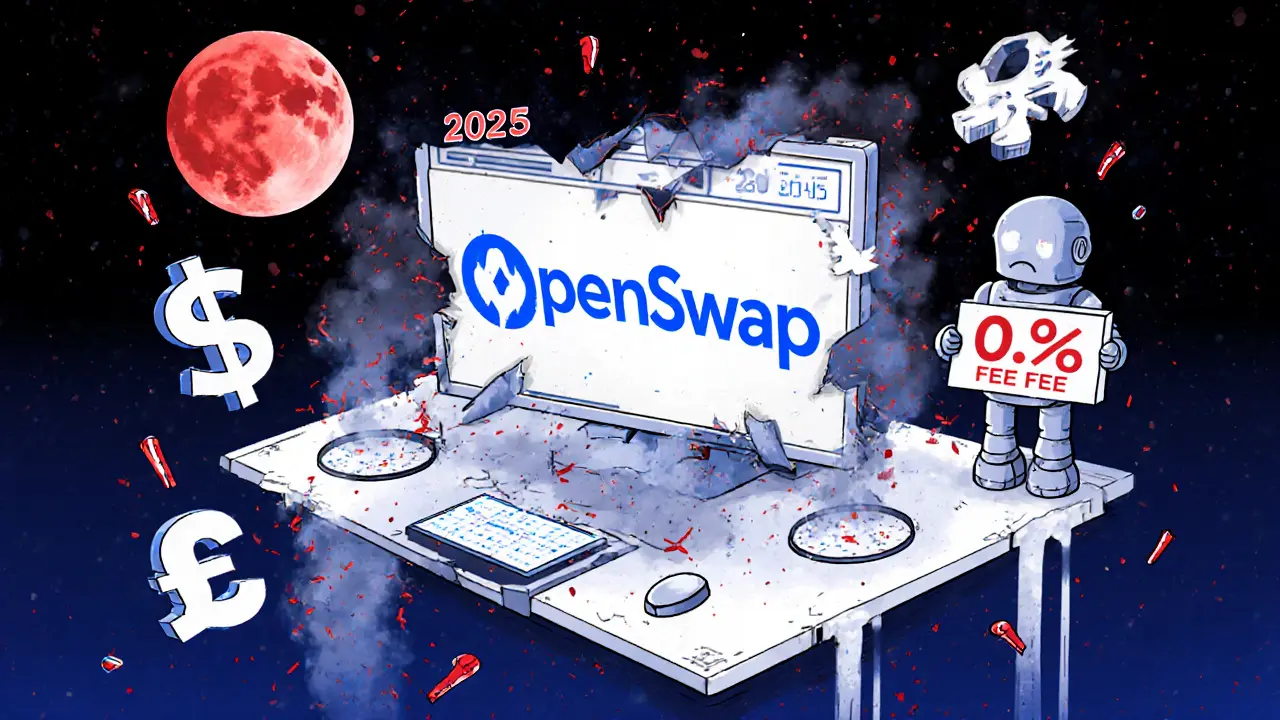
OpenSwap on Harmony was a deflationary DEX with promise, but it's now inactive with zero trading volume. Learn why it failed and what alternatives actually work in 2025.
When you trade on a deflationary DEX, a decentralized exchange that intentionally reduces its native token supply over time through burns or buybacks. Also known as token-burning DEX, it flips the script on most crypto projects that just print more tokens. Instead of inflation eating away at value, a deflationary DEX makes its token scarcer — and potentially more valuable — with every trade.
This isn’t just theory. Projects like Ref Finance, a low-fee DeFi platform on NEAR Protocol and others use token burns to shrink supply after each swap. Every time you trade $0.01 worth of crypto on these platforms, a tiny slice of the platform’s token gets destroyed. Over time, that adds up. Compare that to traditional DEXs like Uniswap, where the token supply stays flat or grows. The difference? One creates scarcity. The other relies on adoption alone.
Why does this matter? Because scarcity drives demand. If 10 million tokens exist today, and next year only 8 million are left — and people still want to use the platform — the price has a built-in upward push. That’s the core idea behind deflationary DEXs. But it’s not magic. If no one trades, no burns happen. If the team stops improving the platform, the token burns won’t save it. That’s why the best deflationary DEXs combine token burns with real utility — like low fees, fast trades, and strong liquidity. You can’t just burn tokens and call it a day.
And it’s not just about the token. A deflationary DEX often ties its economics to other parts of the ecosystem. Think of SushiSwap on Arbitrum Nova, a DEX with minimal trading volume despite ultra-low fees. Even if it burns tokens, if no one’s using it, the burn has no effect. That’s the catch. The burn only works if the platform is alive. Real deflationary DEXs don’t just talk about burns — they build tools people actually use.
Some of the posts below expose fake or abandoned tokens pretending to be deflationary — like Flowmatic or TajCoin — where the burn is just a marketing lie. Others show real examples, like Ref Finance, where the mechanics are transparent and the usage is real. You’ll also find posts about how token burns interact with broader DeFi trends, how they affect yield farming, and why some traders prefer them over inflationary models.
What you won’t find here are empty promises. Just real data, real platforms, and real trade-offs. If you’re tired of crypto projects that just print more tokens and call it growth, you’re in the right place. Below, you’ll see exactly which DEXs are actually shrinking supply — and which ones are just pretending.
30 October
OpenSwap on Harmony was a deflationary DEX with promise, but it's now inactive with zero trading volume. Learn why it failed and what alternatives actually work in 2025.