
Imagine trying to spend a dollar bill while standing on the other side of the ocean. You can’t just hand it over; you need a local currency that represents that value reliably. In the crypto world, blockchains are like isolated islands. Bitcoin lives on its own chain. Ethereum has its own. Solana is another island entirely. Wrapped assets are the solution. They allow you to take an asset from one blockchain, lock it up, and get a 'receipt' (the wrapped version) on another blockchain so you can use it there.
As we move through mid-2026, the demand for these digital receipts hasn't slowed down. Traders and developers crave access to Bitcoin’s stability or Ethereum’s smart contract capabilities without leaving their preferred ecosystem. But which wrapped tokens actually move the most money? Who holds the keys to the vaults? And what happens when a bridge breaks?
What Exactly Is a Wrapped Asset?
To understand the volume leaders, you first have to grasp the mechanics. A wrapped asset is a tokenized representation of an underlying cryptocurrency on a different blockchain network. Think of it as a pawn ticket. You give your gold ring (original BTC) to the pawn shop (custodian/minting protocol). They keep the ring safe in a vault. In exchange, they give you a paper slip (wBTC) that says "this equals one gold ring." You can now trade that paper slip at a local market (DeFi protocols on Ethereum or Solana) where gold rings aren't accepted directly.
The magic here is interoperability. Without wrapping, Bitcoin holders are stuck doing basic transfers. With wrapping, they can lend, borrow, provide liquidity, and earn yield across dozens of ecosystems. The process usually involves three steps:
- Minting: A user sends native coins to a custodial address or locks them in a smart contract.
- Burning: When the user wants their original coin back, they send the wrapped token to a burn address.
- Redemption: The system releases the locked native coins back to the user.
This mechanism creates a synthetic supply of assets that mirrors the original perfectly, maintaining a 1:1 peg. If the peg breaks, chaos ensues. That’s why trust and transparency in the minting process are critical.
The Undisputed King: Wrapped Bitcoin (WBTC)
If you look at total value locked (TVL) and cumulative trading history, Wrapped Bitcoin remains the heavyweight champion. Launched in 2019, wBTC was designed to bring Bitcoin into the Ethereum DeFi ecosystem. For years, it was the only game in town for Bitcoin exposure on Ethereum.
Why does wBTC dominate volume? Because it became the standard collateral. Lending protocols like Aave and Compound built their systems around wBTC. When Ethereum gas fees spiked in 2021, users didn't abandon wBTC; they moved to Layer 2 solutions like Arbitrum and Optimism, where wBTC followed them via bridges. By 2026, wBTC isn't just on Ethereum mainnet anymore. It's everywhere.
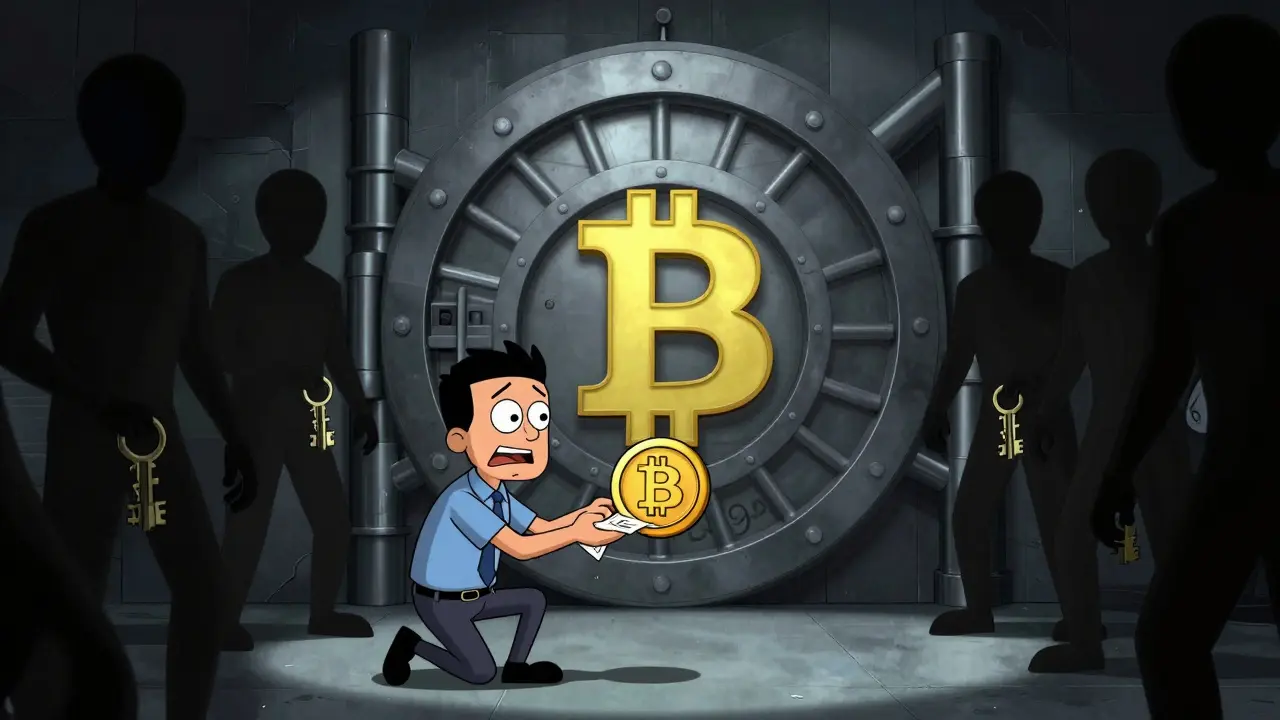
However, wBTC relies on a multi-signature custodian model managed by BitGo and a group of merchants. This centralization point is both its strength (security audits, established reputation) and its weakness (single point of failure risk). Despite this, its sheer liquidity depth makes it the go-to for large institutional trades involving Bitcoin on EVM-compatible chains.
The Native Challenger: Wrapped Ether (WETH)
While wBTC brings Bitcoin to Ethereum, Wrapped Ether serves a different purpose. ETH is the native currency of the Ethereum network, but it doesn't support the ERC-20 token standard required for most smart contracts. You can't easily swap raw ETH for USDC in a decentralized exchange without converting it first.
WETH solves this. It wraps native ETH into an ERC-20 compliant token. Unlike wBTC, which requires a complex custody setup, WETH is non-custodial. Anyone can wrap or unwrap ETH instantly using a simple smart contract. There is no middleman holding your funds in a vault. You hold the private key to the wrapper.
This simplicity makes WETH the backbone of Ethereum DeFi trading volume. Almost every transaction on Uniswap or Curve involves WETH as a base pair. If you are trading any altcoin on Ethereum, you are likely swapping it against WETH. Consequently, its daily trading volume often rivals or exceeds that of many top-tier cryptocurrencies because it facilitates the entire market's liquidity.
The Rise of Cross-Chain Variants: tBTC, solBTC, and more
In 2025 and 2026, the narrative shifted from "Ethereum-centric" to "multi-chain." Users don't want to pay high Ethereum fees if they can trade on Solana, Avalanche, or Polygon. This led to an explosion of new wrapped assets specific to these networks.
tBTC emerged as a decentralized alternative to wBTC. Using threshold signatures rather than a single custodian, tBTC aims to reduce counterparty risk. While its volume is lower than wBTC, it attracts privacy-conscious and decentralization-purist traders.
On Solana, SolBTC (and earlier versions like mBTC) gained traction. Solana’s speed and low costs make it attractive for high-frequency trading. Traders wrap Bitcoin to trade on Jupiter or Raydium, enjoying near-instant settlement. The volume here is driven by retail speculation and arbitrage bots taking advantage of price discrepancies between Bitcoin’s native order book and Solana’s DEXs.
We also see wstETH gaining ground. This is "wrapped staked Ethereum." It combines two features: staking rewards and ERC-20 compatibility. Instead of locking ETH away for staking, you get wstETH, which accrues value over time and can be used in DeFi. Its volume reflects the growing trend of "liquid staking," where users want yield without sacrificing liquidity.
How Trading Volume Is Measured in Wrapped Assets
Measuring volume for wrapped assets is tricky. Traditional centralized exchanges (CEXs) like Binance report massive volumes for BTC/USDT pairs. But that’s native Bitcoin. Wrapped asset volume happens primarily on Decentralized Exchanges (DEXs) and Automated Market Makers (AMMs).
Data aggregators like DefiLlama or Dune Analytics track this by monitoring token transfers on-chain. However, there are pitfalls:
- Wash Trading: Bots may create fake volume to attract attention to a new wrapped token project.
- Bridge Volume vs. Trading Volume: Moving wBTC from Ethereum to Arbitrum counts as a transfer, not necessarily a trade. True volume implies a change of ownership for profit or utility.
- Fragmentation: wBTC exists on Ethereum, Polygon, BSC, and Arbitrum. Each instance has separate liquidity pools. Aggregating these accurately requires sophisticated data pipelines.
Generally, the hierarchy of volume looks like this: WETH (due to being the base pair for all ETH DeFi) > wBTC (largest TVL and institutional usage) > Stablecoins (USDT/USDC, though technically stablecoins, often act as the counterpart to wrapped assets) > Niche wrapped tokens (solBTC, tBTC).

Risks: What Happens When the Wrapper Breaks?
Wrapped assets introduce a layer of complexity that native assets do not: bridge risk. If the custodian gets hacked, or if the smart contract managing the wrap has a bug, the peg can break. We saw this with the Ronin Bridge hack in 2022, which targeted bridged assets. Although not a direct attack on wBTC, it shook confidence in the entire wrapped asset sector.
In 2026, regulators are paying closer attention. The SEC and other global bodies view some wrapped tokens as securities if they rely heavily on centralized entities. This regulatory uncertainty can cause sudden drops in volume as institutions pull back.
Additionally, de-pegging events can occur during market crashes. If Bitcoin drops 20% in an hour, panic selling might overwhelm the liquidity pools for wBTC, causing it to trade at a discount to actual BTC. Arbitrageurs usually fix this quickly, but the window of opportunity-and risk-is real.
Comparison of Top Wrapped Assets
| Asset | Underlying | Primary Chains | Custody Model | Key Use Case |
|---|---|---|---|---|
| WETH | Ethereum | Ethereum, L2s | Non-custodial (Smart Contract) | Base pair for DEX trading |
| wBTC | Bitcoin | Ethereum, Multi-chain | Multi-sig Custodian | Collateral in lending/borrowing |
| tBTC | Bitcoin | Ethereum | Decentralized Threshold Signatures | Trust-minimized Bitcoin DeFi |
| solBTC | Bitcoin | Solana | Various Bridges | High-speed trading on Solana |
| wstETH | Staked ETH | Ethereum | Liquid Staking Protocol | Earning yield while providing liquidity |
Future Outlook: Are Wrapped Assets Becoming Obsolete?
Some argue that Layer 2 scaling solutions and native cross-chain messaging protocols (like IBC or CCIP) will eventually make wrapping unnecessary. Why wrap Bitcoin when you can just verify its state on another chain natively?
However, in 2026, wrapped assets remain essential. They offer immediate liquidity and familiarity. Developers build interfaces for ERC-20 tokens, not for abstract Bitcoin states. Until universal cross-chain standards mature further, wrapped assets will continue to dominate trading volume. The focus is shifting toward more transparent, auditable, and decentralized wrapping mechanisms to mitigate the risks associated with centralized custodians.
For traders, the strategy is clear: stick to the highest volume wrappers (WETH, wBTC) for safety and liquidity. Explore newer variants like tBTC or solBTC only if you understand the specific bridge risks involved. Always verify the audit status of the wrapping protocol before moving significant capital.
Is WETH the same as ETH?
No, but they are economically equivalent. ETH is the native currency of the Ethereum network. WETH is an ERC-20 token that represents ETH 1:1. You can convert ETH to WETH and back instantly without fees (other than gas). WETH is used because most DeFi smart contracts require ERC-20 tokens to function correctly.
Who controls the reserves for Wrapped Bitcoin (wBTC)?
wBTC is managed by a consortium called the Wrapped Bitcoin Association, with custody provided by BitGo. They use a multi-signature wallet system, meaning multiple parties must approve transactions to release the underlying Bitcoin. This provides security but introduces a centralized point of failure compared to fully decentralized alternatives.
Can wrapped assets lose their value?
Yes. While they should always match the price of the underlying asset, technical failures, hacks, or loss of trust in the custodian can cause the wrapped token to trade at a discount. Additionally, if the bridge connecting the chains is compromised, the wrapped tokens could become worthless if the underlying assets cannot be redeemed.
Which wrapped asset has the highest trading volume?
WETH typically has the highest trading volume because it serves as the primary base pair for almost all decentralized exchanges on Ethereum and its Layer 2 networks. Every trade involving an altcoin on Ethereum usually goes through a WETH pool, generating immense volume. wBTC follows closely due to its high Total Value Locked in lending protocols.
Are there decentralized alternatives to wBTC?
Yes. Projects like tBTC (threshold Bitcoin) and sBTC aim to provide decentralized wrapping without relying on a single corporate custodian. These use cryptographic techniques like threshold signatures to distribute control among many nodes, reducing the risk of a single entity misbehaving or being hacked.






Nick Rice
Look, I get the hype around wBTC being the king of collateral, but let's be real about the centralization risk here. It’s like trusting a single bank with your life savings while pretending it’s decentralized finance. The multi-sig setup is fine for now, but if BitGo sneezes, the whole DeFi ecosystem catches a cold. We need to push harder for tBTC and other non-custodial solutions before the next rug pull happens.