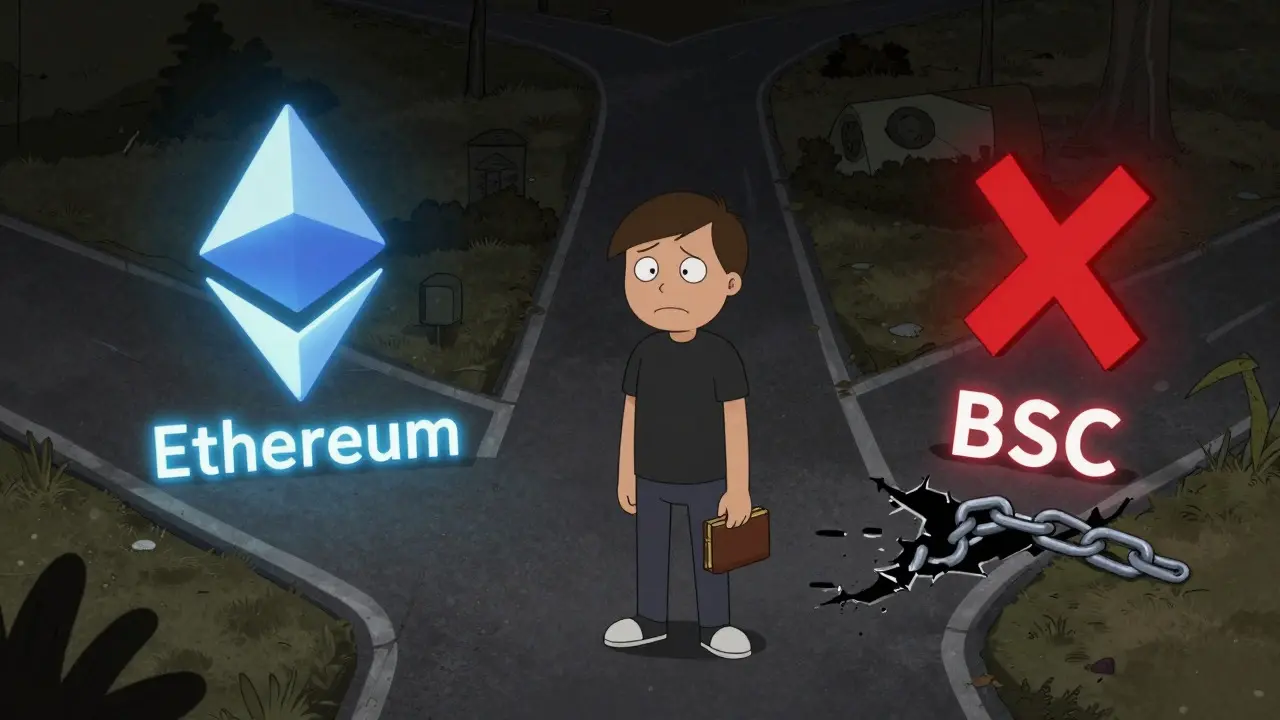
Here is a hard truth for anyone searching for "Uniswap v4 on BSC": it does not exist. If you are trying to find a direct Uniswap v4 interface running natively on the Binance Smart Chain (BSC), you will hit a dead end. Uniswap is, and has always been, an Ethereum-centric protocol. It launched its fourth major version, Uniswap v4, in January 2025 exclusively on Ethereum mainnet and select Layer 2 networks like Arbitrum, Optimism, and Base.
This confusion is understandable. In the world of decentralized finance (DeFi), names get mixed up constantly. PancakeSwap is the giant on BSC, while Uniswap dominates Ethereum. When Uniswap announced its massive v4 upgrade with features like "hooks" and extreme gas savings, many traders assumed this would roll out everywhere at once. It didn't. Understanding this distinction is crucial because using the wrong tool for your chain can cost you in fees, security risks, or simply wasted time.
The Core Misconception: Why Uniswap Isn't on BSC
To understand why you won't find Uniswap v4 on BSC, we need to look at how these protocols were built. Uniswap is a non-custodial automated market maker (AMM) protocol founded by Hayden Adams in 2018. Its architecture is deeply tied to the Ethereum Virtual Machine (EVM). While BSC is EVM-compatible, meaning it uses similar code structures, Uniswap Labs has chosen to focus its development resources strictly on the Ethereum ecosystem.
When Uniswap v4 launched on January 30, 2025, it was described as a complete architectural overhaul, not just a simple update. The team prioritized stability and deep integration with Ethereum's specific improvements, such as EIP-1153 (transient storage). Deploying on every possible chain simultaneously would dilute their efforts and increase security risks. Instead, they focused on Ethereum and high-throughput Layer 2s where the user base and liquidity are most aligned with their design philosophy.
If you are holding assets on BSC and want the benefits of a top-tier DEX, your native option is PancakeSwap. PancakeSwap has its own v4 iteration that mirrors some of Uniswap's innovations but is tailored specifically for the BSC environment. Trying to force Uniswap onto BSC via third-party bridges often leads to higher slippage and unnecessary complexity compared to sticking with native solutions.
What Makes Uniswap v4 Different?
Even though it isn't on BSC, Uniswap v4 represents a significant leap forward in DeFi technology. Launched in early 2025, this version introduced three transformative features that changed how developers build on-chain markets.
- The Singleton Contract: Previous versions of Uniswap required deploying a new smart contract for every single liquidity pool. This was expensive and bloated the blockchain. V4 uses a "singleton" model-a single universal contract that manages all pools. According to Uniswap Labs' whitepaper, this reduced deployment costs by 99.99%. Pool creation dropped from roughly 1.5 million gas units in V3 to just 15,000 gas in V4.
- Flash Accounting: Leveraging Ethereum Improvement Proposal 1153, V4 allows for temporary token approvals within a single transaction. This means you can swap tokens without needing to approve them permanently, reducing attack surfaces and saving gas on complex multi-step trades.
- Native ETH Support: For years, traders had to wrap Ether into WETH to trade it on Uniswap. V4 supports native ETH directly, cutting out the wrapping step and reducing swap fees by approximately 15% for ETH pairs.
These changes make Uniswap v4 incredibly efficient for Ethereum users. However, none of these benefits apply if you are trading purely on BSC, where the network mechanics and fee structures are entirely different.
The Real Competitor on BSC: PancakeSwap v4
If your goal is low-cost trading on Binance Smart Chain, you should be looking at PancakeSwap. Often called the "Uniswap of BSC," PancakeSwap is the dominant decentralized exchange on that network. It also released a v4 update in 2025, featuring similar optimizations like improved capital efficiency and lower deployment costs.
| Feature | Uniswap v4 (Ethereum/L2) | PancakeSwap v4 (BSC) | Curve Finance (Ethereum) |
|---|---|---|---|
| Primary Network | Ethereum, Arbitrum, Optimism, Base | Binance Smart Chain (BSC) | Ethereum |
| Pool Deployment Cost Reduction | 99.99% vs previous version | 95% vs previous version | N/A (Stablecoin focused) |
| Base Fee (Stable Pairs) | 0.05% | Variable (often lower) | 0.04% |
| Customization Framework | Hooks (Solidity-based) | Enhanced Liquidity Modules | Gauge Voting |
| Best For | High-value ETH/EVM trading, developers building custom logic | BSC native trading, meme coins, low-cost swaps | Stablecoin swaps, minimal slippage |
PancakeSwap offers a familiar interface to Uniswap users but operates within the BSC ecosystem. It supports BEP-20 tokens natively and integrates with BNB Chain's unique features. If you are confused about which platform to use, ask yourself: "Where are my tokens?" If they are on BSC, use PancakeSwap. If they are on Ethereum or a Layer 2, use Uniswap.

Understanding Hooks: The Developer Revolution
The most talked-about feature of Uniswap v4 is the "Hooks" framework. But what does this mean for you, the trader? Hooks allow developers to insert custom code at specific points during a trade-before the swap happens, after it completes, or when liquidity is added.
This sounds technical, but it has real-world implications. For example, a hook could automatically adjust trading fees based on market volatility. Or, it could enable limit orders directly on-chain, something Uniswap previously lacked. Dr. Georgios Konstantopoulos, Chief Scientist at Paradigm, noted that this architecture could increase capital efficiency by 2-3x for certain pool configurations.
However, hooks introduce complexity. Tarun Chitra of Gauntlet Networks warned that hooks create new attack vectors. Developers must manage gas stipends carefully, or transactions can fail mid-execution. For the average user, this means that while new innovative products are being built on top of Uniswap v4, you should stick to well-audited interfaces. Don't click on random links promising "new Uniswap v4 beta" features unless they come from trusted sources like the official Uniswap website or reputable aggregators.
Gas Savings: Hype vs. Reality
You will see headlines claiming Uniswap v4 saves 99.99% on gas. This is mathematically true regarding *deployment* costs for creating new pools. But for you, swapping tokens, the savings are more modest.
OAK Research benchmarked that multi-hop swaps now consume 30-40% less gas than V3. Native ETH support reduces fees by about 15%. These are significant improvements, especially during periods of high Ethereum congestion. However, Alex Konst from CoinTelegraph pointed out that the absolute dollar savings per pool deployment might only be $0.07-$0.12 at current gas prices. So, while the percentage looks huge, the practical impact on your wallet depends heavily on Ethereum's gas price at the moment of your trade.
On BSC, gas fees are already negligible-often fractions of a cent. Therefore, the dramatic gas optimizations of Uniswap v4 are less relevant to BSC users, who benefit more from PancakeSwap's inherent low-cost structure.

Security and Trust: What You Need to Know
As of mid-2026, Uniswap maintains a strong reputation for security. With over $15.7 billion in total value locked (TVL) across all versions, it remains the largest DEX by volume. The protocol is non-custodial, meaning you retain control of your funds at all times. There is no central company holding your assets.
However, regulatory scrutiny continues. The SEC's ongoing case against Uniswap Labs highlights the complexities of DeFi regulation. While the protocol itself is decentralized, certain advanced hook implementations could face legal questions under securities laws. For now, standard spot swaps remain largely unaffected, but keep an eye on news if you are using experimental hook-based products.
User sentiment remains positive. Trustpilot shows a 4.3/5 rating, with most reviews praising lower transaction costs. However, 42% of complaints mention increased complexity. If you are new to DeFi, start with basic swaps. Avoid complex liquidity provision strategies until you understand how hooks and flash accounting affect your positions.
How to Trade Safely on Your Preferred Chain
Since Uniswap v4 is not on BSC, here is a clear path forward depending on your situation:
- If you are on Ethereum or Layer 2s (Arbitrum, Optimism, Base): Use the official Uniswap interface. Ensure you are connecting to the correct network. Take advantage of native ETH swaps to save on wrapping fees. Consider using aggregators like 1inch or Matcha to compare routes, as they may route through Uniswap v4 for better prices.
- If you are on Binance Smart Chain (BSC): Use PancakeSwap. It is the native, optimized solution for BSC. Do not try to bridge your assets to Ethereum just to use Uniswap unless you plan to hold them there long-term, as bridging fees and time delays usually outweigh any minor price differences.
- If you need cross-chain swaps: Use dedicated bridge protocols like Symbiosis or Thorchain. Uniswap v4 does not offer native cross-chain functionality. Bridging adds a layer of risk, so always verify the bridge's audit status and TVL before moving large amounts.
Remember, the best DEX is the one that matches your asset's location. Chasing a protocol to a chain it doesn't support natively is a recipe for frustration and extra costs.
Is Uniswap v4 available on Binance Smart Chain (BSC)?
No, Uniswap v4 is not natively available on Binance Smart Chain. It is deployed on Ethereum mainnet and supported Layer 2 networks like Arbitrum, Optimism, and Base. For BSC users, PancakeSwap is the recommended alternative.
What is the difference between Uniswap v3 and v4?
Uniswap v4 introduces a singleton contract architecture, reducing pool deployment costs by 99.99%. It also adds "hooks" for custom logic, flash accounting for better gas efficiency, and native ETH support, eliminating the need to wrap ETH into WETH.
Which DEX is better for BSC: PancakeSwap or Uniswap?
For BSC, PancakeSwap is significantly better. It is native to the chain, offering lower fees and faster transactions. Using Uniswap on BSC would require bridging assets to Ethereum, incurring higher costs and complexity.
Are Uniswap v4 hooks safe for regular users?
Standard swaps on Uniswap v4 are safe. However, advanced features powered by hooks are still maturing. Users should stick to well-audited interfaces and avoid experimental hook-based products unless they have advanced DeFi knowledge.
Does Uniswap v4 support wrapped ETH (WETH)?
Yes, but it now supports native ETH directly. This allows users to trade ETH without first converting it to WETH, saving approximately 15% in swap fees related to wrapping.






Ed Mitchell
obviously the SEC is rigging the game to keep us poor while they feast on the hook profits. it is a calculated move by the central bankers to suppress true decentralization and force everyone back into their controlled silos like BSC which is basically just another centralized exchange in disguise. you think Uniswap Labs chose Ethereum for stability? no. they chose it because that is where the deep state liquidity pools are monitored. the whole narrative of gas savings is a distraction from the fact that your keys are never truly yours when the infrastructure is built on code that can be paused or forked at will by those with enough political capital. wake up sheeple before they tax every swap.