Imagine you are stuck in rush-hour traffic on a highway that can only handle ten cars at a time. You want to get somewhere fast, but the congestion is making it impossible. Now, imagine if there was a secondary road running parallel to that highway. It has its own lanes, its own speed limits, and maybe even different rules for driving. If you could hop from the main highway to this side road, drive quickly, and then hop back when you reached your destination, wouldn’t that solve the problem?
That is exactly what sidechains do for cryptocurrencies like Bitcoin and Ethereum.
If you have ever tried to send crypto during a busy period, you know the pain of high fees and slow confirmation times. The main networks (mainnets) are secure, but they are also crowded. Sidechains offer a way out. They are separate blockchains connected to a primary network, allowing assets to move freely between them. This setup lets you process transactions faster and cheaper without sacrificing the security of the original chain.
But how does this actually work? And more importantly, is it safe to move your money off the main chain? Let’s break down the mechanics, the risks, and why sidechains are becoming essential infrastructure for the future of digital finance.
The Core Concept: What Is a Sidechain?
At its simplest, a sidechain is an independent blockchain that connects to a parent blockchain (the mainnet) via a mechanism called a two-way peg. This connection allows tokens to be transferred back and forth between the two chains.
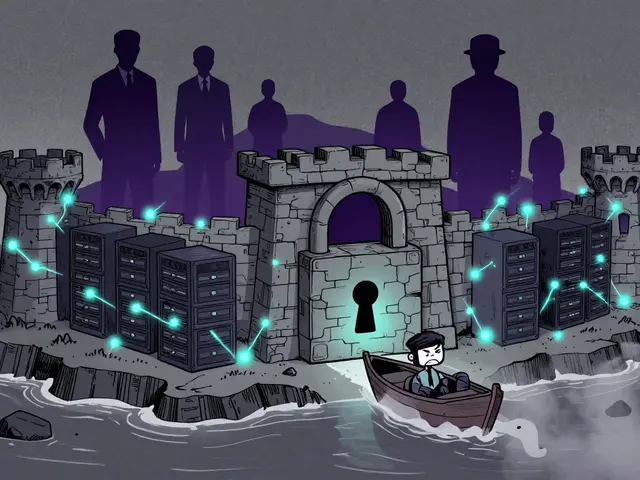
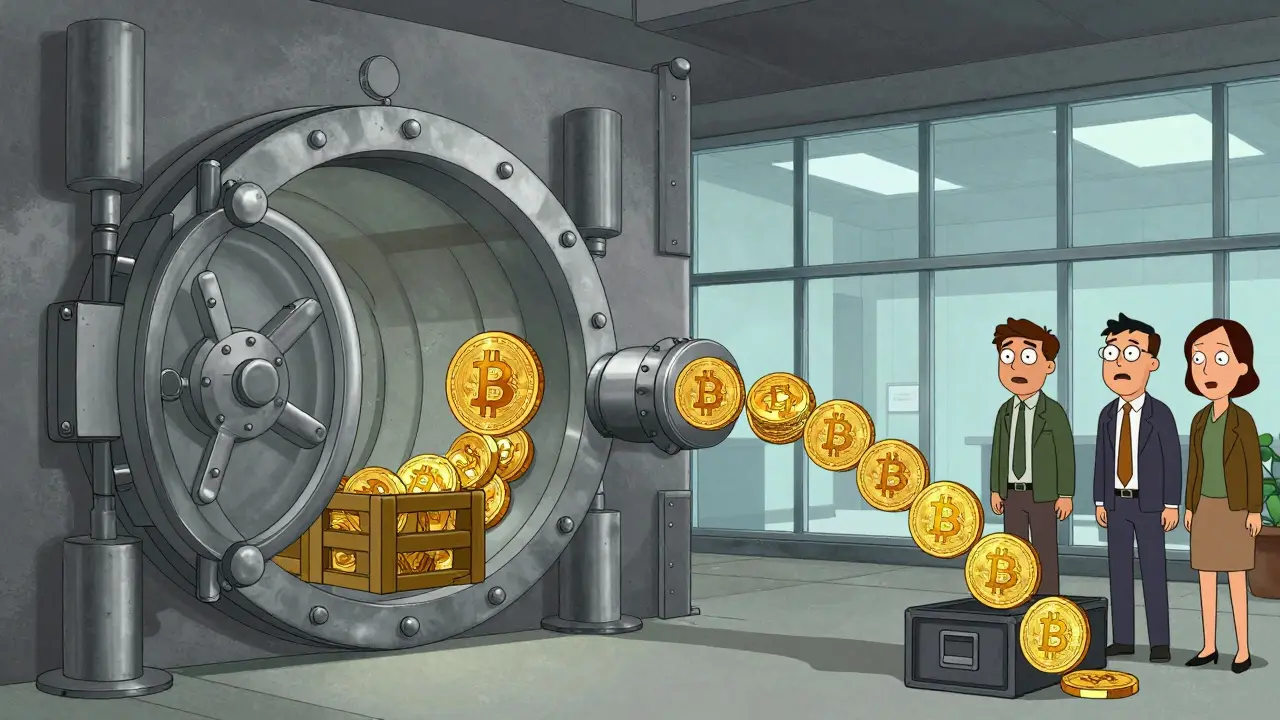
Think of the mainnet as a bank vault. It is incredibly secure, heavily guarded, and designed to hold value safely. However, getting in and out takes time. A sidechain is like a nearby office building connected to the vault by a secure tunnel. Inside the office, people can move documents, sign contracts, and conduct business much faster because there is less red tape. When the work is done, those documents can be sent back into the vault for long-term storage.
The key distinction here is independence. Unlike a fork, which creates a completely new, autonomous network that shares no ongoing connection with the original, a sidechain remains linked to the mainnet. The Komodo Platform, a pioneer in this space, emphasizes that sidechains aim to work alongside existing mainchains to achieve high levels of interoperability, rather than replacing them.
This independence means sidechains can have their own consensus mechanisms. While Bitcoin uses Proof-of-Work (PoW), a sidechain might use Proof-of-Stake (PoS) or another method. This flexibility allows developers to experiment with features that would be too risky or difficult to implement on the mainnet.
How the Two-Way Peg Works
The magic of sidechains lies in the two-way peg system. This is the bridge that locks assets on one chain and releases equivalent value on the other. Here is the step-by-step process of moving Bitcoin from the mainnet to a sidechain:
- Locking Assets: You send your Bitcoin to a special address on the mainnet known as a lockbox. These coins are effectively removed from circulation on the main network. They are not destroyed; they are just frozen.
- Verification: The network notices these locked coins. After a brief security waiting period to ensure the transaction is final, the system signals the sidechain.
- Minting Tokens: The sidechain mints an equivalent amount of tokens and sends them to your wallet on the sidechain. You now hold "wrapped" Bitcoin that functions within the sidechain ecosystem.
- Usage: You can now transact, trade, or interact with smart contracts on the sidechain. Because the sidechain is less congested, these actions happen quickly and cheaply.
- Burning and Unlocking: When you are ready to return to the mainnet, you send your sidechain tokens to a burn address. This destroys the tokens on the sidechain. In response, the lockbox on the mainnet unlocks your original Bitcoin and sends it back to your wallet.
This process ensures that the total supply of Bitcoin remains constant. For every Bitcoin locked on the mainnet, there is exactly one token circulating on the sidechain. This maintains trust and prevents inflation.
Why Do We Need Sidechains?
You might wonder why we don't just upgrade the mainnet directly. The answer lies in the trilemma of blockchain technology: balancing decentralization, security, and scalability. Improving one often hurts the others.
Sidechains solve this by offloading specific tasks. Here are the primary reasons developers and users rely on them:
- Scalability: Mainnets like Bitcoin can only process about seven transactions per second. Sidechains can handle hundreds or thousands. This reduces congestion and lowers fees dramatically.
- Experimental Features: Developers can test new technologies, such as complex smart contracts or privacy protocols, on a sidechain. If something goes wrong, the mainnet remains unaffected. Lightspark notes that this fosters experimentation without modifying core protocols of secure networks.
- Custom Consensus: Different applications require different security models. A gaming app might need instant confirmations using a lightweight consensus method, while a financial settlement layer might prioritize higher security. Sidechains allow each application to choose its own rules.
- Interoperability: They act as bridges between different ecosystems. For example, you might want to use Ethereum-based tokens in a Bitcoin-centric environment. Sidechains facilitate smoother asset exchanges between networks.
Real-World Examples: Liquid and Rootstock
To understand sidechains better, let's look at two prominent examples built on Bitcoin: Liquid Network and RSK.
| Feature | Liquid Network | Rootstock (RSK) |
|---|---|---|
| Purpose | Faster settlements for exchanges and institutions | Smart contract execution (EVM compatible) |
| Consensus Mechanism | Federated Byzantine Agreement (FBA) | Proof-of-Work (merged mining with Bitcoin) |
| Key Benefit | High throughput, low fees for large transfers | Brings DeFi capabilities to Bitcoin |
| Security Model | Trusted federation of nodes | Inherits Bitcoin's security via merged mining |
Liquid Network is designed primarily for financial institutions and exchanges. It allows them to settle trades instantly and cheaply. Instead of waiting hours for Bitcoin confirmations, exchanges can move assets on Liquid in seconds. This improves liquidity and reduces the risk of failed trades.
Rootstock (RSK) takes a different approach. It brings smart contract functionality to Bitcoin. Since Bitcoin’s native scripting language is limited, RSK uses the Ethereum Virtual Machine (EVM). This means developers who already know how to build on Ethereum can deploy decentralized applications (dApps) on Bitcoin’s security model. It essentially turns Bitcoin into a programmable platform.
Security Risks and Trust Assumptions
While sidechains offer immense benefits, they are not without risks. The most critical issue is trust. When you move assets to a sidechain, you are trusting the operators of that sidechain.
On the Bitcoin mainnet, security is distributed among thousands of miners worldwide. On many sidechains, especially those using federated pegs like Liquid, security relies on a smaller group of trusted entities (federators). If a majority of these federators collude or are hacked, they could potentially steal the locked assets. This is a centralization risk.
However, newer sidechains are addressing this. Rootstock, for instance, uses merged mining. This means Bitcoin miners can simultaneously mine blocks for both Bitcoin and RSK. This ties the sidechain’s security directly to Bitcoin’s hash rate, making it much harder to attack. As Ledger Academy points out, sidechains maintain sovereignty through independent consensus mechanisms, ensuring that a breach on the sidechain does not compromise the mainnet. But the reverse is not always true: a breach on the sidechain can lead to loss of funds for users on that specific chain.
Another risk is technical failure. Smart contracts on sidechains can have bugs. If a vulnerability is exploited, users could lose their tokens. This is why testing environments on sidechains are crucial-they allow developers to find and fix bugs before deploying to larger scales.
Sidechains vs. Layer 2 Solutions
You may have heard terms like Lightning Network or Rollups. How do they differ from sidechains?
The main difference lies in dependency. Layer 2 solutions rely entirely on the mainnet for security and finality. They bundle transactions and post proofs to the mainnet. If the mainnet goes down, Layer 2 stops working.
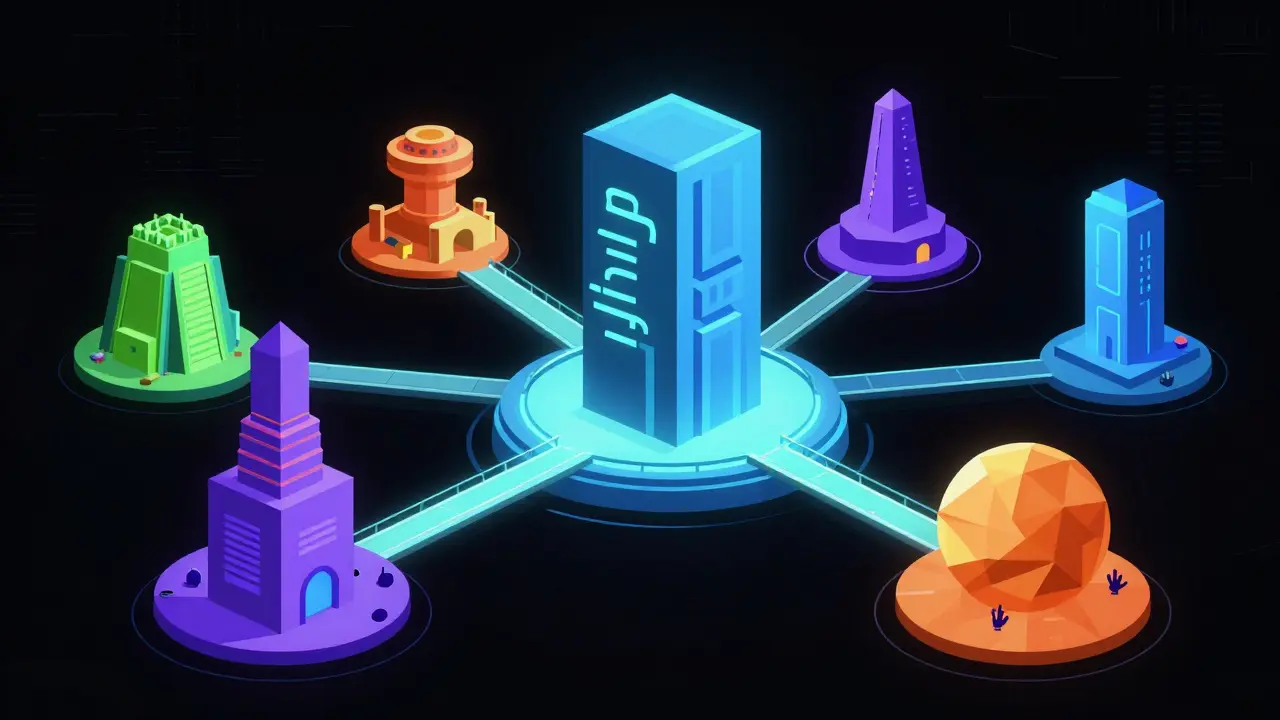
Sidechains, by contrast, are independent. They have their own blocks, their own validators, and their own finality. They only interact with the mainnet for asset transfers. This makes sidechains more flexible but potentially less secure if their consensus mechanism is weak. Layer 2s are generally considered more secure because they inherit the mainnet’s security, but they are less flexible in terms of custom rules.
For users, the choice depends on the use case. If you want maximum security and simple payments, Lightning Network (Layer 2) is ideal. If you want to run complex dApps or need custom consensus rules, a sidechain like RSK is better suited.
The Future of Sidechain Technology
As blockchain adoption grows, the demand for scalability will only increase. Sidechains are evolving to meet this challenge. We are seeing improvements in cross-chain communication protocols, making it easier to move assets between different sidechains and mainnets seamlessly.
Smart contracts are playing an increasingly important role in automating the two-way peg process, reducing the need for trusted intermediaries. Projects like Polkadot and Cosmos are introducing parachains and zones, which are advanced forms of sidechains that communicate with each other natively.
Industry analysis suggests that sidechains will remain crucial infrastructure for blockchain ecosystem growth. They provide a middle ground between the rigidity of mainnets and the fragility of standalone chains. By enabling specialized functionality and experimental features, they drive innovation without compromising the core integrity of established networks.
For everyday users, this means lower fees, faster transactions, and access to a wider range of applications. Whether you are trading on an exchange, playing a blockchain game, or using a decentralized finance protocol, sidechains are likely working behind the scenes to make your experience smoother.
Are sidechains safe for storing large amounts of crypto?
It depends on the sidechain. Sidechains with strong consensus mechanisms, like those using merged mining (e.g., Rootstock), are relatively secure. However, sidechains relying on small federations of trusted parties carry higher counterparty risk. For long-term storage of significant value, the mainnet is generally recommended. Use sidechains for active trading or specific applications, not as cold storage.
Can I lose my money if a sidechain fails?
Yes, if the sidechain suffers a critical security breach or a bug in its smart contracts, you could lose the assets held on that chain. The two-way peg protects the mainnet, but it does not guarantee the safety of funds once they are on the sidechain. Always research the security model and audit history of a sidechain before moving assets.
What is the difference between a sidechain and a fork?
A fork creates a completely new, independent blockchain that diverges from the original. Once forked, the two chains operate separately with no direct connection. A sidechain, however, remains connected to the mainnet via a two-way peg, allowing assets to flow back and forth. Sidechains are designed to complement the mainnet, whereas forks often represent ideological or technical splits.
Do sidechains reduce Bitcoin's security?
No. Sidechains are independent networks. A hack or failure on a sidechain does not affect the security of the Bitcoin mainnet. The mainnet continues to operate normally regardless of what happens on any connected sidechain. However, users must trust the sidechain's operators for the safety of their assets while they are on that chain.
Which sidechain is best for beginners?
For beginners, starting with well-established sidechains like Liquid Network (for faster transfers) or Rootstock (for smart contracts) is advisable. These platforms have robust communities, extensive documentation, and proven track records. Avoid newly launched, untested sidechains until you are more familiar with the technology and associated risks.