Have you ever wondered if your favorite video game could actually pay you back? That’s the promise behind Aether Games, a gaming-focused cryptocurrency project built around its native token, AEG. But here’s the catch: not all gaming tokens are created equal. Some are just hype with no real utility, while others offer tangible benefits like crafting materials or even a slice of the company’s profits.
Aether Games positions itself as more than just another NFT playground. It claims to be a cohesive metaverse where every game connects, and the $AEG token acts as the fuel for everything inside-from buying virtual gear to earning actual cash flow through staking. But before you rush to buy, let’s break down what this token actually does, how it works technically, and whether the "revenue-sharing" model is too good to be true.
The Core Concept: A Unified Gaming Metaverse
At its heart, Aether Games Inc. is a game development studio creating high-end titles within the crypto and NFT realm. Unlike many Web3 projects that launch isolated games, Aether Games builds a franchise-wide metaverse. This means the assets, characters, and currencies in one game should theoretically carry over or interact with others in the ecosystem.
The central entity here is the Aether Games ecosystem, which relies on the $AEG token as its backbone. Think of it as the digital currency inside a theme park. You use it to ride attractions (play games), buy souvenirs (NFTs), and trade with other visitors. The key differentiator for Aether Games is the integration of traditional gaming mechanics with blockchain ownership. When you craft an item using $AEG, you aren’t just getting a texture file; you’re minting a Non-Fungible Token (NFT) that you truly own and can sell on the Aether Marketplace.
How the AEG Token Actually Works
To understand the value of $AEG, you need to look at its specific utilities. Currently, the token serves three primary functions:
- Crafting Material: You spend $AEG to convert standard in-game items into NFTs. This adds scarcity and tradability to otherwise common loot.
- Medium of Exchange: Players use $AEG to buy, sell, or rent assets on the Aether Marketplace. If you want a rare sword from another player, you likely pay in $AEG.
- Staking for Revenue Share: This is the newest and most controversial feature. Holders can stake their tokens to receive a portion of Aether Games’ net revenue.
This shift from pure utility to financial reward marks a significant change in strategy. Initially, $AEG was just a tool for playing games. Now, it’s being marketed as an investment vehicle. The official team has announced a "New Era From Utility to Real Revenue Sharing," inviting users to stake their holdings. However, keep in mind that "net revenue" definitions can vary wildly in crypto, and the exact mechanics-like lock-up periods or distribution schedules-are often opaque until you dig into the smart contracts.
Technical Foundation: Ethereum vs. Polygon
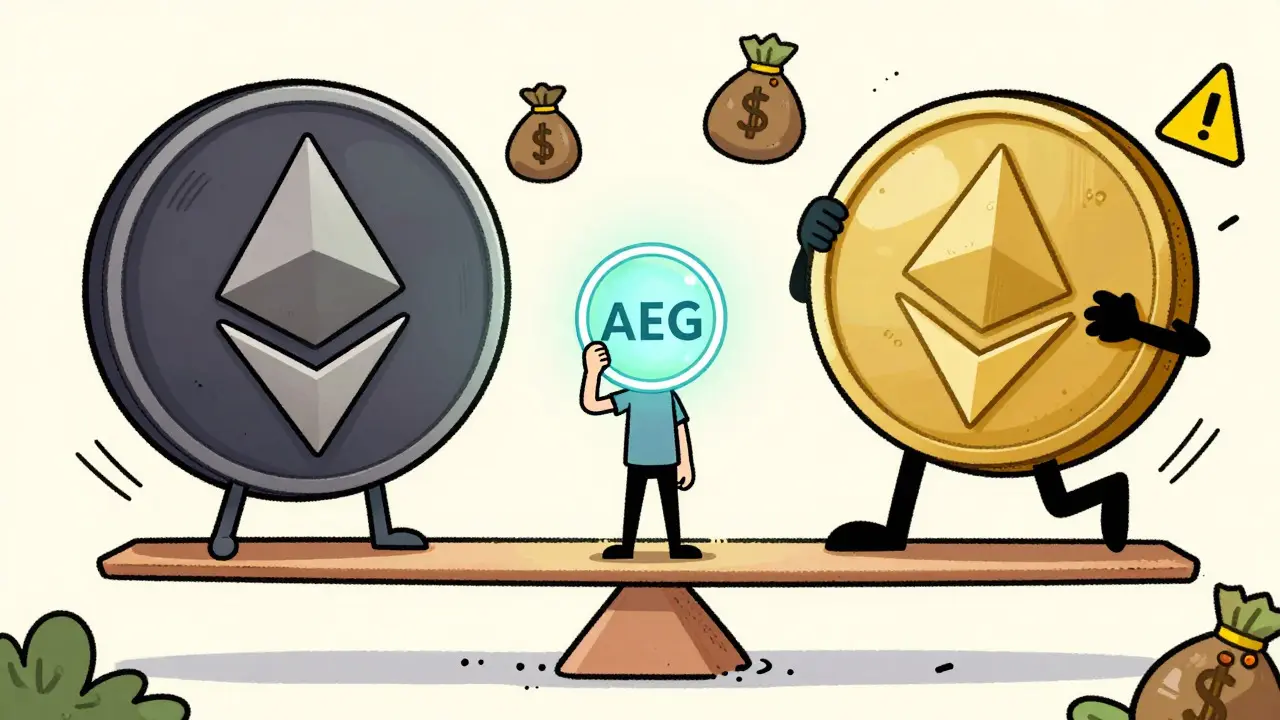
One area that causes confusion for new investors is the technical infrastructure. Is $AEG on Ethereum or Polygon? The answer is both, depending on who you ask and when you check.
Historically, $AEG is described as an ERC-20 token, which implies it lives on the Ethereum blockchain. However, recent data from exchanges like KuCoin highlights it as an ERC-20 token built specifically on Polygon. Polygon is a Layer-2 scaling solution for Ethereum, known for low transaction fees and fast processing speeds-essential features for gaming where users might make dozens of micro-transactions per day.
This multi-chain approach suggests either a migration strategy or simultaneous deployment. For the user, this means you need a wallet that supports both networks. Standard Web3 wallets like MetaMask or Atomic Wallet can handle $AEG, but you must ensure you’re connected to the correct network to avoid losing funds or paying exorbitant gas fees on mainnet Ethereum.
| Attribute | Details |
|---|---|
| Token Standard | ERC-20 |
| Primary Networks | Ethereum, Polygon |
| Max Supply | 1,000,000,000 (1 Billion) |
| Circulating Supply | ~444.89 Million (approx. 44.5%) |
| Initial Sale Price | $0.02 (IEO Feb-March 2024) |
Tokenomics and Supply Dynamics
Let’s talk numbers, because they tell a story about inflation and scarcity. The maximum supply of AEG is capped at 1 billion tokens. As of late 2025 and early 2026, approximately 444.89 million tokens were in circulation. This means roughly 55% of the supply is still locked, reserved for future releases, team vesting, or ecosystem growth.
This unallocated supply is a double-edged sword. On one hand, it shows the project has resources for long-term development. On the other hand, it represents potential selling pressure. If the team or early investors unlock large batches of tokens later, it could dilute the price unless demand grows proportionally. Always check the latest vesting schedules on platforms like CryptoRank or TokenUnlocks before making a large commitment.
The Initial Exchange Offering (IEO) took place in February and March 2024, with tokens sold at $0.02 each. Depending on current market conditions, holders have seen massive percentage gains-or losses. Volatility is the norm in small-cap GameFi tokens. One day, the market cap might spike to $14 million due to hype; the next, it could drop to under $10,000 if trading volume dries up.
Where to Buy and Trade AEG
If you decide to get involved, accessibility is relatively straightforward compared to obscure meme coins. AEG is listed on several major centralized exchanges (CEXs) including ByBit, KuCoin, and Gate.io. These platforms offer liquidity and ease of use for beginners who prefer fiat-to-crypto onboarding.
For decentralized traders, $AEG is available on Uniswap. This allows you to swap directly from your wallet without KYC (Know Your Customer) verification, though you’ll need ETH or MATIC for gas fees. Keep an eye on slippage settings when trading on DEXs, as lower liquidity pools can lead to unfavorable execution prices.
Risks and Considerations
No crypto investment is risk-free, and AEG carries specific red flags worth noting:
- Lack of Audit Transparency: While the token runs on secure chains like Ethereum and Polygon, there is limited public information regarding third-party smart contract audits for the Aether Games-specific staking contracts. Always verify audit reports before staking large amounts.
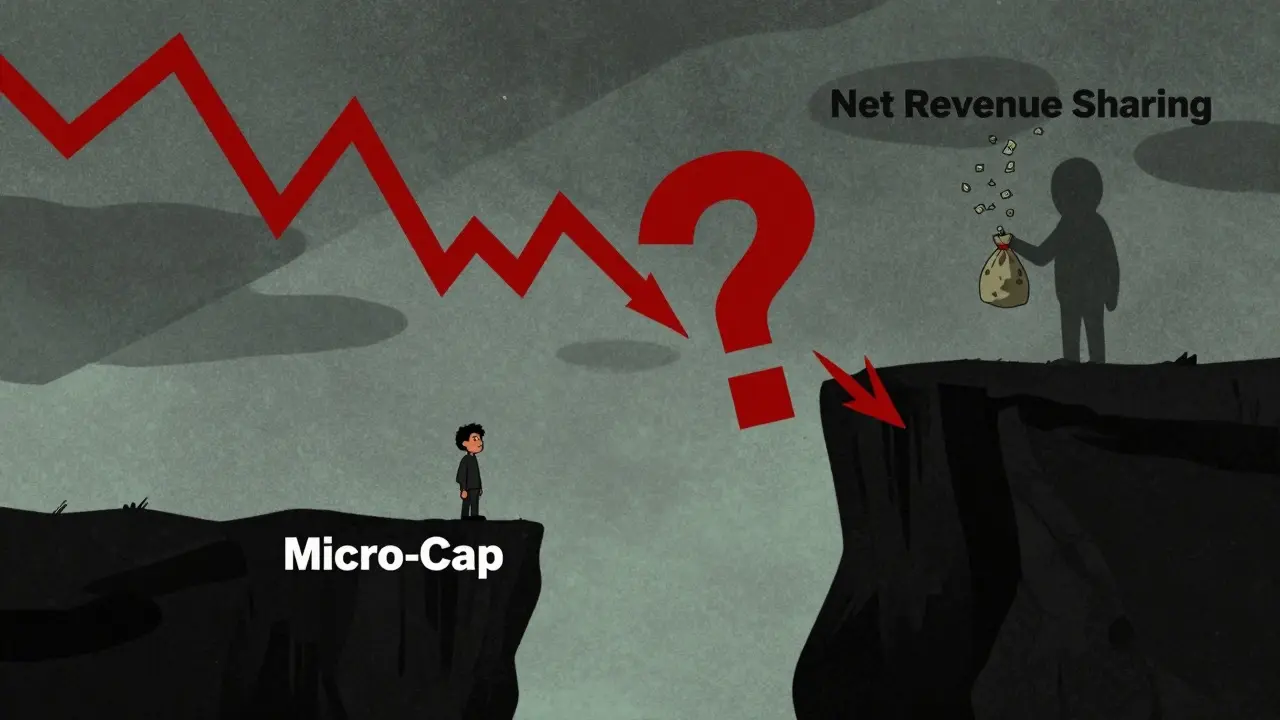
- Volatile Market Cap: With rankings fluctuating between #999 and #4600+, AEG is considered a micro-cap to low-cap asset. This means it’s highly susceptible to manipulation and rapid price swings.
- Revenue Share Ambiguity: The promise of "net revenue" sharing sounds attractive, but legal jurisdictions vary on whether this constitutes a security. Ensure you understand the tax implications in your country.
- Game Adoption Uncertainty: The value of $AEG depends entirely on people playing the games. If the titles fail to attract daily active users, the utility of the token collapses regardless of its technical merits.
Conclusion: Is AEG Worth Your Attention?
Aether Games offers a compelling vision of a unified, profitable gaming metaverse. The transition to revenue-sharing staking sets it apart from typical play-to-earn models. However, the lack of detailed technical documentation, volatile market presence, and reliance on future game success make it a high-risk proposition.
If you’re a gamer interested in Web3, start small. Use the token for crafting and marketplace activities first to test the ecosystem. Only consider staking once you’ve verified the contract safety and understand the revenue distribution mechanics. In the world of GameFi, patience and due diligence are your best weapons.
Is Aether Games (AEG) a safe investment?
Like most small-cap cryptocurrencies, AEG is considered high-risk. Its price is highly volatile, and its value depends on the success of the underlying games. Additionally, the lack of transparent smart contract audits for its staking mechanisms adds technical risk. Always do your own research and never invest more than you can afford to lose.
Which blockchain does AEG run on?
AEG is primarily an ERC-20 token, meaning it originates on Ethereum. However, it is also widely deployed on Polygon, a Layer-2 network, to reduce transaction costs and increase speed for gamers. You may find it on both networks depending on the exchange or wallet you use.
What does "revenue sharing" mean for AEG holders?
Revenue sharing means that by staking your AEG tokens, you become eligible to receive a portion of the net profits generated by Aether Games Inc. This transforms the token from a simple utility coin into a yield-bearing asset. However, the exact calculation of "net revenue" and distribution frequency should be verified in the project's official documentation.
Where can I buy AEG tokens?
You can purchase AEG on centralized exchanges such as ByBit, KuCoin, and Gate.io. For decentralized trading, it is available on Uniswap. Make sure to check the specific pairings (e.g., AEG/USDT or AEG/MATIC) and ensure your wallet supports the correct network.
What is the total supply of AEG?
The maximum total supply of AEG is fixed at 1,000,000,000 (1 billion) tokens. As of recent data, approximately 444.89 million tokens are in circulation, meaning about 55% are still locked or reserved for future distribution.