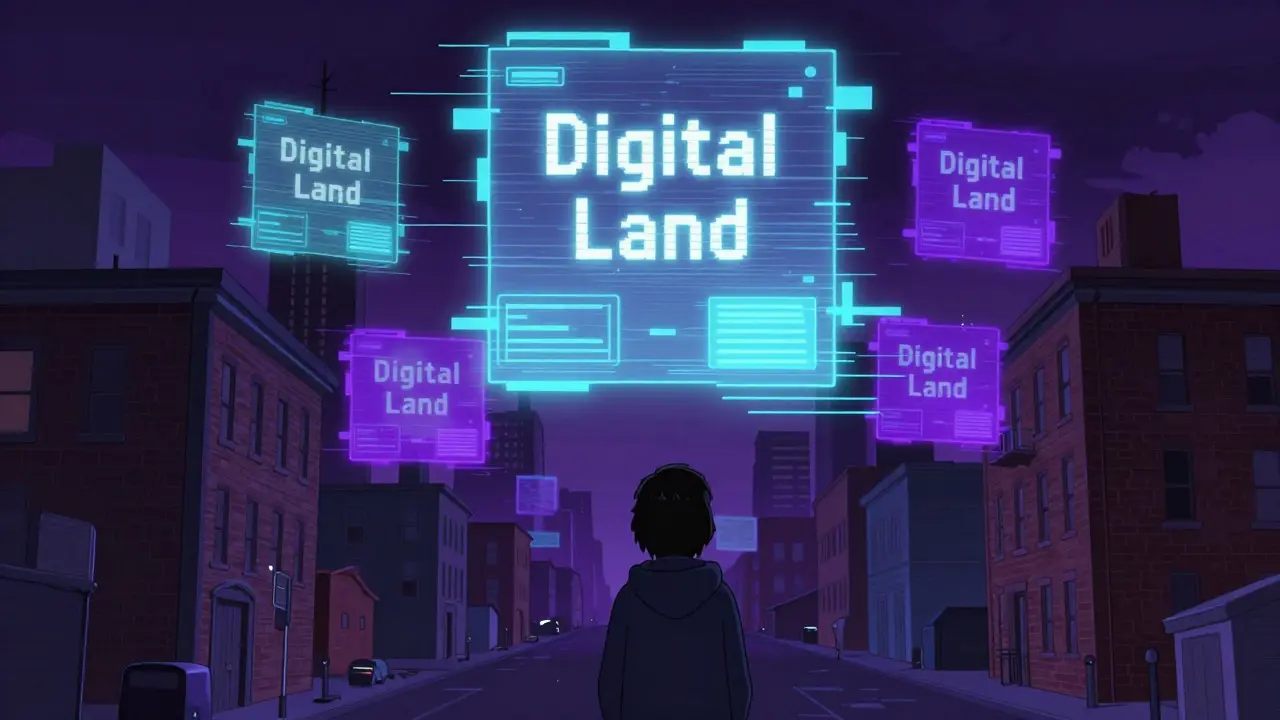
You’ve probably seen the buzz around augmented reality and blockchain merging into one ecosystem. It sounds like the future of digital ownership. But when you dig into specific projects, things get messy fast. Enter Arcona (ARCONA), a cryptocurrency that promised to bridge the physical and virtual worlds through a 'Digital Land' layer. Launched in 2017 by Piligrim XXI, a tech company focused on AR solutions, Arcona aimed to be the native currency for renting digital land, buying virtual goods, and paying for AR services. The vision was ambitious: a persistent AR layer where your digital assets stay put in the real world, verified by blockchain.
But here’s the catch. If you’re looking at ARCONA today, you’re looking at a project that has largely faded from the spotlight. The token exists, but its utility, liquidity, and community activity tell a very different story than the whitepaper once promised. Let’s break down what Arcona actually is, how it works, and whether it still holds any value in 2026.
The Core Concept: Digital Land and Persistent AR
To understand ARCONA, you have to understand the problem it tried to solve. Most early AR apps were transient. You’d open an app, see a Pokémon or a filter, close the app, and the magic vanished. There was no ownership. No persistence. Arcona wanted to change that.
The idea was simple: create a global map where developers could place digital content-ads, games, art-that stays anchored to a specific GPS coordinate. Whether you’re using an iPhone, an Android, or a specialized AR headset, you should see the same thing at the same location. This is called persistent location-based AR.
Here’s how the token fits in:
- Digital Land Rental: Businesses or creators pay ARCONA to rent a specific geographic spot to display their content.
- Virtual Goods: Users buy items within these AR experiences using the token.
- Developer Tools: Creators use ARCONA to access the SDK (Software Development Kit) needed to build these persistent layers.
It sounds logical. If you own the 'digital real estate' above a coffee shop, you can sell ads there. But execution is everything in crypto, and this is where Arcona struggled.
Technical Specs: An ERC20 Token on Ethereum
Technically, ARCONA isn’t a standalone blockchain. It’s an ERC20 token built on the Ethereum network. This means it relies on Ethereum for security and transaction processing. For users, this implies a few things:
- Wallet Compatibility: You need a wallet that supports Ethereum, like MetaMask or Trust Wallet, to hold ARCONA.
- Gas Fees: Transferring ARCONA costs ETH gas fees, which can be high during network congestion.
- Supply Cap: There are only 135 million ARCONA tokens ever created. No inflation. No new minting.
The project claimed to offer a "robust blockchain" with an "innovative consensus mechanism," but since it’s just an ERC20 token, it doesn’t have its own consensus mechanism. It inherits Ethereum’s proof-of-stake (as of 2024). This discrepancy between marketing claims and technical reality is a red flag many investors missed early on.
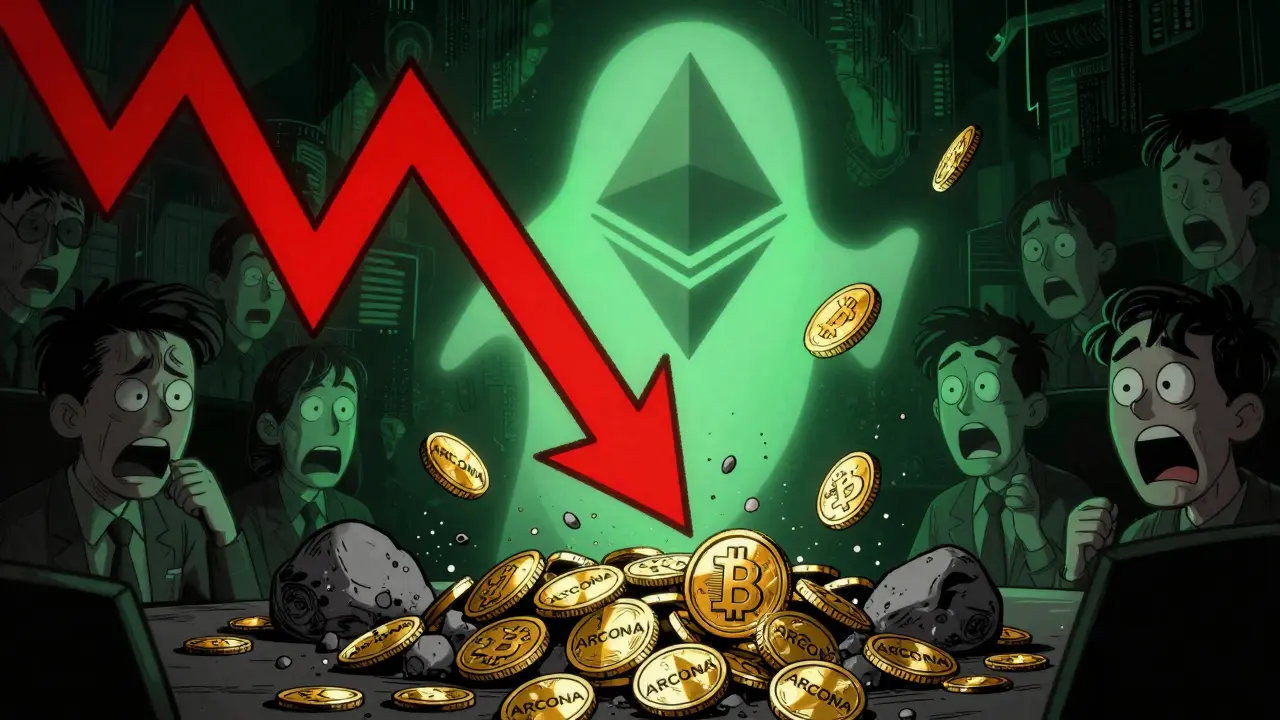
Price History and Market Reality
If you bought ARCONA during its Initial Coin Offering (ICO) in late 2017, you’re likely sitting on significant losses. Here’s the hard data:
| Metric | Value / Status |
|---|---|
| ICO Price (2017) | $1.08 per token |
| Current Price (Approx.) | $0.005 - $0.006 USD |
| Total Supply | 135,000,000 ARCONA |
| Market Cap | ~$790,000 USD |
| Primary Exchanges | Uniswap (v2), PancakeSwap (v2) |
| 24h Volume | Often under $1,000 USD |
That drop from $1.08 to roughly $0.005 represents a loss of over 99%. Why did this happen? Liquidity dried up. Major centralized exchanges delisted the token due to low trading volume. Today, if you want to buy or sell ARCONA, you’re forced to use decentralized exchanges (DEXs) like Uniswap. And here’s the kicker: because the order book is so thin, even small trades cause massive slippage. Trying to sell $50 worth of ARCONA might crash the local price by 20-30%, meaning you get far less than expected.
Development Activity: Is the Project Dead?
This is the most critical question for any crypto investor. A token without development is just a number on a screen. When we look at Arcona’s GitHub repository-the public codebase where developers share updates-we see a stark picture.
The last substantive commit was in April 2021. That’s five years ago. The official Medium blog hasn’t posted meaningful updates since Q4 2020. Community channels, like Telegram, have gone silent, dropping from hundreds of daily messages to near zero. In the fast-paced world of Web3 and AR, silence usually means abandonment.
Compare this to competitors like Decentraland (MANA) or The Sandbox (SAND). Those projects have active roadmaps, regular partnerships, and millions in daily trading volume. Arcona has none of that. While some AR experts praised the initial concept of persistent geospatial markers, the lack of follow-through killed momentum.

Who Should Avoid ARCONA?
Let’s be direct. If you’re looking for investment opportunities, ARCONA is not it. The risk profile is extreme. Here’s why:
- No Liquidity: You might not be able to sell your tokens at all, or you’ll lose half their value in slippage fees.
- No Utility: Without active development, there are no new AR experiences being built on the platform. The 'Digital Land' remains empty.
- No Support: If you encounter issues with the SDK or wallet integration, there’s no customer support team to help.
However, if you’re a developer curious about legacy AR blockchain architectures, the old documentation might still offer some insights into how early teams approached geospatial verification. But don’t expect to build a profitable app on top of it today.
Alternatives in the AR Blockchain Space
If you believe in the future of Augmented Reality and blockchain, there are healthier ecosystems to explore. Projects like Decentraland and The Sandbox have established user bases and economies. Newer entrants focusing on spatial computing and AI-driven AR are also gaining traction. These platforms offer actual liquidity, active communities, and regular updates.
Before investing time or money, always check the GitHub activity, exchange listings, and community engagement. A pretty website doesn’t equal a viable project.
Is Arcona (ARCONA) a scam?
While there’s no legal ruling labeling Arcona as a scam, it exhibits many characteristics of abandoned projects. The founders raised funds in 2017, but development stopped years ago, and the token lost 99% of its value. It’s considered extremely high-risk and potentially worthless for investors.
Where can I buy ARCONA tokens?
ARCONA is not listed on major centralized exchanges like Binance or Coinbase. You can only trade it on decentralized exchanges like Uniswap or PancakeSwap. Be warned: liquidity is extremely low, leading to high slippage and potential inability to execute trades.
What is the purpose of the ARCONA token?
Originally, ARCONA was designed to pay for digital land rentals, virtual goods, and AR services within the Arcona ecosystem. However, due to lack of development, these utilities are largely non-functional today.
Is Arcona still developing new features?
No. The last major code update was in 2021, and official communications ceased around 2020. The project appears to be inactive.
How does Arcona compare to Decentraland?
Decentraland is a thriving metaverse with billions in market cap and active users. Arcona is a niche, inactive project with minimal market presence. Decentraland offers actual economic activity; Arcona does not.