
Ever heard of a cryptocurrency project that claims its goal is literally "happiness" for billions of people? It sounds like a marketing slogan from a wellness app, but Billion Happiness (BHC) is a real blockchain project trying to make it happen. Launched on the Binance Smart Chain (BSC), this decentralized finance (DeFi) platform isn't just about trading tokens. It aims to bring blockchain technology into everyday life through physical goods, digital art, and hardware wallets.
If you are curious about what BHC actually does, how its dual-token system works, or whether it’s worth your attention in a crowded market, you’re in the right place. We’ll break down the tech, the tokenomics, and the very real risks associated with micro-cap projects like this one.
The Core Mission: Beyond Just Trading
Most cryptocurrencies focus purely on financial speculation. Billion Happiness takes a different angle. The project was created with a mission to introduce blockchain to mainstream users by solving tangible problems. Specifically, they target the counterfeit goods market.
How? By using blockchain for authenticity verification. Imagine buying a limited-edition sneaker or a designer handbag. With BHC’s ecosystem, each item comes with a digital twin-an NFT-that proves its origin. This eliminates fakes. But it doesn’t stop there. The platform also supports:
- Crypto Hardware Wallets: Physical devices for secure storage.
- Digital Artwork NFTs: A marketplace for creators and collectors.
- Wearables: Clothing integrated with blockchain tracking.
This blend of physical products and digital assets places BHC in a niche category of utility-focused DeFi projects. It’s not just a coin; it’s an ecosystem designed to bridge the gap between complex crypto tech and consumer needs.
Understanding the Dual-Token System
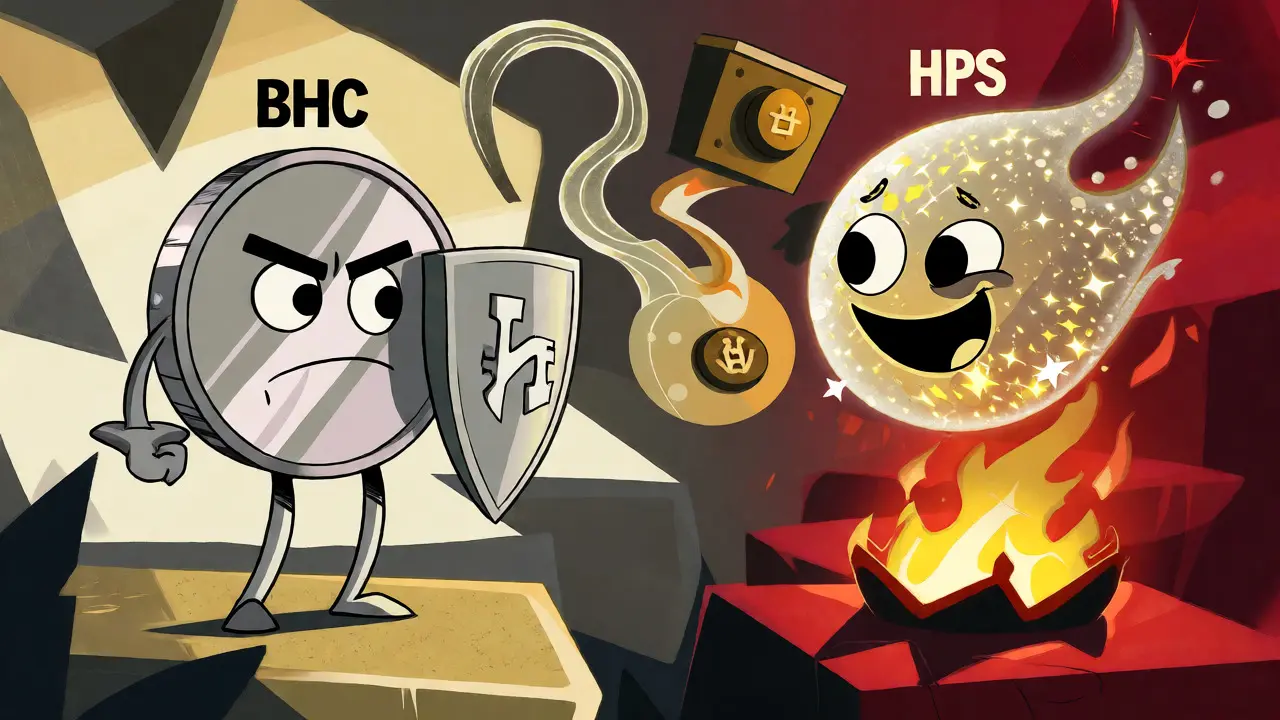
One of the first things to grasp about Billion Happiness is its two-token structure. Confusion often arises here, so let’s clear it up. The ecosystem relies on:
- BHC (Billion Happiness Coin): The primary governance and utility token.
- HPS (Happiness Points): A booster token used for rewards and ecosystem functionality.
BHC is the main asset you trade and stake. It facilitates transactions on the NFT marketplace and powers the "Emotion Pools," which are specialized liquidity pools for yield farming. HPS, on the other hand, acts as a reward mechanism. When you buy NFTs or participate in certain activities, you earn HPS. Think of BHC as the dollar bill and HPS as the loyalty points you get for spending it.
Tokenomics and Economic Model
Let’s look at the numbers. As of September 2026, BHC has a capped total supply of 50,000 tokens. All of these are currently in circulation. This scarcity is intentional, aiming to create value through limited availability rather than inflationary pressure.
The economic model uses a unique fee distribution system:
| Fee Type | Allocation | Purpose |
|---|---|---|
| Transaction Fees (50%) | BHC Buyback | Tokens are bought back and redistributed to "BHC Maxi" staking pools, rewarding long-term holders. |
| Transaction Fees (50%) | HPS Burn | Collected in HPS tokens, these are burned monthly to reduce circulating supply and create deflationary pressure. |
This structure tries to balance immediate rewards for stakers with long-term scarcity. By burning HPS regularly, the project hopes to increase demand for the remaining tokens over time.
Market Performance and Liquidity Reality Check
Here is where things get tricky. While the concept is interesting, the market data tells a story of extreme volatility and low activity. As of mid-September 2026, BHC trades at roughly $0.47 to $0.61 depending on the platform. You might see discrepancies because the token is primarily traded on decentralized exchanges (DEXs) rather than major centralized ones.
Key metrics to watch:
- Market Cap: Fluctuates around $23,000 - $28,000 USD. This makes it a micro-cap asset.
- Trading Volume: Often reported as near zero on major trackers like Binance and CoinMarketCap. This indicates very low liquidity.
- Holder Count: Approximately 12,790 addresses hold BHC. This is a small but dedicated community.
Low trading volume is a double-edged sword. On one hand, it means less price manipulation from whales. On the other, it can be hard to sell large amounts without crashing the price. If you plan to invest, understand that exiting a position might be difficult compared to more liquid coins like Ethereum or Solana.
How to Buy and Stake BHC
You won’t find BHC listed for direct trading on Binance’s main spot market. Instead, you need to use decentralized exchanges on the Binance Smart Chain. Here’s the typical process:
- Get BNB: Purchase Binance Coin (BNB) on a centralized exchange.
- Transfer to Web3 Wallet: Send BNB to a wallet like MetaMask or Trust Wallet.
- Swap on DEX: Use a platform like PancakeSwap to swap BNB for BHC.
- Adjust Slippage: Due to low liquidity, you may need to set higher slippage tolerance (e.g., 1-3%) to complete the transaction.
Once you have BHC, you can stake LP (Liquidity Provider) coins in Emotion Pools to earn both BHC and HPS rewards. Staking is central to the project’s vision of rewarding community participation.
Risks and Challenges
No crypto investment is without risk, and BHC carries specific hurdles:
- Liquidity Risk: With near-zero daily volume, selling quickly is challenging.
- Adoption Uncertainty: The physical product line (wallets, clothing) must gain traction to validate the token’s utility.
- Competition: Many other BSC-based DeFi projects offer similar NFT and staking features.
- Smart Contract Security: Always verify contract audits before committing significant funds.
The project’s success hinges on executing its roadmap: expanding the NFT marketplace and growing the user base beyond the current ~12,000 holders. Without real-world adoption of their anti-counterfeit solutions, the token remains speculative.
Is Billion Happiness (BHC) a good investment?
It depends on your risk tolerance. BHC is a micro-cap token with high potential upside if the project gains mainstream adoption, but it carries significant risks due to low liquidity and unproven mass-market appeal. It is best suited for speculative investors who can afford to lose the capital invested.
Where can I buy BHC tokens?
BHC is primarily available on decentralized exchanges (DEXs) on the Binance Smart Chain, such as PancakeSwap. It is not directly tradable on major centralized exchanges like Binance or Coinbase for spot trading.
What is the difference between BHC and HPS?
BHC is the primary governance and utility token used for staking and transactions. HPS (Happiness Points) is a secondary booster token earned through activities like NFT purchases. HPS tokens are periodically burned to reduce supply, while BHC is used for buybacks and rewards.
Does Billion Happiness solve real-world problems?
Yes, the project aims to combat counterfeiting in fashion and collectibles by providing blockchain-based authenticity verification via NFTs. However, widespread adoption of this solution is still in early stages.
What is the total supply of BHC?
The total supply of BHC is capped at 50,000 tokens. All tokens are currently in circulation, making it a scarce asset compared to many other cryptocurrencies.


musa farid
Bro this is literally the most mid project I have ever seen 😭📉 $23k market cap??? That is not a crypto that is a rounding error on my gas fees! 🤡 You guys are buying dust hoping it turns into gold but honestly? It smells like rug pull bait 🪝💸 If you cannot sell without crashing the chart to zero then what is the point of holding?? Just go buy BTC and sleep well at night instead of gambling your rent money on some "happiness" scam that nobody has heard of!! 🚫🧢