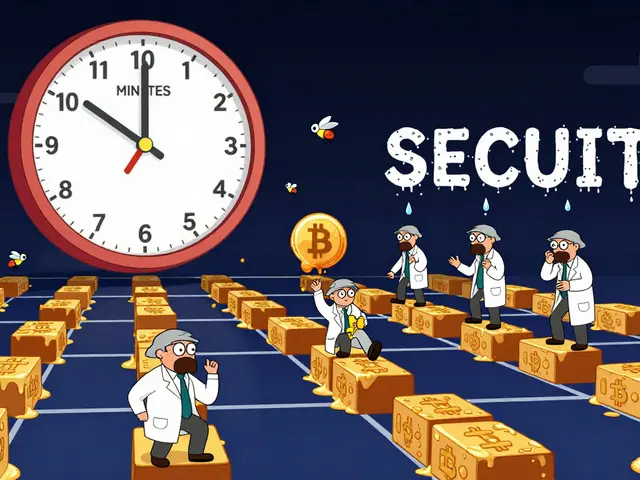
The Silent Freeze: Why Legitimate Crypto Users Are Getting Blocked
You did nothing wrong. You bought Bitcoin with your own money, held it in a reputable wallet, and decided to cash out to pay your rent. Then, the notification hit: account frozen. No warning. No explanation. Just a digital lock on your life savings. This is not a glitch; it is the new normal for cryptocurrency users in 2026.
For years, banks turned a blind eye to small crypto transactions. That era ended abruptly in 2025. Today, financial institutions are under intense pressure to police every cent that touches their systems. The result? A wave of account freezes targeting everyday users who have no malicious intent but are caught in the crossfire of aggressive anti-money laundering (AML) algorithms. If you hold crypto, you need to understand why this is happening and how to protect yourself from becoming a statistic.
The Regulatory Earthquake of 2025
To understand the freeze, you must understand the law. In mid-2025, the United States passed the GENIUS Act, formally known as the Guiding and Establishing National Innovation for U.S. Stablecoins Act. Signed into law by President Trump, this legislation was supposed to bring clarity to the crypto market. Instead, for the average user, it created a minefield.
The GENIUS Act established federal standards for stablecoins and gave regulators powerful tools to enforce them. Crucially, it defined a "lawful order" that allows authorities to seize or freeze payment stablecoins without immediate judicial review in many cases. While the act aimed to legitimize institutional crypto use, it inadvertently handed traditional banks a blunt instrument to block any transaction they deemed risky. Simultaneously, the Federal Deposit Insurance Corporation (FDIC) rescinded its old restrictive guidance in April 2025. On paper, this seemed like good news. The FDIC allowed supervised institutions to engage in crypto activities without prior approval. In reality, it shifted the burden entirely onto the banks themselves to manage risk. And when banks feel uncertain, they freeze accounts.
How Banks Catch You: The KYT Trap
Banks do not manually review your blockchain history. They rely on automated systems called Know Your Transaction (KYT) monitoring. These systems scan the entire chain of custody for your funds. Imagine you receive $1,000 from a friend. That friend received it from a stranger. That stranger sent it to a darknet market three months ago. Even though you had zero contact with the illegal activity, the KYT system flags your address as "tainted."
This concept is known as indirect exposure. Because the blockchain is transparent, every transaction is linked. If any part of that chain involves sanctioned entities, mixing services, or high-risk platforms, your bank’s algorithm triggers an automatic freeze. You are not being accused of a crime; you are being flagged as a compliance risk. The H-X Technologies operational risk analysis warns that even accidental receipt of questionable funds can lead to criminal charges. This creates a chilling effect where legitimate merchants and traders live in constant fear of their next deposit.
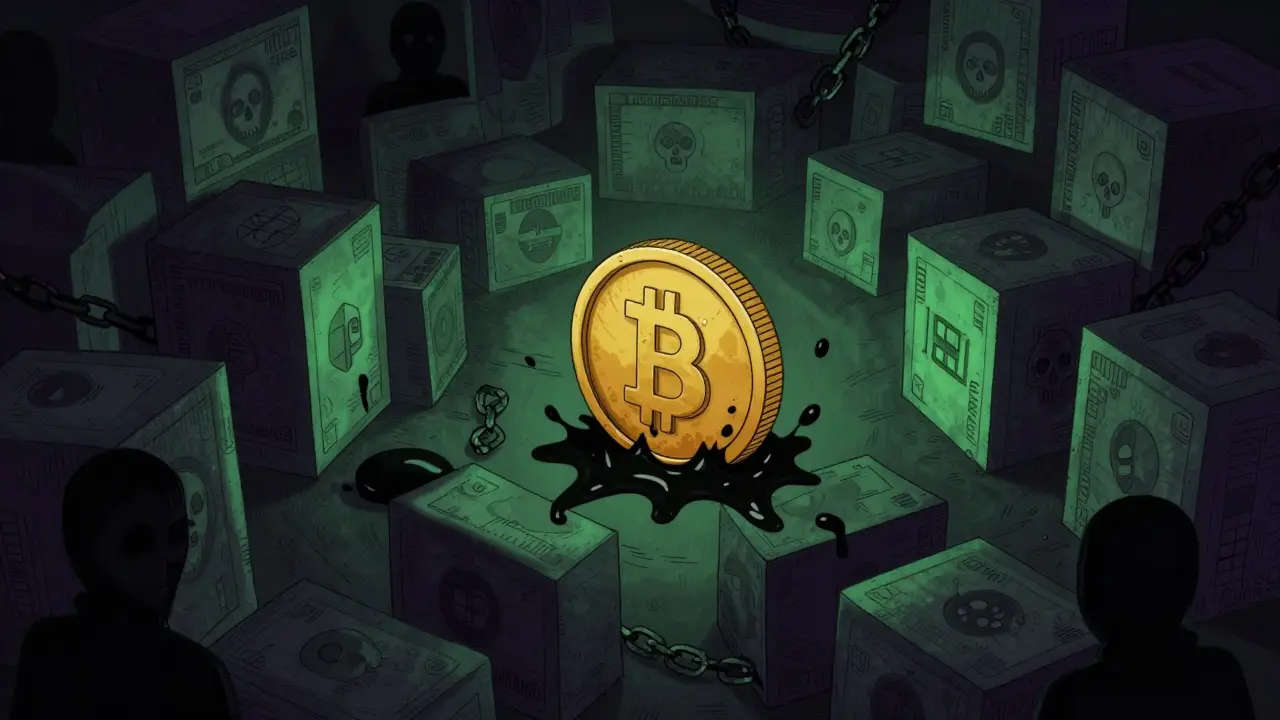
The Off-Ramp Bottleneck
The most common point of failure is the "off-ramp"-the moment you convert crypto back to fiat currency like USD or EUR. This is where the friction between decentralized finance and traditional banking becomes unbearable. Banks are required to verify the source of funds before crediting your account. For cash withdrawals or large transfers, this means submitting extensive documentation.
You might be asked to provide:
- Proof of purchase records from exchanges.
- Tax returns showing income sources.
- Wallet transaction histories going back years.
- Identification of all counterparties involved in the transfer.
If the bank cannot trace the origin of the funds to a clean, verifiable source, they will block the transaction. In severe cases, they will terminate your relationship entirely. This process can take weeks or months, leaving you unable to access your own money during what feels like a bureaucratic black hole.
| Factor | Institutional Users | Retail Users |
|---|---|---|
| Regulatory Clarity | High (covered by GENIUS Act) | Low (subject to interpretation) |
| Freeze Frequency | Rare | Frequent |
| Documentation Required | Standardized corporate filings | Ad-hoc personal proofs |
| Appeal Process | Dedicated compliance teams | General customer support |
The Bifurcated Market: Winners and Losers
The current regulatory landscape has created a two-tier system. On one side, major financial institutions like JPMorgan Chase, Bank of America, and Wells Fargo are exploring joint stablecoin ventures. They have the resources to build robust compliance infrastructure and navigate the complex rules set by the GENIUS Act and FDIC guidelines. For them, crypto is a business opportunity.
On the other side, retail users face increasing scrutiny. The same laws that protect big banks often leave individuals vulnerable. Critics point out that while the GENIUS Act clarifies tokenized deposits, it leaves the secondary market largely unregulated. This creates loopholes that bad actors exploit, forcing banks to cast a wider net. Consequently, innocent users get swept up in the dragnet. The disparity is stark: institutions gain regulatory clarity while individuals lose financial freedom.

Protecting Yourself: Practical Steps
You cannot control the regulations, but you can control your behavior. Here is how to minimize the risk of an account freeze in 2026:
- Use Reputable Exchanges: Only buy and sell through major, regulated exchanges that comply with KYC/AML laws. Avoid peer-to-peer (P2P) platforms unless you fully understand the risks.
- Keep Records: Maintain detailed logs of every transaction. Save receipts, tax documents, and wallet addresses. If your bank asks for proof, you should be able to provide it within 48 hours.
- Avoid Mixing Services: Never use privacy coins or mixing services. These are instant red flags for compliance algorithms. Stick to transparent transactions.
- Separate Accounts: Consider using a dedicated bank account for crypto-related activities. This limits the damage if a freeze occurs, protecting your primary checking account.
- Communicate Early: If you plan to make a large deposit, notify your bank in advance. Provide context before the algorithm flags the transaction.
The Future of Crypto Banking
The trend is clear: regulation will only tighten. The GENIUS Act was just the beginning. With additional legislation like the CLARITY Act pending, expect more specific rules governing how banks handle crypto assets. The FDIC plans to update interagency documents throughout 2026, suggesting continued evolution in enforcement strategies.
Industry analysts predict that this pressure will drive more individual users toward decentralized finance (DeFi) platforms. DeFi operates outside traditional banking infrastructure, meaning no bank can freeze your assets. However, DeFi comes with its own risks, including smart contract vulnerabilities and lack of consumer protection. The choice is becoming less about preference and more about survival. As traditional banks become increasingly hostile to crypto, users must decide whether to adapt to strict compliance regimes or move entirely off-grid.
The genie is out of the bottle. Crypto is here to stay, but the price of admission is higher than ever. By understanding the mechanics of account freezes and taking proactive steps, you can protect your financial future. Stay informed, stay compliant, and stay vigilant.
Why did my bank freeze my account for receiving crypto?
Your bank likely froze your account due to automated Know Your Transaction (KYT) systems flagging your funds as "tainted." This happens if any previous owner of those funds was involved in suspicious activity, such as darknet markets or sanctioned entities. The bank acts to mitigate its own compliance risk under the GENIUS Act and AML regulations.
What is the GENIUS Act and how does it affect me?
The GENIUS Act is a 2025 U.S. federal law regulating stablecoins. It gives regulators power to issue "lawful orders" to freeze crypto assets. For you, it means banks have clearer legal authority to block transactions they deem risky, leading to stricter enforcement and more frequent account freezes for retail users.
Can I appeal a crypto-related account freeze?
Yes, but the process is difficult. You must provide extensive documentation proving the source of your funds and demonstrating that you had no involvement in illicit activities. Contact your bank's compliance department immediately and submit all requested records. Resolution can take weeks or months.
Is it safer to use DeFi instead of banks?
DeFi eliminates the risk of bank freezes because there is no central authority to block your funds. However, DeFi carries different risks, such as smart contract bugs, hacking, and lack of insurance. It offers more control but requires greater technical expertise and self-responsibility.
Did the FDIC change its stance on crypto in 2025?
Yes. In April 2025, the FDIC rescinded its previous restrictive guidance, allowing banks to engage in crypto activities without prior approval. However, this shift placed the burden of risk management squarely on the banks, leading them to implement stricter internal controls and more aggressive freezing practices to protect themselves.