
Imagine running a cryptocurrency exchange that is also a bank. For years, this was a regulatory nightmare in the United States. Then came Wyoming. In 2020, Kraken became the first crypto exchange to receive a state-chartered bank license in the U.S., all thanks to Wyoming crypto-friendly laws. This wasn't an accident. It was the result of deliberate legislative engineering designed to turn the smallest state in America into the "Delaware of Digital Asset Law." If you are building a blockchain business, understanding why founders flock to Cheyenne is no longer optional-it's a strategic necessity.
Why Wyoming? The Regulatory Sandbox Effect
Most states treat cryptocurrency like a wild west frontier or, worse, try to shoehorn it into outdated money transmitter laws. Wyoming took a different approach. Since 2018, the state legislature has passed over a dozen specific bills addressing everything from token sales to corporate governance. The goal wasn't just to allow crypto; it was to define it. By providing clear legal definitions where federal regulators have been slow to act, Wyoming reduced uncertainty. And in the crypto world, uncertainty is expensive.
The state’s population is under 600,000 people, yet it hosts some of the most sophisticated fintech regulations in the country. Why does this matter to you? Because compliance costs drop when the rules are clear. You don't need a team of lawyers guessing whether your token is a security or a utility if the statute already tells you. This clarity attracts capital. Venture capitalists prefer jurisdictions where their exit strategies aren't threatened by sudden regulatory shifts. Wyoming offers that stability through codified law rather than administrative discretion.
The Core Pillars: Virtual Currency and Digital Assets Acts
At the heart of Wyoming's framework are two major pieces of legislation: the Virtual Currency Act and the Digital Asset Act. These laws do more than just legalize Bitcoin; they integrate it into the existing financial infrastructure.
The Virtual Currency Act exempts activities involving virtual currency from traditional Money Transmitters Act requirements, provided certain conditions are met. This exemption is huge. Money transmission licenses are costly and time-consuming to obtain. By carving out an exception for pure virtual currency transactions, Wyoming lowered the barrier to entry for startups. Meanwhile, the Digital Asset Act legally classifies digital assets as property. This classification resolves tax ambiguities and allows banks to custody these assets without violating fiduciary duties.
| Legislation | Primary Function | Regulatory Body |
|---|---|---|
| Virtual Currency Act | Exempts VC from Money Transmitter Act; defines VC | Wyoming Division of Banking |
| Open Blockchain Token Law | Carves out consumptive tokens from securities laws | Secretary of State / Banking Division |
| DAO Supplemental Bill | Recognizes DAOs as legal entities | Secretary of State |
| SPDI Framework | Creates special purpose digital institution charters | Wyoming Division of Banking |
Decentralized Autonomous Organizations (DAOs) Get Legal Personhood
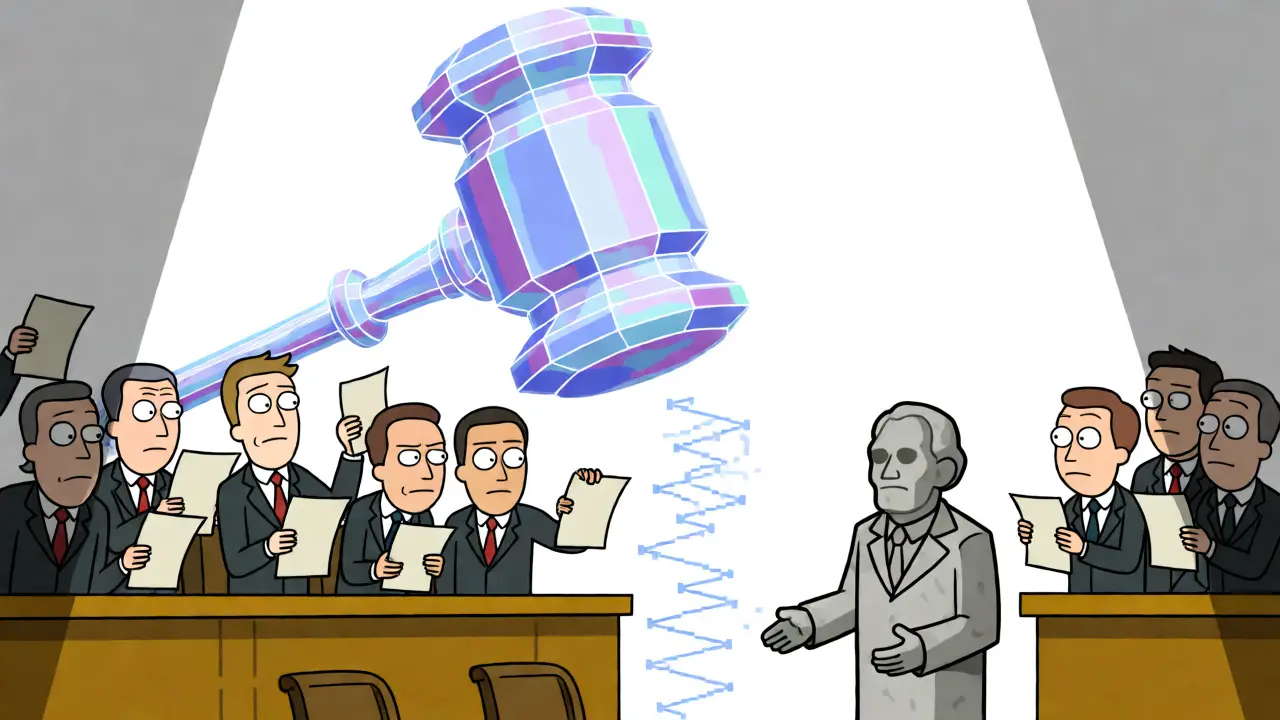
If you've ever tried to incorporate a decentralized group, you know the pain. Who signs the contract? Who gets sued? Wyoming solved this with its DAO Supplemental Bill, passed in 2021. This law grants legal personhood to Decentralized Autonomous Organizations. It allows a DAO to register as a limited liability company (LLC). This means your code can now be a recognized legal entity capable of entering contracts, owning property, and shielding members from personal liability.
This isn't just theoretical. Projects like BitDAO and others have looked to Wyoming structures to bridge the gap between on-chain governance and off-chain legal reality. The Secretary of State handles these registrations, treating them similarly to standard LLCs but with provisions for smart contract-based governance. For developers and community managers, this removes the friction of needing a central CEO to sign paperwork. The smart contract itself becomes part of the operating agreement.
The SPDI Charter: Custody Without the Bank Risk
One of Wyoming's most innovative tools is the Special Purpose Digital Institution (SPDI) charter. Traditional banks struggle with crypto because deposit insurance rules and lending restrictions don't fit the asset class. An SPDI is a hybrid. It can custody digital assets and provide payment services, but it cannot lend out those assets or take deposits insured by the FDIC. This structure protects consumers while allowing institutions to operate efficiently.
Kraken’s approval in 2020 proved this model works. To get an SPDI charter, you must maintain strict liquid asset reserves and contingency accounts. The Wyoming Division of Banking oversees this, ensuring that customer assets are segregated from the company’s own funds. This segregation is critical after collapses like FTX, where commingled funds destroyed trust. For businesses, the SPDI route offers a path to institutional legitimacy without the full burden of a national bank charter.
Tax Advantages and Corporate Flexibility
Let’s talk money. Wyoming has no state income tax and no corporate income tax. For a blockchain startup burning cash on development and marketing, this is a significant runway extender. But beyond the lack of taxes, the state offers flexible corporate structures. The Series LLC framework allows a single parent LLC to create separate series, each with its own records and liabilities. This is perfect for holding multiple digital assets or launching distinct projects under one umbrella without cross-contamination of risk.
Furthermore, Wyoming recognizes blockchain records as valid corporate books. You can maintain shareholder registers on-chain. Voting rights can be exercised via network address or private key. This reduces administrative overhead. No more mailing paper ballots for shareholder meetings. Everything happens programmatically, auditable, and transparent. While other states are still debating whether a blockchain ledger counts as a "book," Wyoming already accepts it as the source of truth.

Pitfalls and Practical Considerations
Is Wyoming perfect? Not quite. First, you still have to deal with federal regulators. The SEC and CFTC do not care about your state charter if your token is deemed a security at the federal level. Wyoming provides clarity, not immunity. Second, physical presence matters. While remote formation is possible, having a registered agent and sometimes a local office helps with banking relationships. Some traditional banks remain wary of crypto-heavy clients, even in Wyoming.
Also, consider the ecosystem depth. Wyoming is small. Hiring specialized talent locally might require remote work arrangements or relocation incentives. However, the University of Wyoming has stepped up, offering courses in blockchain technology and fostering a pipeline of talent interested in this niche sector. The community is tight-knit, which can be an advantage for networking but a limitation for scaling large teams quickly.
What’s Next: The Stable Token Commission
Wyoming isn't resting on its laurels. The state is actively developing its own stablecoin, the WYST (Wyoming Stable Token). Scheduled for launch around 2025-2026, this initiative aims to create a publicly issued stable token backed by short-term U.S. Treasuries. This move signals that Wyoming intends to stay ahead of the curve, moving from regulating private actors to participating directly in the digital economy.
For businesses, this creates new opportunities for integration. Imagine settling transactions using a state-backed stablecoin with known liquidity and reserve audits. It reduces counterparty risk associated with private stablecoins like USDT or USDC. Keep an eye on the Wyoming Stable Token Commission for updates on adoption protocols and API integrations.
Checklist: Is Wyoming Right for Your Business?
- Token Type: Do you issue utility tokens or non-securities? Wyoming’s Open Blockchain Token law may offer exemptions.
- Custody Needs: Do you hold customer assets? An SPDI charter might provide necessary credibility.
- Governance Model: Are you fully decentralized? The DAO LLC structure saves legal headaches.
- Capital Structure: Do you need to segregate risks across multiple projects? Use Series LLCs.
- Federal Compliance: Have you consulted a federal securities lawyer? State law doesn't override SEC rulings.
Do I need a physical office in Wyoming to start a crypto business?
No, you do not strictly need a physical office to form an entity. You need a registered agent with a physical address in Wyoming. However, for banking purposes and obtaining certain licenses like an SPDI, having a local presence or strong ties to the state can facilitate smoother regulatory interactions and banking relationships.
Does Wyoming law protect me from SEC enforcement?
No. Wyoming state law operates independently of federal securities law. If the SEC determines your token is a security, they can still pursue enforcement actions regardless of your Wyoming registration. Wyoming provides clarity on state-level issues like money transmission and corporate governance, but it does not grant immunity from federal oversight.
What is the cost difference between a Wyoming LLC and a Delaware LLC?
Both are low-cost options compared to states like California or New York. Wyoming generally has lower annual franchise fees and no state income tax. Delaware charges a flat annual franchise tax based on authorized shares, which can become expensive for large cap structures. For many early-stage crypto startups, Wyoming is cheaper to maintain long-term due to the absence of complex share-based taxation calculations.
Can any crypto company get an SPDI charter?
Not necessarily. The SPDI application process is rigorous. Applicants must demonstrate robust custody solutions, sufficient capital reserves, and compliance programs. The Wyoming Division of Banking reviews applications closely. It is best suited for established companies with significant assets under management, not necessarily early-stage startups looking for a quick license.
How does Wyoming handle NFTs legally?
The Digital Asset Act broadly defines digital assets, which encompasses NFTs. As long as the NFT represents a right or interest in property and meets the criteria for being a digital consumer asset or virtual currency, it falls under Wyoming's protective framework. Specific classification depends on the underlying rights conveyed by the NFT smart contract.






Harish Ramaiah
Wow... this is actually helpful?? 😳 I usually hate reading these corporate crypto blogs, but the part about the SPDI charter not allowing lending? That's HUGE. 🏦💸 Finally someone admits that banks shouldn't be gambling with our deposits!! 😤🙌 The FTX collapse was pure greed, and Wyoming seems to get it. 👍✨