Have you ever executed a trade on Uniswap only to watch your profit vanish into gas fees and slippage? If so, you’ve likely encountered the fragmented nature of decentralized finance. This is exactly where 1inch Exchange steps in. It isn’t just another trading platform; it’s a sophisticated decentralized exchange (DEX) aggregator that sources liquidity from multiple platforms to secure the best possible rates for users. Founded by Sergej Kunz, 1inch has evolved from a simple swap tool into a critical infrastructure provider for the entire DeFi ecosystem.
As of late 2026, the landscape has shifted. While many still use the 1inch front-end, co-founder Sergej Kunz noted that most business now flows through API integrations. Major players like Binance, Coinbase, and MetaMask rely on 1inch’s backend to process non-custodial swaps. But for the individual trader, does using the direct interface still make sense? Let’s break down how this aggregator works, why its routing algorithms matter, and whether it deserves a spot in your daily trading routine.
How the Pathfinder Algorithm Saves You Money
The core magic of 1inch lies in its proprietary technology, specifically the Pathfinder algorithm. Unlike traditional exchanges that show you one price based on their own order book, Pathfinder scans hundreds of liquidity pools across dozens of blockchains simultaneously. It doesn’t just look for the lowest price; it calculates the most efficient route to get there.
Here is where things get interesting. The algorithm can split a single large trade into multiple smaller transactions across different exchanges-say, 40% on Uniswap, 30% on SushiSwap, and 30% on Balancer. By doing this, it avoids moving the market price too drastically on any single pool, which significantly reduces slippage. In June 2025, an update to this discovery algorithm claimed up to 6.5% better swap rates compared to previous versions. For a trader swapping $10,000 worth of ETH, that difference is real money staying in your pocket.
Beyond just finding routes, the platform integrates complex multi-path routing. If buying Token A directly is expensive, Pathfinder might suggest swapping Token A to Token B, then Token B to Token C, and finally Token C to your target asset if the total cost is lower. This level of arbitrage automation was previously reserved for high-frequency trading bots, but 1inch makes it accessible to anyone with a wallet.
Cross-Chain Swaps and Gas Optimization
Fragmentation isn’t just about different exchanges; it’s about different blockchains. Moving assets between Ethereum, Solana, and Binance Smart Chain used to be a nightmare of bridging risks and double gas fees. 1inch Bridge solves this by allowing fast, secure transfers between networks. More recently, the launch of intent-based cross-chain swaps connected Solana and Ethereum Virtual Machine (EVM) networks directly.
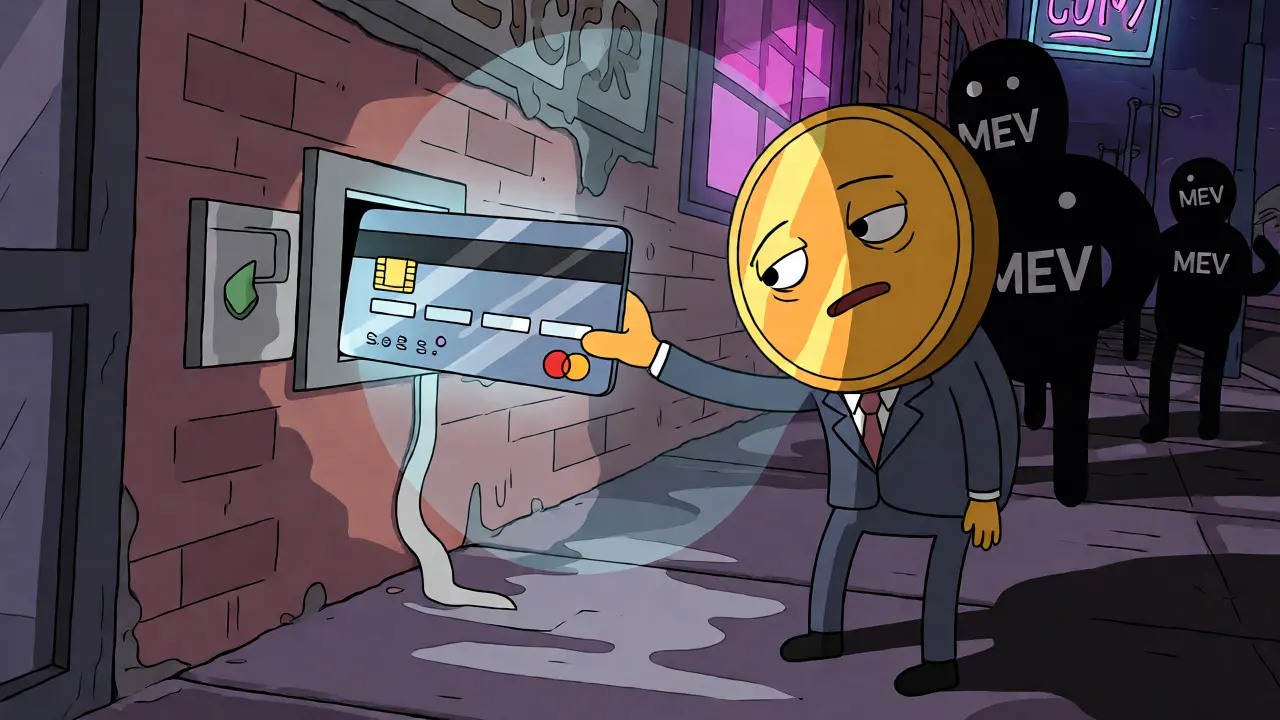
A standout feature here is MEV (Maximum Extractable Value) protection. On public blockchains, bots often see pending transactions and jump ahead of them (front-running), forcing you to pay more. 1inch’s architecture includes protections against this, ensuring you don’t get outbid by predatory bots during volatile markets. Additionally, the platform offers zero gas fees for certain cross-chain swaps, a significant advantage when network congestion drives costs up.
For those stuck on Ethereum mainnet, the Chi Gastoken system helps reduce transaction costs. By leveraging flash loans and token burning mechanisms, 1inch identifies the most gas-efficient routes, sometimes saving users 20-30% on transaction fees compared to standard execution.
The Ecosystem: Wallet, Portfolio, and Card
While the swap engine is the heart, the surrounding ecosystem adds substantial utility. The 1inch Wallet is a mobile-first application available on iOS and Android. It’s not just a storage solution; it integrates directly with the aggregator, letting you execute optimized swaps without leaving the app. Users appreciate the clean UI, though some newcomers find the depth of features initially overwhelming.
Another notable addition is the 1inch Card, a partnership with Mastercard that allows users to spend digital assets at traditional merchants. This bridges the gap between speculative holding and actual spending power. Whether you choose a physical or virtual card, it supports major cryptocurrencies, converting them to fiat at the point of sale.
| Feature | Standard DEX (e.g., Uniswap) | 1inch Exchange |
|---|---|---|
| Liquidity Source | Single Protocol | Aggregated from 100+ DEXs |
| Trade Routing | Direct Swap | Multi-path Splitting |
| Cross-Chain Support | Limited/Native Only | 13+ Networks via Bridge |
| Gas Optimization | Basic Estimates | Advanced Chi/Gas Tokens |
| MEV Protection | Vulnerable | Fusion Mode Integration |
Governance and the 1INCH Token
You can’t discuss 1inch without mentioning the 1INCH token. This ERC-20 token serves as the governance backbone of the protocol. Holders vote on proposals, upgrades, and treasury management, making the platform truly community-driven. Beyond voting, staking 1INCH tokens grants access to a portion of the platform’s transaction fees, creating a passive income stream for long-term holders.
The roadmap indicates further utility expansion. The upcoming liquidity protocol will require 1INCH usage, potentially driving demand. However, investors should note that tokenomics in DeFi are volatile. While the utility is strong, the token’s value fluctuates with broader market sentiment. It’s less of a "get rich quick" play and more of a bet on the continued growth of decentralized infrastructure.
User Experience and Security Concerns
Is it safe? 1inch maintains high security standards, having undergone multiple audits. The team collaborates with leading security firms to ensure smart contract integrity. Customer support is accessible via Telegram and email, which is crucial when dealing with irreversible blockchain transactions.
Reviews from 2025 and 2026 consistently praise the platform’s reliability. BlockchainReporter.net highlighted its trustworthiness in the DeFi space, while CoinBureau noted the intuitive design despite the underlying complexity. That said, CryptoAdventure pointed out that beginners might struggle with concepts like slippage tolerance and gas settings. The interface hides much of this complexity, but understanding what’s happening under the hood prevents costly mistakes.
If you’re new to DeFi, start with small trades to understand how the splitting mechanism affects your receipt. Don’t blindly accept default slippage settings during high volatility. Always check the final output amount before confirming the transaction in your wallet.
Is 1inch better than centralized exchanges like Binance?
It depends on your priority. Centralized exchanges offer ease of use and fiat on-ramps. 1inch excels in offering better prices for altcoins and maintaining self-custody of your funds. For large trades of obscure tokens, 1inch usually beats centralized venues due to aggregated liquidity.
Does 1inch charge extra fees for aggregation?
1inch applies a small service fee (typically around 0.3%) on top of the underlying DEX fees. However, because they find better rates, the net cost after accounting for slippage savings is often lower than trading on a single DEX.
Can I use 1inch without connecting my wallet?
No, as a decentralized platform, 1inch requires a Web3 wallet connection (like MetaMask or Trust Wallet) to execute trades. You retain full control of your private keys throughout the process.
What is MEV protection in 1inch Fusion?
Fusion mode uses off-chain resolvers to fill orders. This prevents bots from seeing your transaction in the mempool and front-running it, effectively protecting you from MEV attacks and often reducing gas costs.
Which blockchains does 1inch currently support?
As of 2026, 1inch supports over 13 networks, including Ethereum, Polygon, Arbitrum, Optimism, Avalanche, BNB Chain, and Solana. Cross-chain swaps are increasingly seamless thanks to recent bridge updates.
Final Verdict: Who Should Use 1inch?
1inch Exchange remains a powerhouse in the DeFi sector. It’s ideal for traders who prioritize getting the best price and are comfortable managing their own keys. The shift toward becoming an infrastructure provider validates its technical superiority-even big exchanges use its tech under the hood.
If you are a beginner, the learning curve is manageable but steep compared to Coinbase. Start with the portfolio tracker to get familiar with the ecosystem. For active traders, the Pathfinder algorithm and gas optimizations provide tangible financial benefits that outweigh the slight increase in operational complexity. In a world where every basis point counts, 1inch gives you the tools to win.