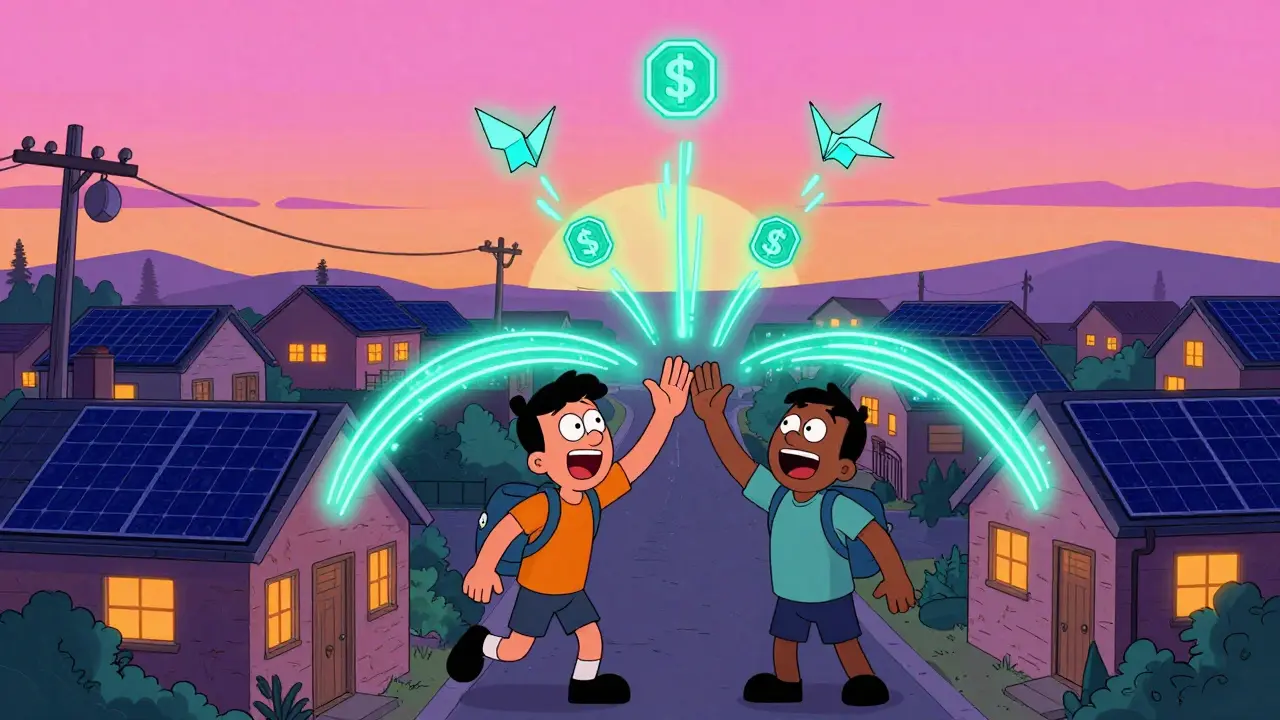
Imagine your home solar panels selling excess power directly to your neighbor-no utility company, no middleman, no monthly bill hikes. That’s not science fiction. It’s already happening because of decentralized infrastructure.
For years, we’ve relied on centralized systems: one company owns the grid, one cloud provider stores your data, one city controls traffic lights. But these systems have cracks. They’re slow, expensive, and break down when one part fails. Decentralized infrastructure flips that model. Instead of one boss in charge, thousands of devices, people, and machines work together using blockchain technology to share control, data, and rewards.
What Exactly Is Decentralized Infrastructure?
Decentralized infrastructure means no single entity owns or controls the system. Think of it like a neighborhood potluck instead of a catered banquet. Everyone brings something. Everyone gets to eat. And no one person can cancel the meal.
This isn’t just about cryptocurrency. It’s about real-world systems: energy grids, internet networks, cloud computing, even traffic sensors. These systems use blockchain to record transactions, verify identities, and automate rules through smart contracts. IBM calls it a “shared and immutable ledger” that only authorized participants can access. That means data can’t be secretly changed. No one can delete your energy usage record. No cloud provider can shut off your access without consensus.
Projects like Hivemapper let drivers earn crypto by uploading street footage, building a free, open alternative to Google Maps. DIMO lets car owners control their vehicle data and sell it directly to developers. Shell and J.P. Morgan are testing blockchain-powered EV charging stations where cars pay each other directly-no credit card, no corporate fee.
Lower Costs, Fewer Middlemen
Centralized systems are expensive because they need layers of bureaucracy: sales teams, billing departments, compliance officers, data centers. Each layer adds cost. Decentralized systems cut those out.
According to IBM’s case studies, blockchain-based systems reduce transaction costs by 30-50%. Why? Because they remove intermediaries. In energy, peer-to-peer networks let homeowners sell solar power to neighbors at 15-25% less than utility rates. In cloud computing, decentralized networks like Filecoin or Akash offer computing power at 20-35% lower prices than AWS or Google Cloud.
And it’s not just about price. It’s about fairness. When you use a centralized cloud, you’re at the mercy of their pricing changes. With decentralized cloud, you’re part of the network. You can even rent out your spare computer power and earn crypto in return.
Better Security, Less Risk of Failure
One server goes down, and half the internet goes dark. That’s what happened in 2021 when a single cloud provider had an outage that took down Netflix, Slack, and major banks for hours.
Decentralized infrastructure doesn’t have that single point of failure. Data is copied across hundreds or thousands of nodes. To break it, you’d need to hack every single one at once-impossible with current technology.
IBM found that blockchain implementations reduce data breach risks by 25-40% compared to traditional databases. Why? Because access is controlled by cryptography, not passwords. Your identity is tied to a private key, not an email. If one node gets compromised, the rest keep working. The system doesn’t collapse.
This resilience matters most in critical infrastructure. In 2023, a European smart city project failed because 15 different agencies couldn’t agree on a single central system. A decentralized version could’ve let each agency keep control of their own data while still sharing what was needed.
Empowering the Unconnected
Two billion six hundred million people-over a third of the world-still don’t have reliable internet. Traditional providers won’t build infrastructure where profits are low. But decentralized networks don’t need big upfront investment.
Hivemapper works in rural areas because it uses phone cameras and mobile data. People earn crypto just by driving around. In Kenya, a project called Helium lets residents set up low-power wireless hotspots and get paid in tokens. No telecom company needed. No monthly fee. Just a device, a power source, and a Wi-Fi signal.
The International Telecommunication Union says this is one of the few models that can actually reach the unconnected. Because the incentive isn’t corporate profit-it’s direct reward to the user.
Transparency That Can’t Be Faked
Ever wonder how your food got from farm to store? Or whether your cloud provider is really using renewable energy? Centralized systems rarely show you the truth.
Decentralized systems make everything visible. Every energy transfer, every data request, every payment is recorded on a public ledger. You can verify it yourself.
Shell’s EV charging pilot lets users see exactly how much energy was used, who paid for it, and when. No hidden fees. No surprise charges. Just transparent, verifiable records. That kind of trust doesn’t come from a logo on a website. It comes from code that can’t be altered.
Where It Falls Short
Decentralized infrastructure isn’t magic. It has real limits.
Speed is one. Blockchains like Ethereum handle 15-50 transactions per second. Visa handles 24,000. So if you’re trying to run a stock exchange or a high-frequency trading platform, blockchain isn’t ready yet.
Complexity is another. Setting up a decentralized energy grid requires engineers who understand both power systems and smart contracts. Most companies spend 6-12 months just getting teams trained. The University of Surrey found that while costs drop over time, the initial setup is expensive and slow.
And then there’s regulation. The EU has clear rules for crypto-based systems under MiCA. The U.S. doesn’t. That uncertainty scares off big investors. Some projects fail not because the tech doesn’t work-but because no one knows if it’s legal.

Who’s Using This Right Now?
It’s not just startups. Big players are in.
- Shell is testing blockchain for EV charging stations that auto-pay when you plug in.
- COBASE is building decentralized AI infrastructure that keeps data in the UK and India to meet GDPR rules.
- IBM uses blockchain to cut supply chain tracking from days to seconds.
- Hivemapper has mapped over 80% of U.S. roads using user-contributed data.
These aren’t experiments. They’re working models. And they’re saving money, reducing waste, and giving power back to users.
The Future: AI, Machines, and Autonomous Systems
The next leap? Machines talking to machines.
Karina Fernandez at Shell says we’re heading toward “AI-to-AI interactions.” Imagine a smart grid that automatically adjusts energy flow based on weather forecasts, car charging needs, and factory demand-all without humans stepping in.
Decentralized infrastructure makes that possible. It gives AI agents a trusted way to exchange data, make payments, and coordinate actions. No central server. No single point of control. Just autonomous systems working together.
That’s the real promise. Not just cheaper services. But systems that adapt, self-heal, and evolve without needing permission from a boardroom.
How to Get Started
If you’re curious, you don’t need to build a grid from scratch.
- Try Hivemapper-download the app, drive around, earn crypto for mapping your neighborhood.
- Use Akash Network to rent cheaper cloud computing power for your projects.
- Join Helium and set up a hotspot to help build a decentralized internet.
For businesses: Start small. Pick one process-like tracking shipments or managing energy use-and test a blockchain solution. Don’t try to replace your whole system overnight. Focus on where the current system is slow, expensive, or opaque.
The learning curve is steep. But the payoff? More control, lower costs, and systems that don’t break when one company fails.
Is decentralized infrastructure the same as blockchain?
Not exactly. Blockchain is the technology that enables decentralized infrastructure, but not all blockchain projects are infrastructure. Decentralized infrastructure refers to real-world systems-like energy grids, internet networks, or cloud computing-that use blockchain to distribute control and automate operations. Blockchain is the ledger; decentralized infrastructure is the entire system built on top of it.
Can decentralized infrastructure replace AWS or Google Cloud?
It’s already starting to. Platforms like Akash and Filecoin offer cloud computing and storage at 20-35% lower prices than AWS or Google Cloud. They’re not as feature-rich yet, but for developers who need raw computing power without vendor lock-in, they’re a strong alternative. The trade-off is less customer support and fewer pre-built tools.
Why aren’t more companies using decentralized infrastructure?
Three main reasons: complexity, regulation, and speed. Most companies don’t have staff who understand both blockchain and their core operations. Regulations are unclear in places like the U.S., making legal teams nervous. And blockchains are slower than traditional databases-so for high-speed needs like stock trading, they’re not ready yet. But for supply chains, energy, and data sharing, they’re already beating centralized systems.
Do I need to buy cryptocurrency to use decentralized infrastructure?
Sometimes, but not always. Many platforms let you pay in traditional currency for services like cloud storage or data access. But if you want to earn rewards-like contributing data to Hivemapper or running a hotspot on Helium-you’ll need to hold or earn crypto tokens. These tokens are how the system incentivizes participation. Think of them like loyalty points that actually have market value.
Is decentralized infrastructure environmentally friendly?
It depends. Early blockchains like Bitcoin used a lot of energy. But most modern decentralized infrastructure uses proof-of-stake or other low-energy consensus methods. Projects like Hivemapper and Helium use minimal power. In fact, decentralized energy grids that let homes sell solar power reduce waste and lower overall demand on fossil-fuel plants. The environmental impact is often better than centralized systems.
What’s the biggest risk with decentralized infrastructure?
The biggest risk isn’t the tech-it’s the people. If you lose your private key, you lose access forever. There’s no “forgot password” button. Also, poorly designed token economies can create speculation instead of real utility. And if regulators crack down on crypto rewards, some projects could shut down overnight. The tech is solid. The human and legal pieces are still evolving.







surendra meena
THIS IS THE FUTURE!!! WHY ARE WE STILL PAYING BIG TECH TO TELL US WHAT TO DO?!?!?!!? THEY’RE STEALING OUR DATA, OUR ENERGY, OUR LIVES!!! DECENTRALIZE OR DIE!!!