
When you send Bitcoin, why does it take minutes - sometimes over an hour - to show up in the recipient’s wallet? It’s not a glitch. It’s not slow internet. It’s because of something called block time.
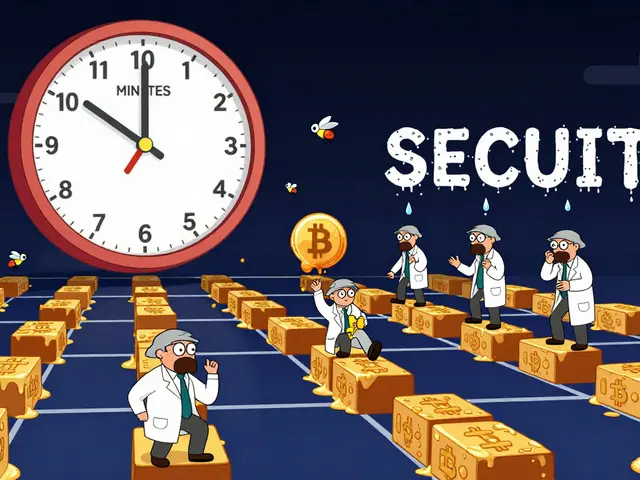
Block time is the average time it takes for a new block to be added to the blockchain. In Bitcoin, that number is 10 minutes. Not 8. Not 12. Exactly 10. That’s not an accident. It’s a deliberate design choice that shapes everything about how fast your transactions move through the network.
Why 10 Minutes? It’s a Trade-Off
Satoshi Nakamoto didn’t pick 10 minutes because it felt right. He picked it because it balanced three things: security, decentralization, and speed. Faster blocks mean faster payments. But they also mean more network problems.
Think of it like this: every time a miner finds a new block, they broadcast it to the whole network. Other miners need to receive it, verify it, and start building on top of it. If blocks come too fast - say, every 30 seconds - some miners might not hear about the latest block before they start mining the next one. That creates forks: two different versions of the blockchain that temporarily exist at the same time. Most get resolved quickly, but it’s still a risk. More forks mean more chances for double-spends, wasted mining work, and network instability.
Bitcoin’s 10-minute block time gives the network enough time to spread new blocks across the globe, even with slow connections in remote areas. It reduces the chance of forks. And that makes the chain more secure.
How Block Time Limits Transaction Speed
Let’s say you send 0.5 BTC. Your transaction sits in a pool of unconfirmed transactions. Miners pick transactions from that pool and bundle them into a block. But they can only add one block every 10 minutes on average. And each block is capped at 1 MB - about 2,000 transactions max.
That gives Bitcoin a theoretical maximum of around 7 transactions per second. Compare that to Visa, which handles over 1,700 transactions per second. Bitcoin wasn’t built to compete with credit cards. It was built to be a secure, decentralized settlement layer.
When demand goes up - during a price surge, a NFT drop, or a major event - the mempool (the waiting room for transactions) fills up. Suddenly, you’re not just waiting for the next block. You’re waiting for your turn in line. And to get ahead, you have to pay higher fees. That’s why during peak times, fees spike from $0.50 to $10 or more. It’s a market: those who need speed pay more.
How the Network Keeps Block Time Stable
Bitcoin doesn’t rely on humans to adjust the block time. It uses a smart algorithm called difficulty adjustment. Every 2,016 blocks - roughly every two weeks - the network checks: “Did blocks come in faster or slower than 10 minutes on average?”
If miners are solving blocks too quickly (because more hash power joined the network), the difficulty goes up. That means miners need to do more math to find the next block. If blocks are taking longer (miners left, or hardware failed), the difficulty drops. It’s automatic. It’s self-correcting.
This system ensures that even if Bitcoin’s mining power doubles overnight, the average block time stays at 10 minutes. That predictability is what makes Bitcoin reliable. You can plan around it. If you need a transaction confirmed, you know it’ll likely take 10 to 60 minutes for six confirmations - the standard for high-value transfers.

What Happens When Block Time Is Shorter?
Not all blockchains use 10 minutes. Ethereum, for example, has a block time of around 12 seconds. That’s over 50 times faster than Bitcoin. But Ethereum pays a price.
Shorter block times mean more orphaned blocks - blocks that get abandoned because another miner found a block just before them. That wastes energy and reduces miner rewards. It also makes the network more vulnerable to attacks. With less time to propagate blocks, malicious actors have a better chance of manipulating the chain.
Some blockchains, like Solana or Ripple, use block times under 5 seconds. They’re fast. But they rely on fewer validators or centralized infrastructure to make it work. That sacrifices decentralization - the core promise of blockchain.
Bitcoin’s 10-minute block time isn’t the fastest. But it’s the most balanced. It keeps the network open to anyone with a cheap computer, while still being secure enough to protect billions in value.
Real-World Impact: What Users Experience
If you’re sending Bitcoin to pay for coffee, 10 minutes feels too slow. That’s why services like Starbucks or PayPal don’t accept Bitcoin directly. They use Layer 2 solutions like the Lightning Network, which processes payments instantly off-chain.
But if you’re transferring $10,000 from one exchange to a cold wallet? You want that 10-minute block time. You want six confirmations. You want the network to be slow enough that an attacker can’t reverse the transaction.
Most users don’t realize that confirmation time isn’t fixed. One block might take 5 minutes. The next might take 18. That’s normal. The 10-minute average is just a long-term trend. Your transaction could confirm in 2 minutes or take 20. It’s probabilistic, not scheduled.
That’s why wallets show you estimated times - not guarantees. They look at current network congestion and fee levels to guess when your transaction might be picked up. But they can’t promise it.

How the Industry Is Adapting
Bitcoin’s block time hasn’t changed. But the ecosystem has evolved around it.
The Lightning Network lets users open payment channels and send dozens of transactions in seconds, settling only the final balance on Bitcoin. That’s why Bitcoin is now called “digital gold” - not for daily spending, but for secure, long-term value transfer.
Other blockchains fill the gap. Ethereum handles smart contracts. Solana does fast DeFi trades. Polygon supports low-fee NFT marketplaces. Bitcoin stays slow on purpose - and that’s why it still works.
Instead of changing block time, developers built on top of it. That’s the real lesson: block time isn’t a flaw. It’s a feature. It’s the foundation that lets Bitcoin survive 15 years of attacks, crashes, and hype.
What You Should Do
- If you’re sending a small amount (< $100), one confirmation might be enough. Wait 10 minutes.
- If you’re moving a large sum, wait for at least six confirmations. That’s about 60 minutes. Don’t rush it.
- Use fee estimators in your wallet. They’ll tell you how much to pay for fast, medium, or slow confirmation.
- For everyday payments, consider using Lightning or a stablecoin on a faster chain.
- Don’t blame Bitcoin for being slow. It’s designed that way - and that’s why it’s still here.
Why does Bitcoin take 10 minutes to confirm a transaction?
Bitcoin’s 10-minute block time is a deliberate design choice to ensure network security and decentralization. It gives miners enough time to propagate new blocks across the globe, reducing the risk of forks and double-spends. This delay is the trade-off for a trustless, tamper-resistant system. While it limits transaction speed, it protects the integrity of the entire blockchain.
Can Bitcoin ever be faster than 10 minutes per block?
Technically, yes - but changing it would break Bitcoin’s security model. A shorter block time would increase orphaned blocks, reduce decentralization, and make the network more vulnerable to attacks. The Bitcoin community has consistently rejected changes to block time because the 10-minute interval has proven stable for over 15 years. Instead of altering it, scaling solutions like the Lightning Network handle fast payments off-chain.
Why do transaction fees go up when the network is busy?
Bitcoin blocks are limited to about 1 MB, which fits roughly 2,000 transactions. When more people send transactions than can fit in one block, they compete for space. Users who want faster confirmation raise their fees to incentivize miners to include their transaction first. This creates a fee market - the higher the demand, the higher the fees. It’s not a bug. It’s how the system allocates scarce block space.
How many confirmations are needed for a Bitcoin transaction to be safe?
For small transactions under $100, one confirmation (about 10 minutes) is usually enough. For larger transfers - like buying a car or moving funds between exchanges - six confirmations (about 60 minutes) is the industry standard. Each confirmation adds another block on top of yours, making it exponentially harder to reverse. After six, the chance of a successful attack is less than one in a trillion.
Do other blockchains have different block times?
Yes. Ethereum confirms blocks every 12 seconds, Solana every 400 milliseconds, and Litecoin every 2.5 minutes. These networks prioritize speed over Bitcoin’s security model. But they often sacrifice decentralization - using fewer validators, centralized infrastructure, or weaker consensus mechanisms. Bitcoin’s 10-minute block time is slower, but it’s the most decentralized and secure among major blockchains.
Block time isn’t just a number. It’s the heartbeat of Bitcoin. Slow? Yes. But that slowness is what keeps it alive. Every minute it takes to confirm a transaction is a minute the network stays secure. And in a world full of fast, fragile systems, that’s worth something.





Jesse VanDerPol
I've been holding BTC for years and never thought about why it takes 10 minutes. This post finally made it click. It's not broken. It's engineered. The fact that it stays consistent despite mining surges is wild. I used to think it was inefficient. Now I see it as intentional stability.