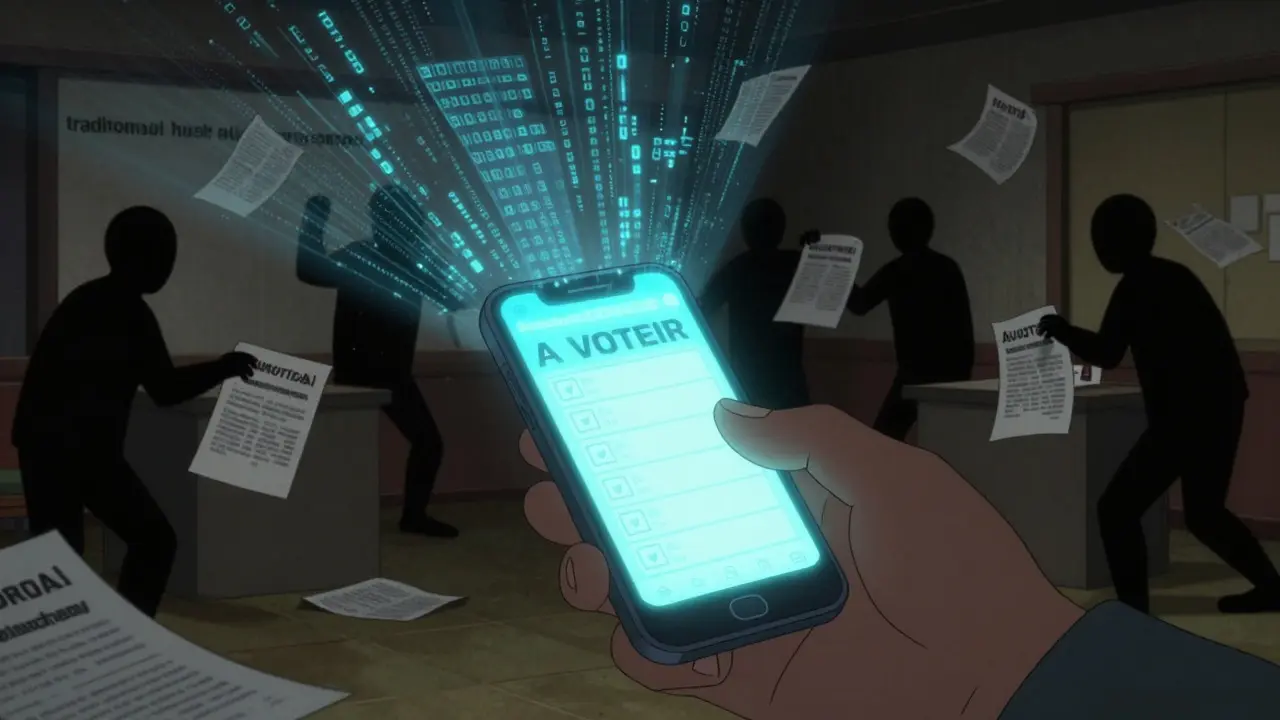
Imagine casting your vote from your phone, knowing for a fact that no one can change it, delete it, or even see who you voted for. That is the promise of Blockchain, a technology originally built for cryptocurrency that now offers a radical solution to one of democracy’s oldest problems: trust. Traditional elections rely on paper ballots and centralized counting centers. While familiar, these systems have vulnerabilities. Paper can be lost or altered. Centralized servers can be hacked. Human error happens. Blockchain changes the game by creating a system where every vote is recorded permanently, transparently, and securely across a network of computers, making tampering nearly impossible.
The Core Problem with Traditional Voting Systems
To understand why blockchain matters, we first need to look at what goes wrong in current systems. Most countries use a mix of paper ballots and electronic tallying machines. The issue isn’t just about fraud; it’s about opacity. When votes are collected and counted in a central location, citizens must trust that the process was handled correctly. But trust is fragile. In recent years, concerns about cyberattacks on election infrastructure have grown. A single breach in a central server could theoretically alter thousands of votes without immediate detection. Furthermore, verifying results often requires waiting days or weeks for audits, leaving room for doubt and political tension.
Traditional systems also struggle with accessibility. Elderly voters, those with disabilities, or citizens living abroad often face significant barriers to casting a ballot. Electronic voting machines (EVMs) were introduced to solve this, but they created new risks. If an EVM software has a bug or is compromised by malware, the entire election result can be skewed. We need a system that combines the accessibility of digital voting with the security of physical records. This is where distributed ledger technology steps in.
How Blockchain Creates an Immutable Record
At its heart, blockchain is a distributed ledger that records transactions in blocks linked together by cryptography. Think of it as a shared digital notebook that everyone can read, but only authorized users can write to. Once a page (or block) is filled and added to the book, it cannot be erased or changed. To alter a past entry, a hacker would need to change that entry on more than half of all the computers in the network simultaneously. For a global network, this is computationally impractical.
In the context of elections, each vote is treated as a transaction. When you cast your vote, it is encrypted and sent to the blockchain. Here is how the process ensures integrity:
- Decentralization: Instead of one central server storing votes, copies of the ledger are stored on thousands of nodes (computers) worldwide. There is no single point of failure.
- Immutability: Once a vote is recorded, it gets a unique cryptographic hash. Any attempt to change that vote would change its hash, alerting the entire network to the tampering.
- Transparency: Anyone can verify that the total number of votes matches the number of eligible voters, without seeing individual choices. This allows for real-time auditing by independent observers.
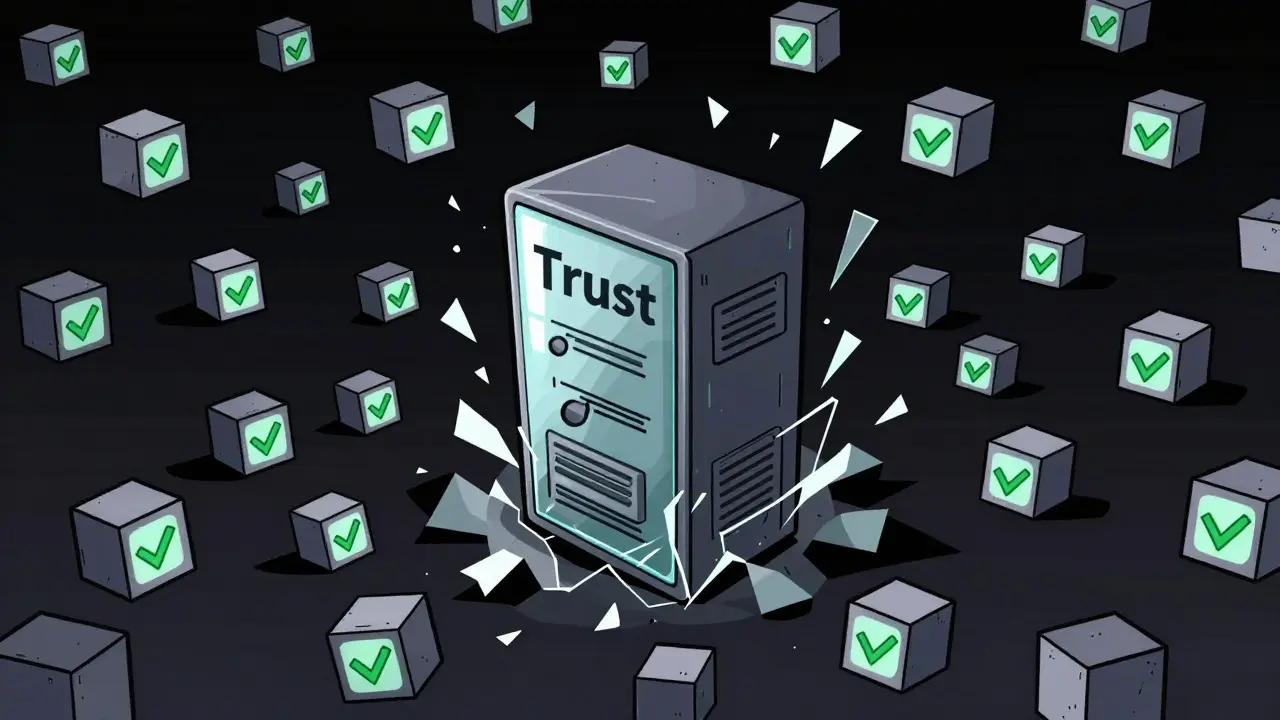
This structure eliminates the need to trust a single authority. You don’t need to trust the government, the tech company, or the election commission. You trust the math and the code. As long as the underlying protocol is secure, the data remains intact.
The Role of Smart Contracts in Automating Trust
Blockchain doesn’t just store data; it can execute logic through Smart Contracts, which are self-executing contracts with the terms of the agreement directly written into code. In an election, smart contracts automate critical steps that are usually handled by humans, reducing the risk of bias or error.
For example, a smart contract can handle voter eligibility. Before you can vote, the system checks your identity against a secure database. If you are registered and haven’t already voted, the smart contract unlocks your ability to cast a ballot. Once you submit your vote, the contract immediately locks your status as "voted," preventing double-voting. This automation ensures that rules are applied consistently to every single voter, regardless of their location or background.
Furthermore, smart contracts can manage the tabulation process. Instead of waiting for human counters to tally paper ballots, the blockchain automatically aggregates the encrypted votes. The final result is generated by the code itself, based on the immutable records. This speed and accuracy reduce the window for disputes and misinformation campaigns that often thrive in the vacuum between election day and certified results.
Identity Verification and Voter Privacy
A common concern with digital voting is anonymity. How do we know who is voting without revealing how they voted? Blockchain solves this using advanced cryptographic techniques like Zero-Knowledge Proofs. This technology allows the system to verify that you are a legitimate voter without exposing your personal identity or your specific choice.
Here is how it works in practice:
- Registration: During registration, your identity is verified using traditional methods (ID cards, biometrics). This verified identity is then linked to a unique, anonymous public key on the blockchain.
- Voting: When you vote, you sign the transaction with your private key. The blockchain recognizes the signature as valid but does not link it back to your name in the public record.
- Anonymity: Your vote appears on the ledger as an encrypted string. Only the aggregated results are decrypted at the end. Individual votes remain hidden.
This approach protects against coercion. If someone forces you to vote a certain way, you can show them a receipt that proves you voted, but not for whom. Meanwhile, the system prevents duplicate votes because each public key can only be used once per election. This balance of verifiability and privacy is crucial for maintaining democratic standards.

Challenges and Real-World Implementation
Despite the technical elegance, implementing blockchain voting is not without hurdles. The technology is powerful, but it requires robust infrastructure. One major challenge is scalability. Blockchains like Ethereum can handle thousands of transactions per second, but a national election might require millions. Solutions like Layer 2 scaling protocols are being developed to handle this load, ensuring that voting apps don’t crash during peak hours.
Another issue is the "garbage in, garbage out" problem. Blockchain secures the vote after it is cast, but it doesn’t protect the device you use to cast it. If your computer has malware that changes your selection before it reaches the blockchain, the immutable record will simply preserve the wrong choice. This means user education and secure hardware remain essential components of any blockchain voting strategy.
Regulatory frameworks are also lagging behind. Governments need to establish legal standards for digital signatures, audit trails, and dispute resolution. Pilot programs in countries like Estonia have shown promising results for local elections, but scaling to national levels requires careful planning and public trust building. Citizens need to see transparent audits and independent security reviews before they feel comfortable moving away from paper ballots entirely.
| Feature | Paper Ballots | Traditional Electronic Voting | Blockchain Voting |
|---|---|---|---|
| Tamper Resistance | Moderate (physical access needed) | Low (centralized servers vulnerable) | High (decentralized, cryptographic) |
| Auditability | Slow, manual recount | Limited, opaque logs | Real-time, public verification |
| Accessibility | Low (requires physical presence) | Moderate (limited locations) | High (remote voting possible) |
| Cost | High (logistics, personnel) | Moderate (hardware maintenance) | Variable (initial setup high, long-term low) |
| User Trust | High (familiar) | Mixed (black box concerns) | Growing (needs education) |
The Future of Democratic Participation
As we move further into the digital age, the demand for secure, accessible, and transparent voting mechanisms will only increase. Blockchain offers a path forward, but it is not a magic bullet. It requires a holistic approach that includes user-friendly interfaces, robust cybersecurity measures, and comprehensive voter education. By combining the immutability of distributed ledgers with the efficiency of smart contracts, we can create election systems that are not only secure but also inclusive. The goal is not just to count votes accurately, but to restore faith in the democratic process itself. When citizens can verify their own participation and trust the outcome, democracy becomes stronger.
Is blockchain voting completely anonymous?
Yes, when implemented correctly. Blockchain uses cryptographic techniques like zero-knowledge proofs to separate voter identity from the vote itself. Your identity is verified during registration, but your actual choice remains encrypted and anonymous on the public ledger. Only the aggregate results are visible to the public.
Can hackers change votes on a blockchain?
It is extremely difficult. Because the ledger is distributed across thousands of nodes, a hacker would need to compromise more than 50% of the network simultaneously to alter a record. Additionally, any change would create a mismatch in cryptographic hashes, instantly flagging the tampering to the entire network.
What happens if my internet connection drops while voting?
Modern blockchain voting systems include transaction confirmation protocols. If your connection drops before the vote is confirmed, the system will notify you. You can then reconnect and resubmit. Smart contracts ensure that if two identical votes are submitted, only one is counted, preventing accidental double-voting.
Does blockchain voting replace paper ballots entirely?
Not necessarily. Many experts recommend a hybrid approach initially. Paper ballots can serve as a backup or for specific demographics, while blockchain handles the primary digital vote. Over time, as trust and technology mature, a fully digital system may become viable, but paper remains a crucial fail-safe during the transition period.
How does blockchain prevent double voting?
Each voter is assigned a unique digital identity or public key during registration. The smart contract governing the election tracks which keys have already cast a vote. Once a key is used, it is marked as "spent" for that specific election cycle, making it technically impossible to submit a second vote from the same account.