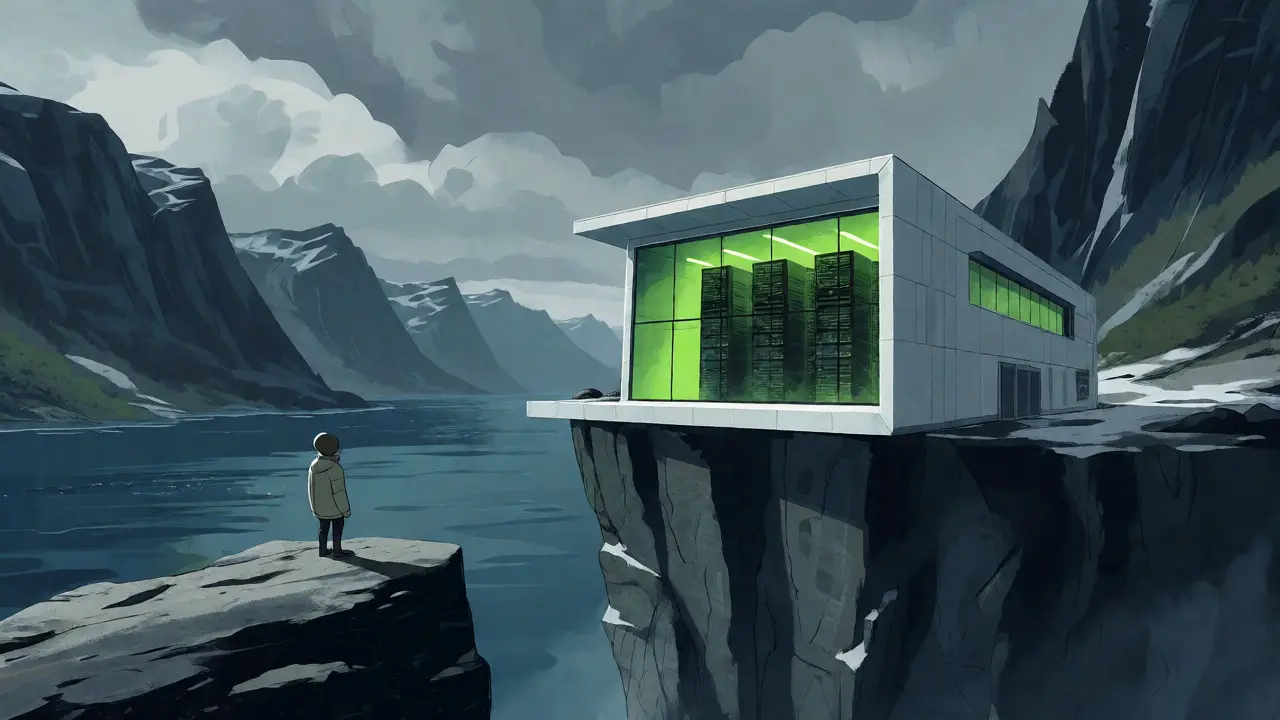
Imagine you’ve just secured a prime location in the Norwegian fjords for your new crypto mining facility. You have cheap hydroelectric power, cold air for cooling, and a stable grid. Then, overnight, the rules change. You can’t build there anymore. This isn’t hypothetical. It’s exactly what happened to operators targeting Norway as the next big hub for digital asset production.
Norway has become the most restrictive jurisdiction in Europe for cryptocurrency miners. Why? Because the government decided that your electricity bill shouldn’t compete with local hospitals and factories. If you are planning to mine Bitcoin or other proof-of-work coins in Scandinavia, you need to understand two massive regulatory shifts: a mandatory national registry and a temporary ban on new facilities. Let’s break down what these rules actually mean for your bottom line.
The Two-Pronged Regulatory Hammer
Norway didn’t just slap a tax on miners. They built a legal framework specifically designed to monitor and limit energy-intensive data centers. This system relies on two distinct mechanisms enforced by different branches of the government.
First, there is the Data Center Registry. Starting January 1, 2025, the Norwegian Communications Authority (Nkom) began enforcing a strict registration requirement under the Electronic Communications Act. Every data center operating in Norway must register. This isn’t optional. Existing facilities had until July 1, 2025, to get their paperwork in order. New constructions must register before breaking ground.
Second, and more critical for growth, is the Temporary Ban on New Mining Centers. Announced in April 2024 and implemented in autumn 2025, this rule stops new power-intensive mining operations from starting up. The Ministry of Digitalization and Public Administration, led by Minister Karianne Tung, made the stance clear: the Labour Party government intends to limit crypto mining "as much as possible." Energy Minister Terje Aasland backed this up, arguing that electricity should go to industries that provide greater social and economic benefits.
Think of it this way: the registry tells the government who is mining and how much power they use. The ban stops anyone new from joining the party. For existing miners, life goes on, but expansion is off the table. For newcomers, the door is firmly shut.
Who Enforces These Rules?
You might wonder which agency holds the keys. It’s a coordinated effort between several heavy hitters in Norwegian bureaucracy. Nkom handles the technical side of the data center registry. They check if you are registered, if your details are accurate, and if you are compliant with reporting standards.
Meanwhile, the policy direction comes from the ministries. The Ministry of Digitalization focuses on the societal impact of tech infrastructure, while the Ministry of Energy looks at grid stability and resource allocation. This dual approach ensures that regulators aren’t just looking at IT specs; they are looking at national energy priorities.
Then there’s the financial layer. The Norwegian Financial Supervisory Authority (FSA) is implementing the EU’s Markets in Crypto Assets (MiCA) regulation. While MiCA primarily targets exchanges and service providers, its rollout throughout 2025 adds another compliance hurdle. Miners often double as service providers or hold significant assets, meaning they must navigate both energy laws and financial securities regulations simultaneously.
What You Must Register With Nkom
If you operate a data center in Norway, transparency is no longer a buzzword-it’s a legal mandate. The registration process forces you to disclose operational details that were previously private. You can’t hide behind vague descriptions like "IT services." You must be specific.
Here is what you need to provide to Nkom:
- Company Identity: Full legal name, physical address, and legal status.
- Representative Contact: Name and contact info for the person responsible for government communications.
- Service Description: A detailed explanation of what happens inside the facility. If you are mining, you must say so.
- Customer List: Who uses your facility? Are they public agencies or private businesses? This helps authorities map out who is consuming the power.
This level of detail serves a specific purpose. By forcing operators to declare mining services, the government creates an enforcement mechanism. They can identify power-intensive activities across the country and intervene if necessary. Non-compliance isn’t cheap. Penalties can reach up to 5% of annual turnover. For a mid-sized mining operation, that could wipe out years of profit.
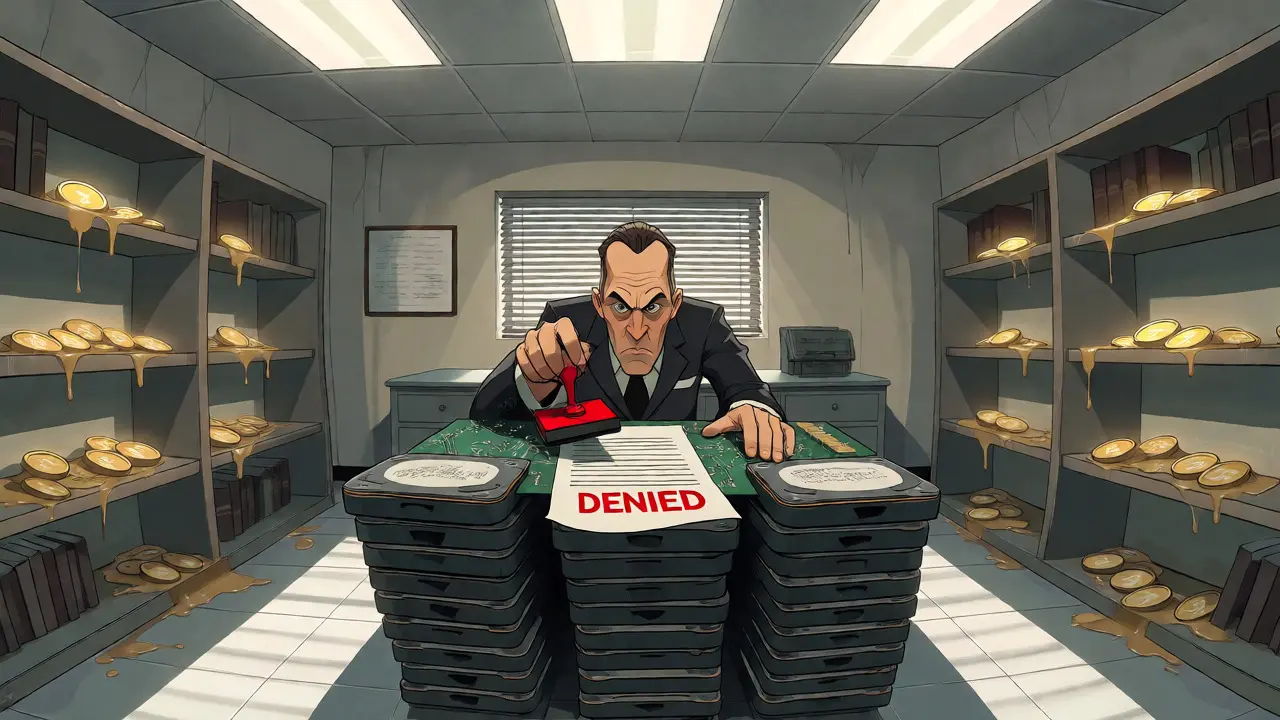
Why Norway Is Saying No to New Miners
It seems counterintuitive. Norway has abundant renewable energy, mostly from hydroelectric sources. Other Nordic countries like Iceland and Sweden have historically attracted miners because of this. So why is Norway pushing them away?
The answer lies in opportunity cost. Minister Tung stated that crypto mining is "very power-intensive and generates little in the way of jobs and income for the local community." In plain English: your mining rig uses the same electricity as a small factory, but it employs one technician instead of fifty workers.
The government views electricity as a finite resource that needs to be allocated efficiently. They prefer directing power toward traditional industries, manufacturing, and public services that create broader economic ripple effects. This represents a shift in how Nordic countries view renewable energy. It’s not just about having green power; it’s about using that power to maximize social benefit.
| Feature | Norway | Iceland/Sweden | China (2021) |
|---|---|---|---|
| Status of New Miners | Banned (Temporary) | Open/Welcomed | Banned (Permanent) |
| Status of Existing Miners | Allowed but Regulated | Allowed | Closed/Migrated |
| Primary Reason | Resource Allocation/Jobs | Energy Export/Economy | Financial Stability/Energy |
| Registration Required | Yes (Strict) | Varies | N/A |
Impact on the Market and Miners
The reaction from the industry has been mixed, bordering on frustrated. Small-scale miners feel the pinch hardest. The administrative burden of registering with Nkom and maintaining compliance costs money. Legal fees, reporting obligations, and potential fines add overhead that wasn’t there five years ago.
Larger international companies haven’t panicked, but they have moved. Many planned investments in Norway have been relocated to jurisdictions with friendlier policies. We’re seeing a trend where miners are moving to North America or other parts of Europe where renewable energy is abundant but regulatory scrutiny is lower. This phenomenon is known as regulatory arbitrage-miners chase the path of least resistance.
For those already operating in Norway, the mood is cautious optimism. They can keep mining, but they know the political winds are blowing against them. There is a lingering fear that the temporary ban could become permanent, or that restrictions could expand to include existing facilities. Currently, the ban applies only to new operations, leaving the installed base safe for now.

Compliance Checklist for Norwegian Operators
If you run a data center in Norway, don’t wait for a letter from Nkom. Proactive compliance saves headaches. Here is what you need to do right now:
- Verify Registration Status: Ensure your facility is listed in the national registry. If you missed the July 1, 2025 deadline for existing centers, seek legal advice immediately.
- Audit Your Service Descriptions: Make sure your declared services match reality. If you started mining after registering as a general IT provider, update your records.
- Prepare for MiCA: Even if you are just mining, assess if your business model triggers financial service regulations. Consult with a lawyer familiar with the Norwegian FSA guidelines.
- Monitor Energy Thresholds: Keep detailed logs of your power consumption. If the government defines specific energy intensity thresholds for future restrictions, you want to know where you stand.
The Future Outlook
Is this ban permanent? Government officials haven’t said so explicitly. They describe it as a temporary measure while they evaluate the compatibility of crypto mining with Norway’s climate goals. However, given the strong political consensus around resource allocation, it’s unlikely to disappear quickly.
Norway is effectively serving as a regulatory testing ground. Other European nations are watching closely. If Norway’s approach successfully protects grid stability without stifling innovation, we might see similar frameworks emerge elsewhere. For now, though, Norway remains a difficult place to start a new mining venture. The message is clear: bring your own power, or look elsewhere.
Can I still mine crypto in Norway if my facility already exists?
Yes. The temporary ban announced in April 2024 and implemented in autumn 2025 applies exclusively to new cryptocurrency mining data centers. Existing facilities are allowed to continue operations, provided they comply with the mandatory registration requirements enforced by Nkom.
What happens if I fail to register my data center with Nkom?
Non-compliance with the data center registration requirements carries significant financial penalties. Authorities can impose fines of up to 5% of the company's annual turnover. This makes strict adherence to registration deadlines crucial for all operators.
Why did Norway implement a ban on new crypto mining centers?
The primary justification is resource allocation. Government officials argue that cryptocurrency mining consumes excessive electricity while generating minimal employment and economic benefits compared to traditional industries. The goal is to redirect power toward sectors that offer greater social and economic value to local communities.
Does the ban affect home miners in Norway?
The regulations primarily target commercial data centers and power-intensive operations. Home miners generally fall outside the scope of the data center registry and the ban on new industrial facilities, though they must still adhere to standard electrical safety codes and may face higher electricity rates depending on local utility policies.
How does Norway's approach compare to China's crypto ban?
Norway's approach is less severe than China's 2021 crackdown. China implemented a complete prohibition, forcing all mining operations to close or migrate. Norway allows existing operations to continue while blocking new entrants. This preserves current infrastructure investment while preventing sector expansion.





Alexis Riggle
the registry is the real killer here not the ban
if you miss the filing window its a 5% turnover fine
thats brutal for small ops