Chasing free tokens feels like finding money in an old coat pocket. It’s exciting, but you have to be careful not to rip the pocket or get scammed in the process. If you are looking into the SIL Finance airdrop, you need to separate the marketing hype from the actual mechanics. SIL Finance, often referred to by its ticker symbol SIL, positions itself as a "Sister In Law" financial gathering service. Its main goal is to bridge the gap between complex yield farming protocols like Yearn Finance (YFI) and YFII. The promise is simple: automate your income generation so you don’t have to manually manage liquidity pools.
However, getting your hands on those tokens isn’t just about clicking a button. The current landscape for SIL Finance is murky. Data inconsistencies across major tracking platforms raise red flags that every participant must understand before connecting their wallet. This guide breaks down exactly what we know about the SIL airdrop, how to verify if it’s legitimate, and the specific steps to protect your assets while participating.
Understanding the SIL Token and Project Fundamentals
Before you worry about the airdrop, you need to understand what you are actually trying to get. SIL Finance operates within the decentralized finance (DeFi) sector, specifically focusing on automated yield optimization. Unlike manual strategies where you move funds between farms daily, SIL aims to select products based on annualized returns, safety factors, and management cycles automatically.
The tokenomics of the project are quite restrictive. The maximum supply cap for SIL tokens is set at only 30,000 units. This is an incredibly low number compared to most DeFi projects, which often have supplies in the millions or billions. Such a low cap suggests a high-value-per-token model, but it also means liquidity can be extremely thin. When liquidity is low, even small trades can cause massive price swings, making it risky to sell immediately after receiving an airdrop.
As of mid-2026, the market data for SIL is contradictory. Some platforms list the price at $0.00 with zero market capitalization, suggesting the token might be dormant or unlisted. Others, like Crypto.com, have shown historical prices around $21.01, though trading volume remains negligible. This discrepancy is your first warning sign. You are dealing with an asset that lacks consistent market activity. Always check multiple sources like CoinMarketCap and CoinGecko before assuming a token has real value.
How to Qualify for SIL Finance Airdrops
There is no single "claim now" button for SIL Finance because the project relies on promotional activities rather than a universal snapshot distribution. Based on available data from exchanges like Bitget, users can receive free SIL tokens by joining ongoing challenges and promotions. These are typically time-limited events rather than permanent features.
To increase your chances of eligibility, follow these practical steps:
- Monitor Exchange Listings: Keep an eye on Bitget and other major exchanges that have previously listed SIL. They often host "Learn and Earn" campaigns or trading competitions that reward participants with SIL tokens.
- Join Official Communities: Legitimate airdrops are announced through official channels. Follow SIL Finance’s verified Twitter/X account and Discord server. Do not trust Telegram groups that are not linked from their official website.
- Engage with Yield Products: Since SIL is a yield aggregator, interacting with their smart contracts (if active) might grant you points or status that qualifies you for future distributions. However, only do this if you fully understand the risks of interacting with unknown smart contracts.
- Check Wallet Activity: Ensure your wallet address has some history. Many airdrop bots filter out brand-new wallets created solely for claiming rewards. Use a wallet that has interacted with Ethereum mainnet or other supported chains previously.
Note that specific eligibility criteria, such as minimum deposit amounts or holding periods, are rarely published upfront. This lack of transparency is common in early-stage DeFi projects but requires you to stay vigilant for updates.
Critical Safety Checks Before Participating
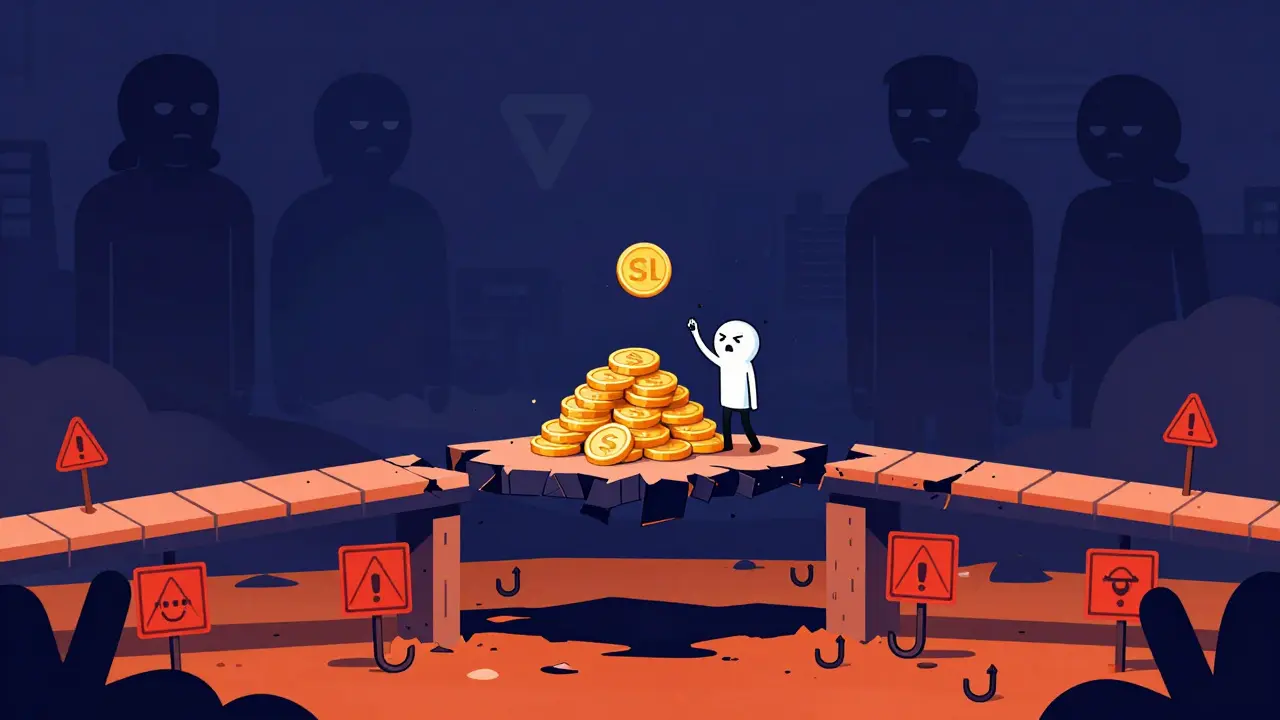
The biggest risk in any crypto airdrop is not missing out; it’s losing your existing funds to a scam. Because SIL Finance has limited visibility and conflicting data, you must treat every interaction with extreme caution. Here is how to verify legitimacy:
- Verify the Contract Address: The official SIL token contract on Ethereum mainnet is listed as
0x133B...FF3a13C. Never accept tokens sent to your wallet unless they match this exact address. Scammers often create fake tokens with similar names and send them to your wallet to trick you into approving a malicious transaction when you try to swap or sell them. - Check for Recent Development Activity: Look at the project’s GitHub repository. Are there recent commits? Is the code being updated? A project with no development activity for months is likely abandoned, meaning any airdrop promises are empty.
- Beware of Phishing Links: Search results often mix up SIL Finance with other projects like Silo Finance (SILO) or SilkAI. These are completely different entities. Double-check the URL of any website you visit. If the domain looks slightly off (e.g., sil-finance.com instead of silfinance.com), leave immediately.
- Never Share Your Seed Phrase: No legitimate airdrop will ever ask for your private key or seed phrase. If a site asks for this information to "verify" your eligibility, it is a scam designed to drain your wallet.
If you are unsure, use tools like Etherscan to look up the contract address provided by the project. Check who holds the tokens. If one address holds 90% of the supply, the project is centralized and potentially dangerous.
Comparing SIL Finance to Similar Projects
To understand where SIL stands, it helps to compare it to established players in the yield aggregation space. This comparison highlights why due diligence is critical.
| Feature | SIL Finance (SIL) | Yearn Finance (YFI) | Silo Finance (SILO) |
|---|---|---|---|
| Token Supply Cap | 30,000 | 36,666 | Higher (varies by version) |
| Market Maturity | Low/Unverified | High/Established | Medium/Growing |
| Airdrop History | Promotional only | None (Initial DEX Offering) | Yes (Up to $15k valued) |
| Liquidity Depth | Very Low | High | Moderate |
| Risk Level | High | Low-Medium | Medium |
As you can see, SIL Finance lags behind competitors in terms of market maturity and liquidity. While Yearn Finance is a industry standard with deep liquidity, SIL appears to be in a much earlier or more fragile stage. This doesn’t mean it’s worthless, but it does mean the potential reward of an airdrop is outweighed by the risk of interacting with a potentially unstable protocol.

What to Do If You Receive SIL Tokens
If you successfully claim SIL tokens, your next steps are crucial. Do not simply hold them hoping for a moonshot. Given the low supply and inconsistent pricing, here is a prudent strategy:
First, verify the token in your wallet. Add the contract address manually to ensure you are looking at the real SIL token. Second, assess the liquidity. Try to find a pair on a decentralized exchange like Uniswap. If there is no liquidity pool, you cannot sell the tokens, rendering them useless regardless of their theoretical price. Third, consider taking profits immediately. If the market cap is low, selling a small portion can cover any gas fees you spent during the participation process. Finally, keep records. Document the date, amount, and source of the airdrop for tax purposes, as crypto airdrops are often considered taxable income in many jurisdictions.
Navigating Conflicting Market Data
The confusion surrounding SIL Finance stems largely from data fragmentation. As noted, CoinMarketCap lists the UCID as 10136 but shows zero volume. Meanwhile, other aggregators show sporadic price spikes. This happens when a token is traded on obscure decentralized exchanges that aren’t properly indexed by major trackers. It also happens when bots manipulate prices on low-liquidity pairs.
For a regular user, this means you should not rely on a single price feed. If you see a price of $21 on one site and $0 on another, assume the true market value is closer to zero until significant volume proves otherwise. Never buy SIL tokens on the open market based on a single data point. The risk of buying a fake token or getting stuck in a rug pull is too high.
Instead, focus on the utility. Does SIL Finance actually work? Can you deposit funds and earn yield? If the platform is inactive, the token has no fundamental value. An airdrop in this case is merely a speculative bet on future development, which is a gamble, not an investment.
Is the SIL Finance airdrop still active in 2026?
There is no continuous, automatic airdrop for SIL Finance. Participation is tied to specific promotional events on platforms like Bitget. You must actively join these challenges to qualify. Always check the latest announcements on official channels, as these opportunities are temporary.
How do I distinguish SIL Finance from Silo Finance?
They are completely different projects. SIL Finance uses the ticker SIL and focuses on bridging YFI and YFII yields. Silo Finance uses the SILO token and operates a lending protocol. Confusing the two can lead to scams. Always verify the contract address and official social media links before interacting.
Why is the SIL token price showing $0 on some sites?
A price of $0 usually indicates a lack of trading volume or liquidity on the tracked exchanges. It does not necessarily mean the token is worthless, but it does mean you may not be able to sell it easily. This is a sign of high risk and low market interest.
Can I lose my ETH while trying to claim a SIL airdrop?
Yes, if you interact with a phishing site or approve a malicious smart contract. Never connect your primary wallet to unverified dApps. Use a burner wallet for testing new protocols. If a site asks for your seed phrase, it is a scam.
What is the total supply of SIL tokens?
The maximum supply cap for SIL tokens is 30,000. This extremely low supply makes the token highly sensitive to small trades, leading to volatile price movements if liquidity exists.