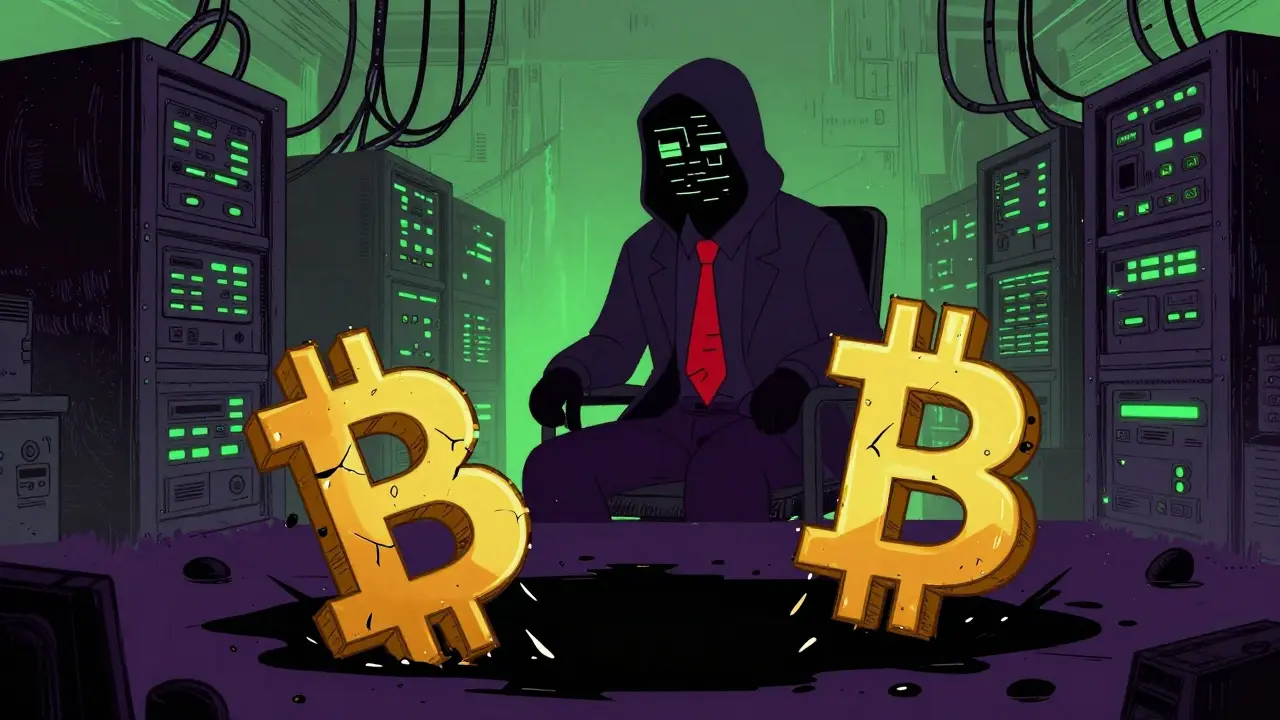
Imagine losing $1.5 billion in a single afternoon. That is exactly what happened to the Dubai-based exchange Bybit in February 2025. It was not a glitch, nor was it a rogue trader. It was a state-sponsored heist executed by hackers from North Korea. This single event shattered records, surpassing the combined total of every major cryptocurrency hack throughout all of 2024. But this massive theft is just the latest chapter in a decade-long campaign that has drained approximately $3 billion from the global digital asset ecosystem between 2017 and 2023 alone.
The numbers are staggering, but the method is even more concerning. These are not lone wolves hiding in dark basements. They are highly organized teams funded by the government of the Democratic People's Republic of Korea (DPRK). Their goal is clear: circumvent international sanctions to fund weapons programs by stealing your money. If you hold crypto, work in tech, or simply follow financial news, understanding how these attacks happen is no longer optional-it is essential for survival in the digital economy.
The Scale of the Heist: From Millions to Billions
To grasp the severity of the threat, we need to look at the trajectory. Between 2017 and 2023, United Nations Security Council assessments identified 58 separate cyberattacks linked to North Korean groups, resulting in roughly $3 billion in stolen assets. The pace has accelerated dramatically since then. In 2023, they stole about $660 million across 20 incidents. By 2024, that number more than doubled to $1.34 billion across 47 incidents. Then came February 2025, with the Bybit heist adding another $1.5 billion in a single stroke.
This escalation shows a shift in strategy. Early attacks were opportunistic, targeting smaller exchanges or vulnerable protocols. Today, the operations are surgical, patient, and aimed at high-value targets. The Lazarus Group, along with affiliates like TraderTraitor, Jade Sleet, UNC4899, and Slow Pisces, operate as a coordinated network. They do not just want quick cash; they want systemic access to large pools of liquidity.
| Time Period | Estimated Stolen Amount | Number of Incidents | Key Characteristic |
|---|---|---|---|
| 2017 - 2023 | ~$3 Billion | 58 | Establishment of core tactics and laundering networks |
| 2023 | $660.5 Million | 20 | Focus on wallet providers and payment processors |
| 2024 | $1.34 Billion | 47 | Peak activity; sophisticated social engineering campaigns |
| Feb 2025 | ~$1.5 Billion | 1 (Major) | Single largest theft in history (Bybit incident) |
Anatomy of an Attack: The DMM Case Study
How do you steal $308 million without triggering alarms? You don't break in through the front door; you convince someone to let you in. The May 2024 attack on the Japanese platform DMM is a textbook example of modern state-sponsored cyber warfare. It wasn't a brute-force code crack. It was a months-long social engineering operation.
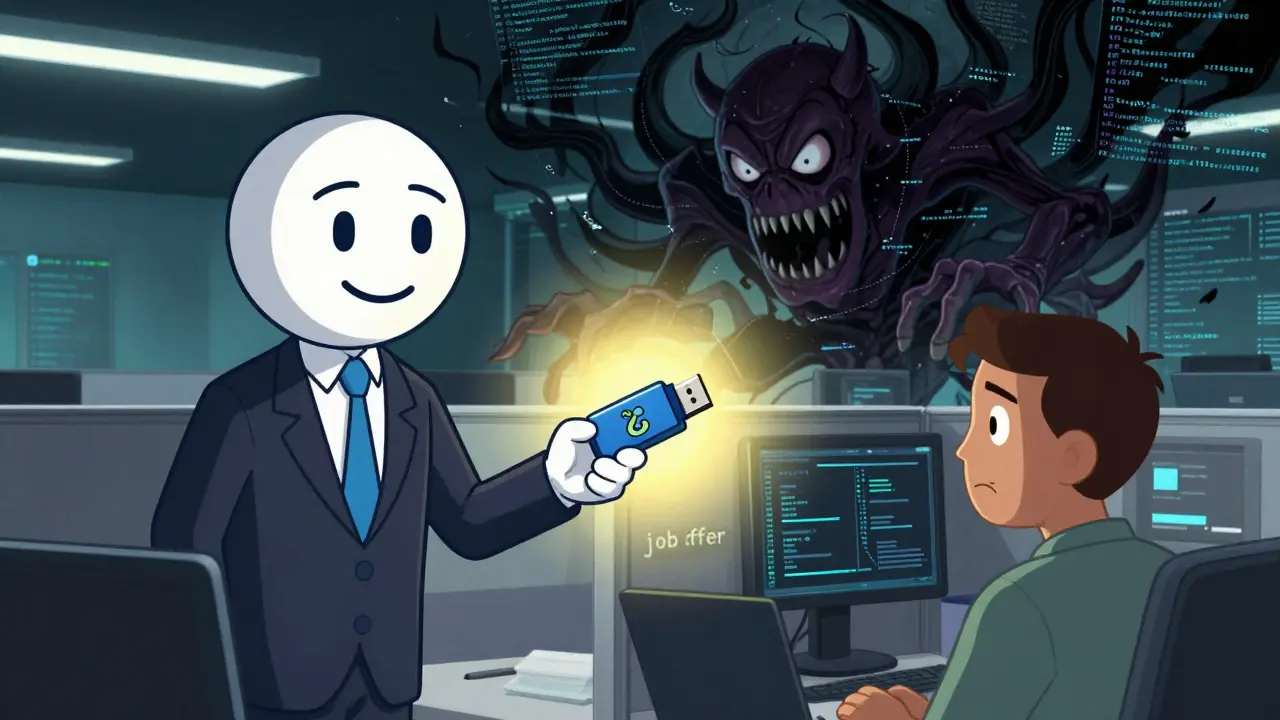
The attackers started in late March 2024. They posed as recruiters on LinkedIn, targeting employees at Ginco, a Japan-based company that provides enterprise wallet software. Ginco’s systems were integrated with DMM’s infrastructure. The hackers sent potential victims a malicious Python script disguised as a pre-employment test hosted on GitHub. It looked professional. It looked legitimate. When an employee ran the script, they unknowingly installed malware that gave the attackers remote access to their machine.
Once inside, the hackers didn't move immediately. They waited. They monitored communications. They stole session cookies to impersonate the compromised employee within Ginco’s unencrypted internal communication system. By mid-May, they had full visibility into the workflow. When a legitimate transaction request came in from a DMM employee, the hackers manipulated it behind the scenes. They redirected 4,502.9 BTC-worth $308 million at the time-to wallets they controlled. The victim didn't know until the money was gone.
This multi-stage approach highlights a critical vulnerability: human trust. No firewall can stop a determined insider who has been tricked into handing over the keys. The attack relied on patience, technical precision, and a deep understanding of corporate workflows.
The Laundering Machine: Turning Stolen Crypto into Cash
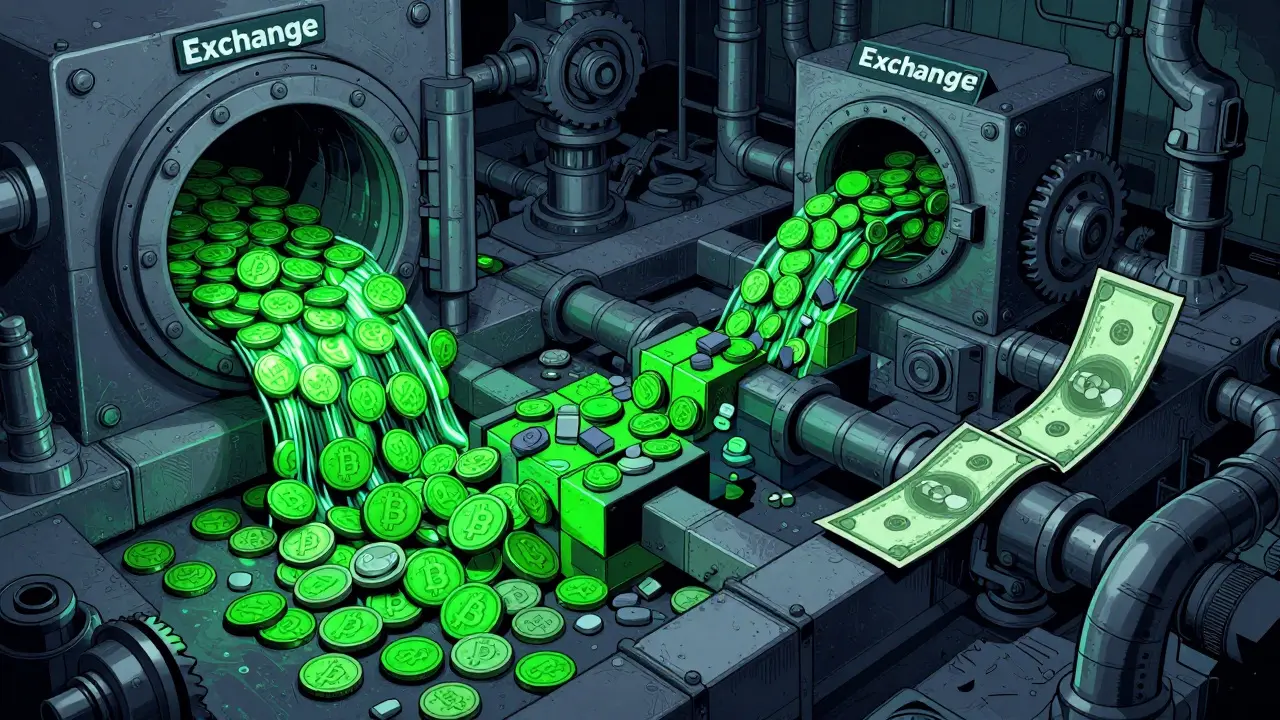
Stealing the money is only half the battle. The real challenge is spending it without getting caught. North Korean hackers have become masters of blockchain obfuscation. After the Bybit heist, the FBI noted that hackers were "rapidly" converting stolen Ether into Bitcoin and other digital currencies. Why? Because mixing services and cross-chain bridges make tracing nearly impossible.
Here is how the laundering process typically works:
- Cross-Chain Bridges: Attackers move stolen assets from one blockchain to another (e.g., Ethereum to Solana) using decentralized bridges. This breaks the direct link between the source wallet and the destination.
- Decentralized Exchanges (DEXs): Instead of using regulated exchanges like Coinbase or Binance, which require KYC (Know Your Customer) checks, hackers use DEXs where transactions are peer-to-peer and anonymous.
- Tumbling Services: Specialized software mixes stolen coins with clean coins from other users, creating a "pool" of funds that cannot be easily distinguished.
- Fragmentation: Large sums are split into thousands of tiny transactions across hundreds of virtual wallets. This overwhelms automated monitoring tools used by law enforcement.
Blockchain analysis firms like Chainalysis and TRM Labs have warned that Pyongyang’s ability to launder crypto has improved significantly. They now use more sophisticated techniques to obscure origins, making it harder for agencies like the FBI and the National Police Agency of Japan to freeze assets before they are converted into fiat currency or spent on illicit goods.
Why North Korea? The Geopolitical Driver
You might wonder why a country with such a small population and isolated economy would dominate the global cybercrime landscape. The answer lies in desperation and opportunity. International sanctions have choked off traditional revenue streams for the DPRK. Trade restrictions limit imports of luxury goods, fuel, and technology. To survive-and to fund its nuclear and ballistic missile programs-the regime needs hard currency.
Cryptocurrency offers the perfect solution. It is borderless, difficult to regulate, and increasingly accepted worldwide. For North Korea, hacking is not just crime; it is national policy. U.S. and international officials have assessed that Pyongyang uses stolen cryptocurrency directly to finance weapons of mass destruction. This creates a direct national security implication. Every dollar stolen from a crypto exchange could eventually end up funding a missile test.
In 2024, North Korea-affiliated groups accounted for 61% of all cryptocurrency stolen globally, despite representing only 20% of total incidents. This disparity shows superior targeting and execution capabilities compared to other threat actors. While ransomware gangs demand payment, North Korean hackers take what they want. They are not motivated by profit in the traditional sense; they are motivated by regime survival.
Impact on the Crypto Industry
The cumulative losses from North Korean operations exceed $5 billion between 2017 and 2024, not including the 2025 Bybit incident. This has forced the industry to change. Exchanges can no longer rely on basic security measures. Insurance costs have skyrocketed. Regulatory scrutiny has intensified, with governments demanding stricter compliance protocols.
Platforms are now implementing:
- Multi-Signature Wallets: Requiring multiple keys from different individuals to authorize large transactions, reducing the risk of a single point of failure.
- Enhanced Employee Training: Regular phishing simulations and security awareness programs to combat social engineering.
- Real-Time Blockchain Monitoring: AI-driven systems that flag suspicious transaction patterns instantly.
- Segregation of Funds: Keeping customer funds in cold storage (offline) rather than hot wallets (online) to limit exposure.
Despite these improvements, user confidence remains fragile. High-profile hacks erode trust, leading to capital flight and market volatility. The industry faces a paradox: the very openness and decentralization that make crypto attractive also make it vulnerable to sophisticated state actors.
What You Can Do to Protect Yourself
If you are an individual investor, you are likely not a direct target for a $308 million heist. However, the ripple effects of these attacks affect everyone. Exchange failures lead to frozen accounts. Market crashes reduce portfolio value. Here are practical steps to safeguard your assets:
- Use Hardware Wallets: Store long-term holdings in offline hardware wallets like Ledger or Trezor. Never leave significant amounts on exchanges.
- Enable Two-Factor Authentication (2FA): Use app-based 2FA (like Google Authenticator or Authy) instead of SMS, which can be intercepted via SIM swapping.
- Beware of Phishing: Be skeptical of unsolicited messages, especially those claiming to be from support teams or recruiters. Verify URLs carefully.
- Diversify Platforms: Do not keep all your eggs in one basket. Spread assets across reputable, audited exchanges.
- Stay Informed: Follow cybersecurity news from sources like Chainalysis and the FBI’s Cyber Division to understand emerging threats.
For businesses, the lesson is clear: security is not just an IT issue; it is a boardroom priority. Invest in employee training, conduct regular penetration testing, and assume that breaches will happen. Plan for containment and recovery, not just prevention.
The Future of State-Sponsored Crypto Crime
The trend is clear: North Korean operations will continue to expand in scope and sophistication. As international sanctions tighten, the regime will seek new avenues for revenue. We expect to see larger targets, more advanced laundering techniques, and potentially attacks on decentralized finance (DeFi) protocols that lack centralized oversight.
Cybersecurity experts predict that the gap between attacker and defender will remain wide. While defenses improve, so do offensive capabilities. The February 2025 Bybit incident demonstrated that even well-funded, established platforms are vulnerable to coordinated, patient attacks. The only way to stay ahead is through constant vigilance, international cooperation, and a willingness to adapt to evolving threats.
The $3 billion figure from 2017-2023 is a historical marker, but the current reality is far more dangerous. With billions more stolen in recent years, the stakes have never been higher. Understanding the enemy is the first step toward defense. North Korea’s cyber army is not going away anytime soon. Are you ready?
Who are the main North Korean hacking groups responsible for crypto theft?
The primary groups include Lazarus Group, TraderTraitor, Jade Sleet, UNC4899, and Slow Pisces. These are state-sponsored units tracked by cybersecurity firms and intelligence agencies for their role in executing large-scale cryptocurrency heists.
How did North Korean hackers steal $308 million from DMM in 2024?
They used a social engineering attack targeting employees at Ginco, a wallet software provider. Hackers posed as recruiters on LinkedIn, sent a malicious Python script disguised as a job test, and gained access to internal systems. They then manipulated a legitimate transaction request to redirect funds to their own wallets.
What happened in the February 2025 Bybit hack?
In February 2025, North Korean hackers stole nearly $1.5 billion worth of Ether from the Dubai-based exchange Bybit. This single event became the largest cryptocurrency theft in history, exceeding the total stolen in all 47 incidents throughout 2024.
Why does North Korea engage in cryptocurrency theft?
International sanctions have restricted North Korea's access to traditional financial systems. Cryptocurrency theft allows the regime to bypass these sanctions, generate hard currency, and fund its weapons of mass destruction and ballistic missile programs.
How do North Korean hackers launder stolen cryptocurrency?
They use a combination of cross-chain bridges, decentralized exchanges (DEXs), tumbling services, and fragmentation techniques. By moving assets across multiple blockchains and splitting them into many small transactions, they obscure the origin of the funds and complicate law enforcement tracking.
Is my personal crypto account at risk from these hackers?
Directly, probably not. These groups target large exchanges and institutions with significant liquidity. However, indirect risks exist if your exchange fails due to a hack. Using hardware wallets and enabling strong two-factor authentication significantly reduces your personal risk.
What percentage of global crypto thefts are attributed to North Korea?
In 2024, North Korea-affiliated groups accounted for 61% of all cryptocurrency stolen globally, despite being involved in only 20% of total incidents. This highlights their superior targeting and execution capabilities compared to other cybercriminal groups.