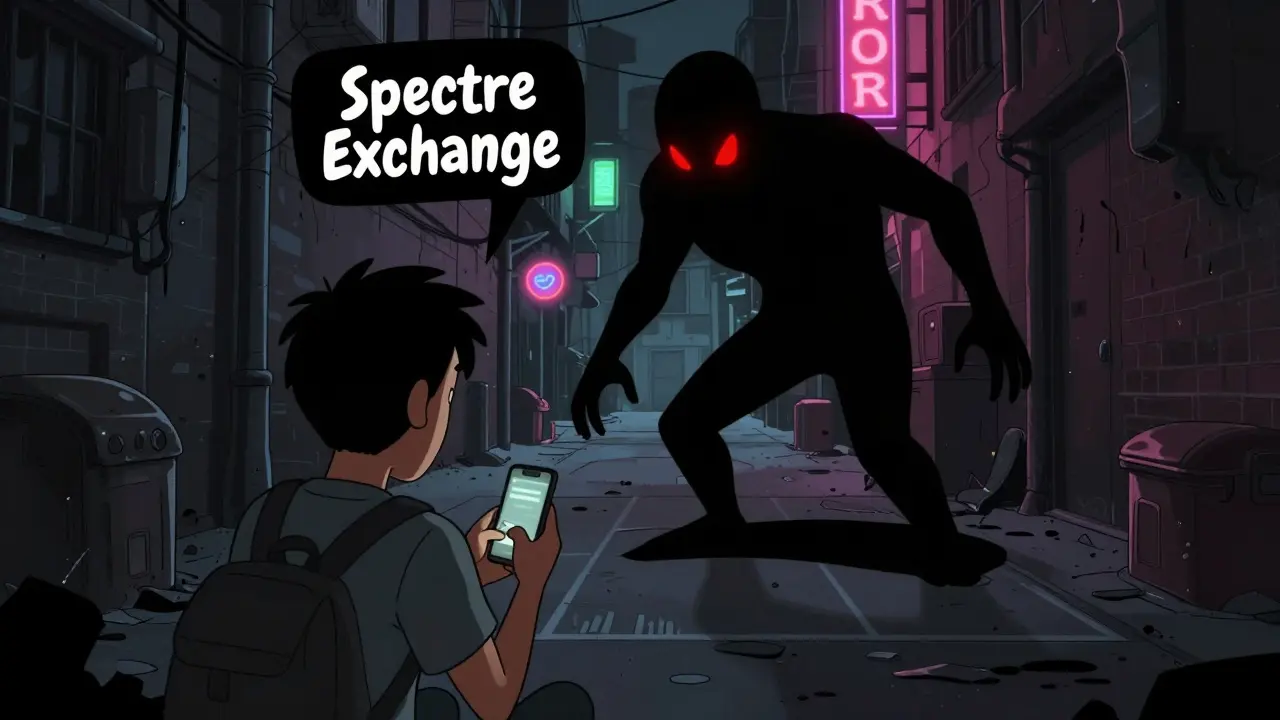
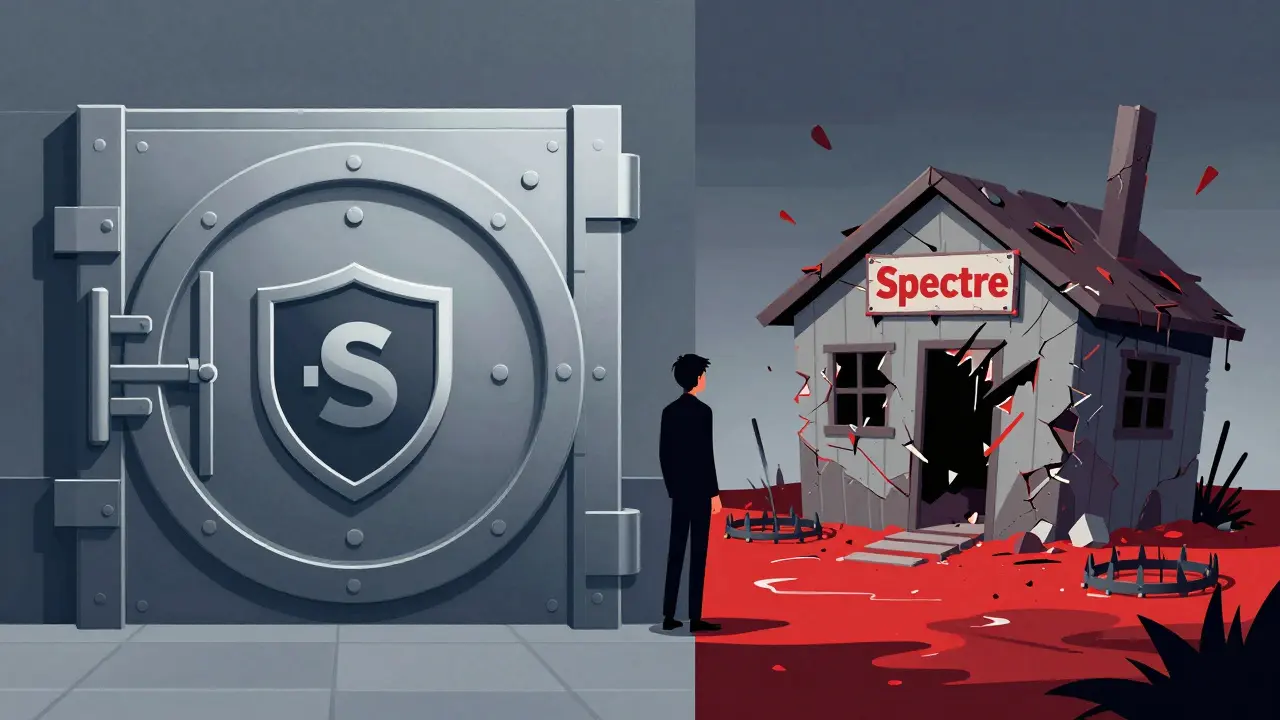
You might have seen an ad promising fast trades and total privacy on the Spectre crypto exchange. It sounds like the perfect place to hide your money while making profits. But here is the hard truth you need to hear right now: there is no such thing as a legitimate "Spectre Exchange."
If you are looking for a platform to buy, sell, or trade cryptocurrencies under that specific name, you are walking into a trap. The confusion usually stems from two things: a low-cap privacy token called Spectre Network (SPR) and fake websites trying to steal your funds by using similar names. In May 2026, with regulations tightening globally, falling for these impersonators can cost you everything.
The Core Confusion: Token vs. Exchange
To understand why this review is critical, we first need to clear up a massive misunderstanding in the crypto space. Many users search for "Spectre Exchange" because they want to buy the Spectre Network SPR token. They assume that because the token exists, there must be an official exchange named after it.
This is not how the industry works. Major tokens do not run their own exclusive exchanges. Instead, they are listed on established platforms. Spectre Network (SPR) is a privacy-focused cryptocurrency token that operates within existing blockchain ecosystems rather than functioning as a trading platform itself. It is an asset, not a service provider. You cannot deposit fiat currency directly into "Spectre." You have to go through third-party venues.
Think of it like this: Apple makes iPhones, but you don't buy them at a store called "Apple Exchange." You buy them at Best Buy or Amazon. Similarly, SPR is traded on smaller decentralized exchanges or niche centralized platforms, never on a site claiming to be "The Spectre Exchange."
Red Flags: How to Spot the Fake Platforms
Because the name "Spectre" sounds cool and mysterious, scammers love to use it. If you landed on this page after seeing a pop-up ad or a social media post directing you to a site ending in .com, .net, or .io with "Spectre" in the URL, stop immediately. Here are the specific signs that confirm a site is fraudulent:
- Lack of Regulatory Compliance: Legitimate exchanges operating in 2026 are required to display their licensing information clearly. Sites mimicking Spectre often have generic "Terms of Service" pages with no legal entity name or physical address.
- Fake Volume Numbers: Scam sites often show impressive trading volumes to look busy. These numbers are fabricated scripts. A real audit would reveal zero actual liquidity behind those figures.
- No KYC Process: While some people prefer anonymity, any site allowing you to deposit thousands of dollars without Identity Verification (KYC) is likely a honeypot designed to drain your wallet once you try to withdraw.
- Poor Documentation: Reputable services have extensive help centers. Fake Spectre sites usually have broken links, grammatical errors, and vague descriptions about "advanced security measures" without technical specifics.
I’ve analyzed several reports from early 2024 and 2025, and the pattern is consistent. Users who deposited funds into these impostor sites found themselves unable to withdraw. Customer support channels either disappeared or demanded "tax fees" to release the money-a classic advance-fee scam.
The Reality of Spectre Network (SPR) as an Asset
Let’s talk about the actual token, Spectre Network, since that is what most people are actually trying to access. Even if you avoid the fake exchanges, buying SPR comes with significant hurdles that most casual investors overlook.
As of mid-2024 data which remains relevant into 2026, SPR ranked around #1187 by market capitalization. For context, the top privacy coin, Monero (XMR), dominates nearly 78% of the privacy niche. SPR holds a minuscule fraction of that market share. This means extremely low liquidity.
Low liquidity is dangerous for two reasons. First, you might not find enough buyers when you want to sell, forcing you to accept terrible prices. Second, the spread between buy and sell orders is wide, meaning you lose value instantly upon entering a trade. Furthermore, major exchanges like Binance and Coinbase have consistently declined to list SPR due to its limited adoption and regulatory risks associated with privacy features.

Security Risks in Privacy Coins
Privacy coins promise anonymity, but in 2026, that anonymity is becoming a liability rather than a feature. With the implementation of strict frameworks like the EU's MiCA regulations, financial institutions are increasingly blacklisting assets that obscure transaction origins.
When you hold a token like SPR, you are holding an asset that traditional banks and payment processors refuse to touch. There is no enterprise adoption. No major company accepts SPR for goods or services. Your only option is to swap it back to Bitcoin or Ethereum, often through complex decentralized finance (DeFi) routes that carry high gas fees and smart contract risks.
Additionally, the development activity around Spectre Network has been sparse. GitHub repositories showed minimal commits in recent quarters, suggesting the team is not actively updating the protocol. In the crypto world, abandoned codebases are breeding grounds for vulnerabilities. Without regular security audits from firms like CertiK or OpenZeppelin, the underlying technology could contain undiscovered bugs.
Better Alternatives for Privacy and Trading
If your goal is privacy, look at Monero (XMR). It has a proven track record, robust ring signature technology, and widespread acceptance among privacy advocates. If your goal is easy trading, stick to regulated giants like Coinbase or Kraken.
| Feature | Fake "Spectre Exchange" | Spectre Network (SPR) Token | Legit Exchanges (e.g., Coinbase) |
|---|---|---|---|
| Regulatory Status | Non-existent / Illegal | Unregulated Asset | Fully Licensed |
| Liquidity | Fabricated | Very Low | High |
| Withdrawal Risk | Extremely High (Scam) | Moderate (Slippage) | Low |
| User Support | None | Community Only | 24/7 Dedicated Team |
| Primary Use Case | Theft | Niche Speculation | Trading & Custody |
How to Safely Acquire SPR (If You Must)
If you are determined to buy Spectre Network tokens despite the risks, do not use a site calling itself "Spectre Exchange." Instead, follow this safer path:
- Use a Major CEX: Deposit USD or EUR into a reputable exchange like Kraken or Binance.
- Buy a Base Currency: Purchase Ethereum (ETH) or Tether (USDT). These are universally accepted.
- Transfer to a Wallet: Move your ETH/USDT to a non-custodial wallet like MetaMask or Trust Wallet.
- Use a DEX: Connect your wallet to a decentralized exchange like Uniswap or PancakeSwap.
- Swap for SPR: Search for the correct contract address for Spectre Network (verify this on CoinGecko or Etherscan to avoid fake tokens).
- Set Slippage Tolerance: Due to low liquidity, you may need to set slippage higher than usual, but be aware you will pay more per token.
This process takes time and costs gas fees, but it keeps your funds out of the hands of scammers running fake branded exchanges.
Final Verdict: Avoid the Name Entirely
The "Spectre crypto exchange" does not exist as a legitimate entity. Any website using that exact name is attempting to deceive you. The token itself, Spectre Network (SPR), is a high-risk, low-liquidity asset with minimal development activity and significant regulatory headwinds.
In 2026, safety should be your priority. Stick to blue-chip assets and regulated platforms. Do not let the allure of privacy or the promise of hidden gems lure you into unverified territories. Your capital is too valuable to risk on a ghost platform.
Is Spectre Exchange a scam?
Yes. There is no legitimate cryptocurrency exchange called "Spectre Exchange." Websites using this name are fraudulent impersonators designed to steal user funds. Always verify the legitimacy of a platform before depositing money.
Can I buy Spectre Network (SPR) on Coinbase?
No. As of mid-2024 and continuing into 2026, Spectre Network (SPR) is not listed on major centralized exchanges like Coinbase or Binance. You must use decentralized exchanges (DEXs) via a private wallet to acquire it.
What is the difference between Spectre Network and Spectre Exchange?
Spectre Network is a cryptocurrency token (SPR) focused on privacy. "Spectre Exchange" is a misleading term used by scammers. There is no official exchange operated by the Spectre Network project.
Why is Spectre Network considered risky?
SPR has very low liquidity, minimal development activity, and faces regulatory scrutiny due to its privacy features. Its low market cap ranking (#1187+) indicates poor adoption and high volatility compared to established coins.
How do I recover funds lost to a fake Spectre site?
Recovery is extremely difficult. If you sent crypto directly to a wallet address, it is likely irreversible. Report the incident to local cybercrime authorities and the platform where you purchased the initial crypto (e.g., Coinbase Support), but expect limited recourse.
Are there any safe alternatives to Spectre for privacy?
Yes. Monero (XMR) is the leading privacy coin with strong security, active development, and wider acceptance. Zcash (ZEC) is another alternative offering optional privacy features, though it is less anonymous than Monero.