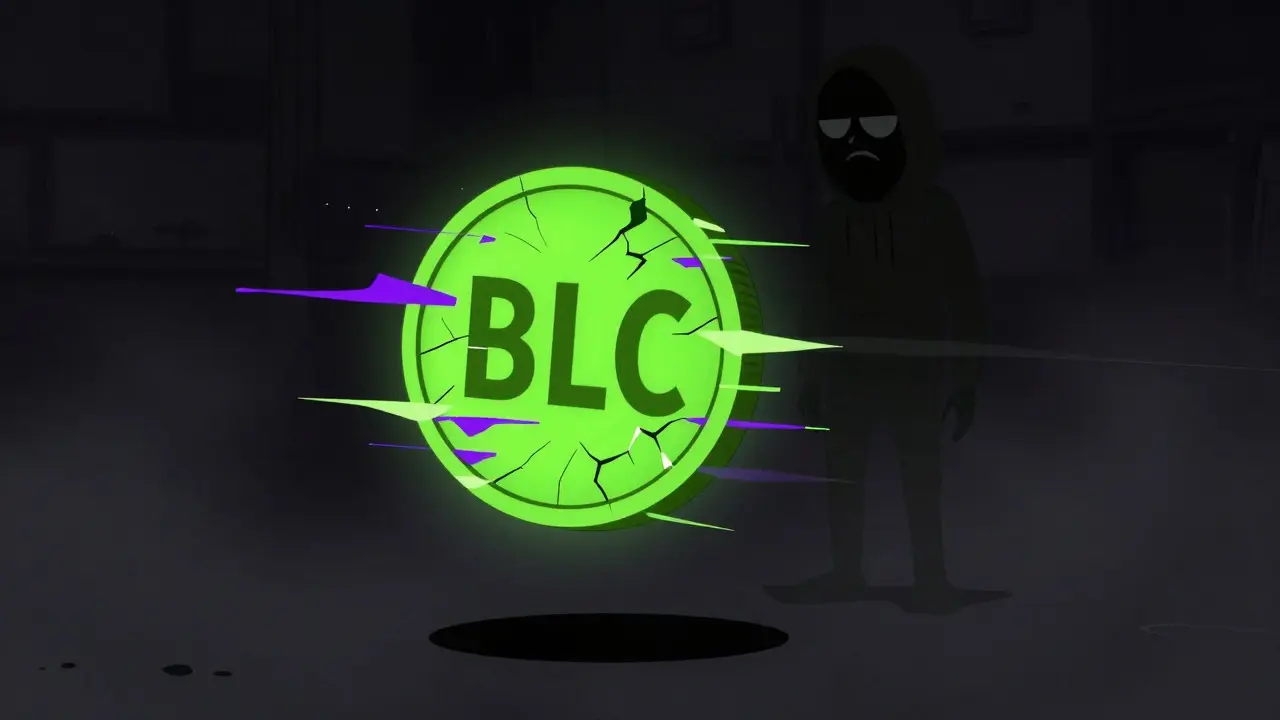
You’ve probably seen it pop up on a tracker or heard a whisper in a Discord channel. Balance Coin is a relatively new digital asset that launched in early 2025, operating as a micro-cap cryptocurrency with significant price volatility and limited exchange presence. Also known by its ticker BLC, this token has sparked curiosity among traders looking for the next big thing, but also raised eyebrows due to conflicting data across major platforms. If you are wondering whether this is a solid investment or just another fleeting meme coin, you need to look past the hype and examine the raw numbers.
The truth about Balance Coin is complicated. It sits in a gray area of the crypto market-too small to be ignored by speculators, but too obscure to offer the stability of established coins like Bitcoin or Ethereum. As we move through 2026, understanding what BLC actually is requires digging into its tokenomics, its trading mechanics, and the stark discrepancies in how different platforms report its value.
The Basics: What Is Balance Coin?
At its core, Balance Coin is a smart contract token. It doesn’t have its own blockchain; instead, it lives on top of an existing one, likely Ethereum or a compatible Layer-1 network, given the standard address format starting with '0x'. The project launched around January 30, 2025, placing it firmly in the category of recent entrants to a saturated market.
Unlike major cryptocurrencies that solve specific problems-like Bitcoin’s store of value or Ethereum’s smart contract platform-Balance Coin’s primary utility isn’t immediately clear from public documentation. There is no widely recognized whitepaper or official website that details a robust roadmap or technological innovation. This lack of transparent information is a common trait among micro-cap tokens, where the narrative often drives price more than fundamental utility.
For the average investor, BLC represents high risk. It is not listed on major centralized exchanges like Coinbase or Kraken. Instead, it trades primarily on decentralized exchanges (DEXs). This means if you want to buy it, you can’t just log into your familiar app and click 'buy.' You need a Web3 wallet, some native currency for gas fees, and a willingness to navigate the complexities of peer-to-peer trading pools.
The Data Discrepancy: Why Numbers Don't Match
One of the most striking things about Balance Coin is how much the data varies depending on who you ask. In the world of crypto, consistency builds trust. With BLC, consistency is missing.
| Metric | CoinMarketCap | CoinRanking | Binance / RateX.ai |
|---|---|---|---|
| Total Supply | 3.51 Million | 10.36 Million | Varies / Unspecified |
| Market Cap | $3.43 Million | ~$10.3 Million | $3.48 Million (Fully Diluted) |
| 24h Volume | $5,827 | N/A | $0 - $1.5 Million |
| All-Time High | $1.42 (May 2025) | $1.26 (Feb 2025) | $1.42 |
| Current Price Range | $0.99 | $0.98 | $0.99 |
Look at that supply difference. CoinMarketCap says there are 3.51 million tokens. CoinRanking says there are over 10 million. That’s a threefold difference in the total number of coins in existence. Why does this matter? Because market cap is calculated by multiplying price by supply. If the supply number is wrong, the market cap is wrong, and your perception of the project's size is skewed.
This inconsistency suggests either poor reporting by the team behind BLC or issues with how aggregators are scraping the blockchain data. For a serious investor, this red flag indicates a lack of professional oversight. It makes it hard to assess true liquidity or holder distribution.

Trading BLC: The Decentralized Challenge
If you decide to buy Balance Coin, you aren’t going to do it the easy way. Since no major centralized exchange lists it, you have to use a Decentralized Exchange (DEX). This process involves several steps that can trip up beginners.
- Set Up a Web3 Wallet: You’ll need a wallet like MetaMask or Trust Wallet. This gives you control over your private keys, which means you are responsible for security.
- Acquire Native Currency: To swap for BLC, you usually need the native token of the chain it’s built on (likely ETH or MATIC). You buy this on a regular exchange and send it to your wallet.
- Connect to a DEX: Platforms like Uniswap, PancakeSwap, or specialized aggregators allow you to connect your wallet and find the BLC contract address.
- Verify the Contract Address: This is crucial. Scammers often create fake tokens with the same name. Always double-check the address against multiple reliable sources. The referenced address starts with
0x5343.... - Execute the Swap: Set your slippage tolerance. Because BLC has low liquidity, prices can jump significantly during a trade. High slippage settings might mean you pay more than expected.
The friction here is real. Binance, for instance, shows zero trading volume for BLC on its main spot markets. Any volume reported comes from their Web3 wallet feature, which bridges users to external DEXs. This confirms that BLC lacks institutional support and relies entirely on retail speculation.
Price History and Volatility
Let’s talk money. Balance Coin hit its peak shortly after launch. Depending on the source, the all-time high was between $1.26 and $1.42 in early 2025. Since then, it has settled around the $0.99 mark. While it hasn’t crashed to zero, it has lost roughly 30% of its peak value.
Volatility is the defining characteristic of BLC. In a single day, the price can swing wildly based on tiny trades. With a 24-hour volume sometimes reported as low as $5,000, a single large sell order can tank the price. Conversely, a small buy-in can spike it artificially. This makes technical analysis less reliable because the chart is driven by noise rather than organic demand.
Technical indicators paint a mixed picture. The Relative Strength Index (RSI) often hovers in the neutral zone, suggesting neither extreme overbought nor oversold conditions. However, moving averages show a downward trend from the highs, indicating bearish momentum. Expert predictions from platforms like CoinCodex suggest further declines in late 2025 and early 2026, forecasting prices potentially dropping below $0.70.

Risks and Red Flags
Before you put any money into Balance Coin, consider these risks:
- Liquidity Risk: Low volume means you might struggle to sell your tokens without crashing the price. If everyone tries to exit at once, the pool could dry up.
- Transparency Issues: The conflicting supply data and lack of a clear team or roadmap make it hard to verify legitimacy.
- Smart Contract Risk: Without audited code, there’s always a chance of bugs or vulnerabilities that could lead to loss of funds.
- Scarcity of Information: No major news outlets cover BLC. Community engagement is minimal. When interest fades, micro-caps often go dormant.
Balance Coin is not a blue-chip asset. It’s a speculative play. Treat it like a lottery ticket, not a savings account. Only invest what you can afford to lose completely.
Is Balance Coin Worth It in 2026?
As we settle into 2026, the crypto market is becoming more mature. Investors are increasingly demanding transparency, utility, and regulatory compliance. Balance Coin struggles to meet these standards. It remains a micro-cap token with no major exchange listings and ambiguous fundamentals.
However, for high-risk traders, there is always the allure of asymmetric returns. If BLC were to suddenly get listed on a major exchange or partner with a notable project, the price could surge. But betting on this scenario is pure speculation.
Most analysts view BLC as a hold or a sell. The bearish outlook suggests that unless there is a catalyst-like a partnership, a listing, or a viral social media moment-the token will likely continue to drift lower or stagnate. The opportunity cost of holding BLC versus holding stablecoins or larger caps is significant.
Where can I buy Balance Coin (BLC)?
You cannot buy BLC on major centralized exchanges like Coinbase or Binance Spot. You must use a Decentralized Exchange (DEX) such as Uniswap or PancakeSwap. Connect your Web3 wallet (like MetaMask), ensure you have the native currency for gas fees, and swap using the verified contract address.
Why is the supply of BLC different on different sites?
There is a discrepancy between platforms like CoinMarketCap (reporting ~3.5M supply) and CoinRanking (reporting ~10.3M supply). This may be due to errors in data aggregation, unverified self-reported metrics by the team, or differences in how circulating vs. total supply is calculated. Always cross-reference multiple sources.
What is the all-time high of Balance Coin?
The all-time high for BLC is approximately $1.42, reached in May 2025 according to CoinMarketCap and Binance data. Some sources cite a slightly lower high of $1.26 in February 2025. Current prices hover around $0.99, representing a significant drop from its peak.
Is Balance Coin a good investment for beginners?
Generally, no. BLC is a micro-cap token with low liquidity, high volatility, and limited transparency. Beginners should start with well-established cryptocurrencies like Bitcoin or Ethereum before exploring high-risk assets like BLC. The complexity of DEX trading also adds a barrier to entry.
What are the future predictions for BLC?
Expert analysis from platforms like CoinCodex suggests a bearish outlook, predicting potential drops to around $0.70-$0.77 in late 2025 and averaging $1.34 in 2026. However, these predictions are highly speculative due to the token's low market cap and lack of fundamental drivers.
Does Balance Coin have a working team or whitepaper?
Publicly available information about the team behind Balance Coin is scarce. There is no widely accessible official whitepaper or detailed project documentation on major aggregators. This lack of transparency is a common risk factor for micro-cap cryptocurrencies.
How many people hold Balance Coin?
CoinMarketCap reports approximately 19,490 holders of Balance Coin. While this seems like a decent number for a new token, it is small compared to major cryptocurrencies, indicating limited adoption and community engagement.