
Have you ever wondered if your data stays private when you chat with an AI assistant? Most people assume their conversations are safe, but the reality is often different. This concern has given rise to a new niche in the cryptocurrency world: privacy-focused artificial intelligence projects. One such project is Silentis, a micro-cap cryptocurrency token linked to an offline AI software suite. If you have seen the ticker symbol SILENTIS pop up on trading charts or social media, you might be asking what it actually does and whether it is worth your attention.
In this guide, we will break down exactly what Silentis is, how its technology works, and the risks associated with investing in such a small-cap asset. We will look at the numbers, the utility, and the practical steps involved in using the ecosystem.
What Is Silentis (SILENTIS)?
Silentis is a cryptocurrency token operating on the BNB Smart Chain (BSC) that serves as the native asset for the Silentis offline AI assistant project. Unlike many AI tokens that promise cloud-based computing power or decentralized storage, Silentis focuses on a very specific use case: running large language models locally on your computer without an internet connection. The goal is to keep user data entirely private, secure, and under the user's control.
The token itself is a BEP-20 asset, meaning it lives on the Binance Smart Chain infrastructure. It uses BNB for network transaction fees. While the project aims to "empower privacy-focused AI for everyone," it is crucial to understand that Silentis is currently a micro-cap project. As of mid-2026, it ranks around #4504 among all listed cryptocurrencies, indicating it is still in the early stages of adoption compared to industry giants.
The Core Utility: Offline AI Software
The main value proposition behind the SILENTIS token is the software it supports. The project offers Silentis Offline AI, which is a standalone Windows application that runs open-source AI models locally on a user's device. This software is marketed as "Silentis 2.0" and claims to support over 169 different AI models, including popular open-source families like Llama and DeepSeek.
Why does this matter? When you use standard online AI tools, your prompts and documents are sent to remote servers. With Silentis software, inference happens right on your machine. No installation is required for the basic version, and it operates as a portable application. The features include advanced natural language processing, document integration, and customizable model selection. For users who handle sensitive information-like legal professionals, researchers, or privacy-conscious individuals-this local-first approach offers a significant security advantage.
| Feature | Standard Online AI | Silentis Offline AI |
|---|---|---|
| Data Privacy | Data sent to cloud servers | Data stays on local device |
| Internet Required | Yes, always | No, after initial setup |
| Model Variety | Limited to provider's models | 169+ open-source models supported |
| Hardware Demand | Low (runs on server) | High (requires local GPU/RAM) |
Tokenomics and Supply Details
Understanding the economics of a token is vital before considering any interaction with it. Silentis has a fixed supply structure, which is common for deflationary or stable-value assets, but the scale here is important.
- Total Supply: 1,000,000,000 (1 Billion) SILENTIS
- Circulating Supply: 1,000,000,000 SILENTIS
- Maximum Supply: 1,000,000,000 SILENTIS
Since the circulating supply equals the total and maximum supply, there is no inflationary pressure from new minting. All tokens are already in existence. However, transparency regarding distribution is limited. Public sources do not provide a detailed breakdown of how many tokens are held by the team, allocated for development, or locked in liquidity pools. This lack of granular visibility means investors must rely on self-reported data from aggregators, which carries inherent risk.
The market capitalization has fluctuated significantly. At various points, it has been reported in the range of tens of thousands of USD. For context, a price of $0.000075 per token against a 1 billion supply results in a market cap of roughly $75,000. This places Silentis firmly in the "micro-cap" category, where prices can swing wildly based on small trade volumes.
Market Performance and Volatility
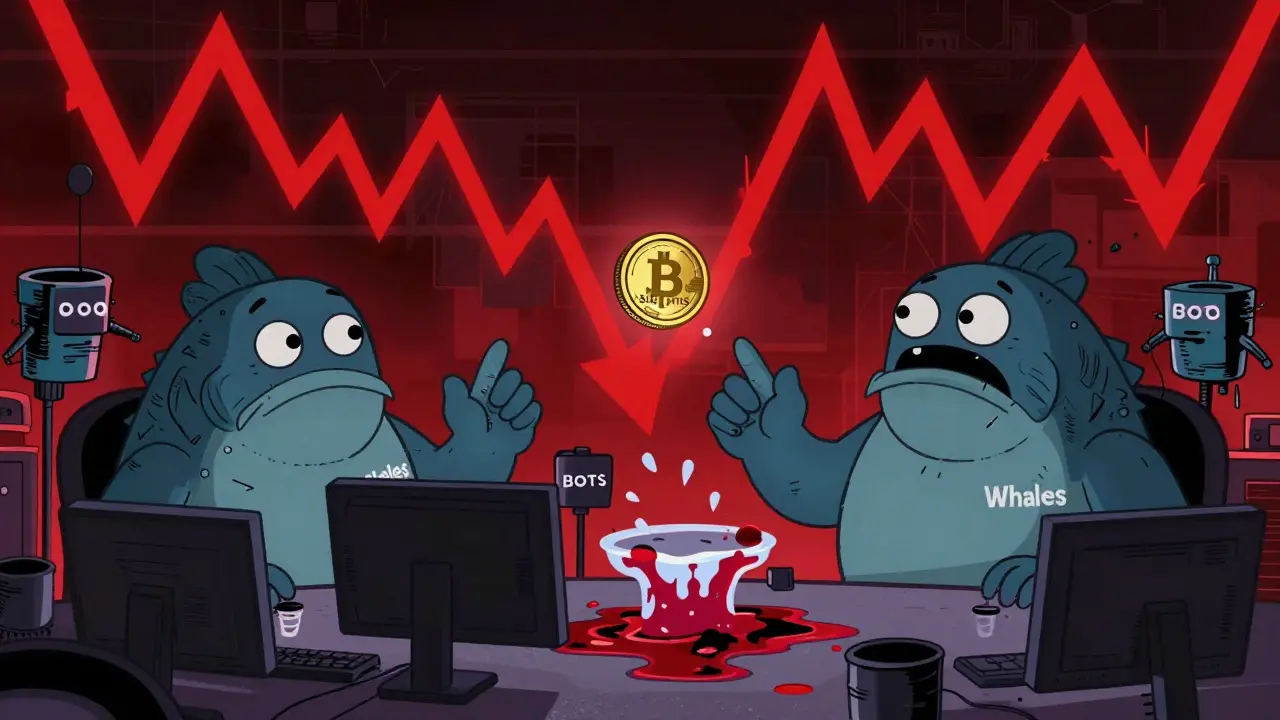
If you are looking at the charts, you will see extreme volatility. Silentis reached its all-time high (ATH) on April 14, 2025, at approximately $0.0002471. Since then, the price has experienced significant drawdowns. In some snapshots, the price dropped by more than 65% from that peak, hovering closer to $0.00006-$0.00008 ranges.
Liquidity is another critical factor. Trading volumes vary drastically between platforms. Some aggregators show 24-hour volumes of nearly $50,000, while others report volumes as low as $1.04 or even zero. This discrepancy suggests that liquidity is fragmented and thin. For a trader, this means high slippage risk; buying or selling a large amount could move the price significantly against you.
The low liquidity also makes the token susceptible to manipulation. Without deep order books, whale movements can create false signals. Always check multiple data sources before making decisions, as single-platform data may not reflect the true market state.
How to Buy and Use SILENTIS
For those interested in acquiring the token, the process relies on the BNB Chain ecosystem. You cannot buy SILENTIS directly with fiat currency on major centralized exchanges like Coinbase or Binance due to its low market cap. Instead, you typically need to use decentralized methods or specialized bots.
- Set Up a Wallet: You need a BSC-compatible wallet. The project guides often mention using the Alph.ai ecosystem or generating a wallet via the Alph AI Bot. Ensure you enable Google two-factor authentication (2FA) for security.
- Acquire BNB: Purchase BNB (Binance Coin) on a major exchange and withdraw it to your BSC wallet address. You will need BNB to pay for gas fees and to swap into SILENTIS.
- Swap for SILENTIS: Once BNB is in your wallet, use a decentralized exchange (DEX) or the provided bot interface to swap BNB for SILENTIS. Because liquidity is thin, set appropriate slippage tolerance (often higher than usual) to ensure the transaction goes through.
- Store Securely: After purchase, consider moving tokens to a cold wallet or a secure self-custody solution if you plan to hold long-term.
Note that the software itself-the offline AI assistant-is separate from the token. The token acts as a speculative asset tied to the brand, but current documentation does not explicitly detail if holding the token grants direct access to premium software features or governance rights. Users should verify the latest whitepaper or official announcements for any changes to utility.

Risks and Considerations
Investing in micro-cap AI tokens like Silentis comes with substantial risks. Here are the key factors to weigh:
- Regulatory Uncertainty: The intersection of AI and crypto is heavily scrutinized. Changes in regulations could impact how these tokens are traded or used.
- Technical Barriers: Running offline AI models requires powerful hardware. Not every user has a GPU capable of handling large models like Llama 3 locally. This limits the potential user base for the software.
- Lack of Audits: There are no widely publicized smart contract audits for the SILENTIS token. Without independent verification, there is a risk of hidden vulnerabilities or malicious code.
- Project Maturity: With limited community feedback, no formal analyst coverage, and sparse technical documentation, the project lacks the social proof found in more established ecosystems.
Conclusion
Silentis represents a niche attempt to merge privacy-centric AI with blockchain technology. Its focus on offline processing addresses a genuine concern about data surveillance, and its fixed supply model offers a clear economic structure. However, the extreme volatility, thin liquidity, and lack of transparent distribution data make it a high-risk venture. It is best suited for investors who understand the mechanics of micro-cap tokens and have a strong interest in decentralized, private AI solutions. Always conduct your own due diligence and never invest more than you can afford to lose.
Is Silentis (SILENTIS) a scam?
There is no definitive evidence labeling Silentis as a scam, but it carries high risk typical of micro-cap cryptocurrencies. It lacks independent smart contract audits and has opaque token distribution details. Investors should proceed with caution and verify all information through official channels.
Can I run Silentis AI on my laptop?
It depends on your hardware. Silentis AI supports large models like Llama, which require significant RAM and GPU power. A standard office laptop may struggle or fail to run these models efficiently. Check the specific system requirements for the models you wish to use within the Silentis software.
Where can I buy SILENTIS tokens?
SILENTIS is not available on major centralized exchanges like Coinbase. You typically need to acquire BNB, transfer it to a BSC-compatible wallet, and swap it for SILENTIS using a decentralized exchange (DEX) or specialized trading bots like Alph AI Bot.
What is the maximum supply of SILENTIS?
The maximum supply of SILENTIS is fixed at 1,000,000,000 (1 billion) tokens. The circulating supply is also reported as 1 billion, meaning all tokens are already in circulation.
Does Silentis AI store my data?
The core feature of Silentis AI is offline processing. This means your data stays on your local device and is not sent to external servers. However, you should always review the software's privacy policy to confirm how local data is managed and stored on your machine.





ravi mahla
lol another micro-cap trying to sell us the dream of privacy while sitting on a liquidity pool thinner than my patience. SILENTIS? more like SILENTLY losing your money.