You buy a promising new token. The price shoots up. Then, overnight, you can’t sell it. Or worse, the entire value vanishes because the developers took all the money with them. This is a rug pull, and it is one of the most devastating risks in decentralized finance (DeFi). Unlike traditional fraud where you might sue a company, blockchain transactions are irreversible. Once the code executes, the money is gone forever.
Rug pulls aren't just random bad luck; they are engineered exploits built into the smart contracts themselves. To protect your capital, you need to understand exactly how these mechanisms work under the hood. We will break down the three primary technical methods scammers use: liquidity pulls, honeypots, and pump-and-dump schemes.
The Anatomy of a Liquidity Pull
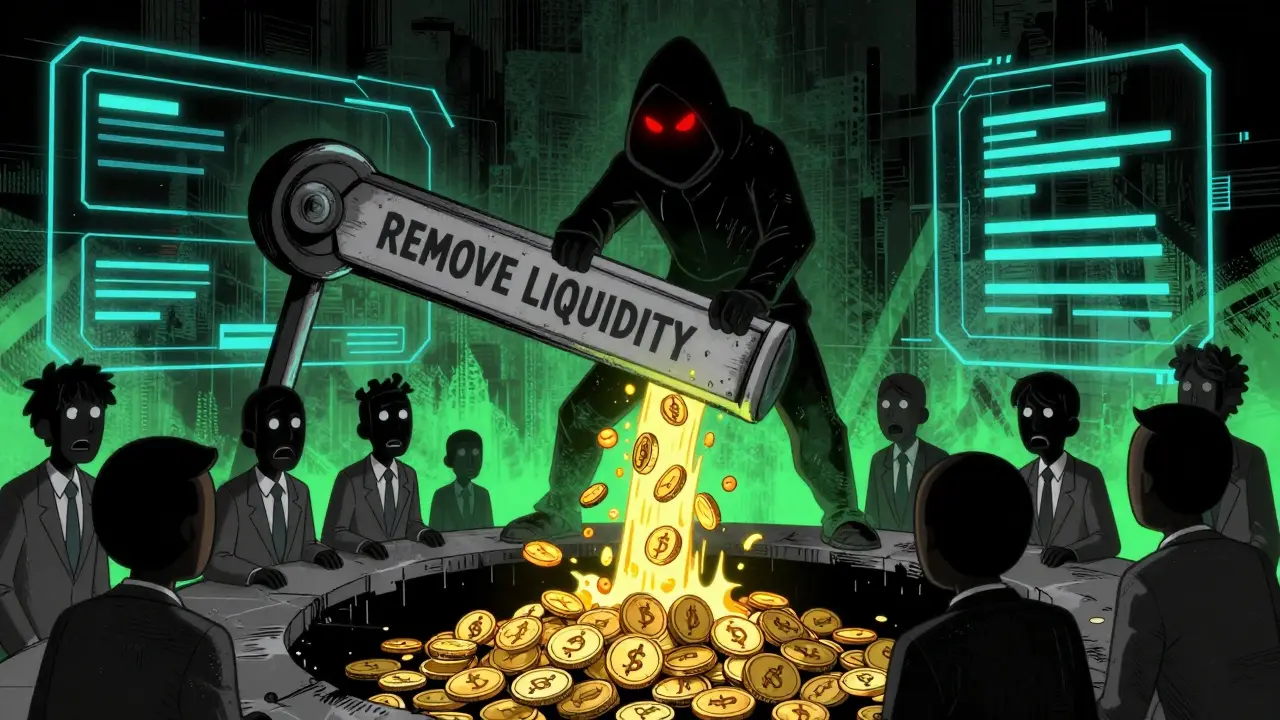
The liquidity pull is the classic rug pull. It is straightforward, brutal, and unfortunately very common. To understand this, you first need to know how decentralized exchanges (DEXs) like Uniswap or PancakeSwap work. These platforms don't have a central order book. Instead, they rely on liquidity pools-pairs of tokens locked in a smart contract that allow users to trade.
When a developer launches a new token, they must pair it with an established asset like Ethereum (ETH) or Binance Coin (BNB) to create a trading market. They deposit both their new tokens and the ETH/BNB into the pool. Here is where the trap is set. If the developer does not lock this liquidity, they retain the private keys to withdraw it at any time.
The scam unfolds in stages:
- Setup: The developer creates the token and adds initial liquidity (e.g., $10,000 worth of ETH and millions of their new tokens).
- Promotion: They hype the project on social media. Investors buy the token using ETH, which flows into the liquidity pool. The token price rises as demand increases.
- The Pull: The developer calls the
removeLiquidityfunction. This transaction withdraws all the paired ETH or BNB from the pool. - The Aftermath: With no underlying value left in the pool, the token becomes worthless. Holders cannot sell because there is no liquidity to trade against.
In 2021, the SQUID token incident demonstrated this mechanism clearly. TRM Labs analysis showed that the creators had explicit permissions in the smart contract to drain the liquidity pool systematically. They didn't hack the exchange; they used the features provided by the protocol to empty the vault while investors watched helplessly.
Honeypot Tokens: The Trap You Can Enter But Not Leave
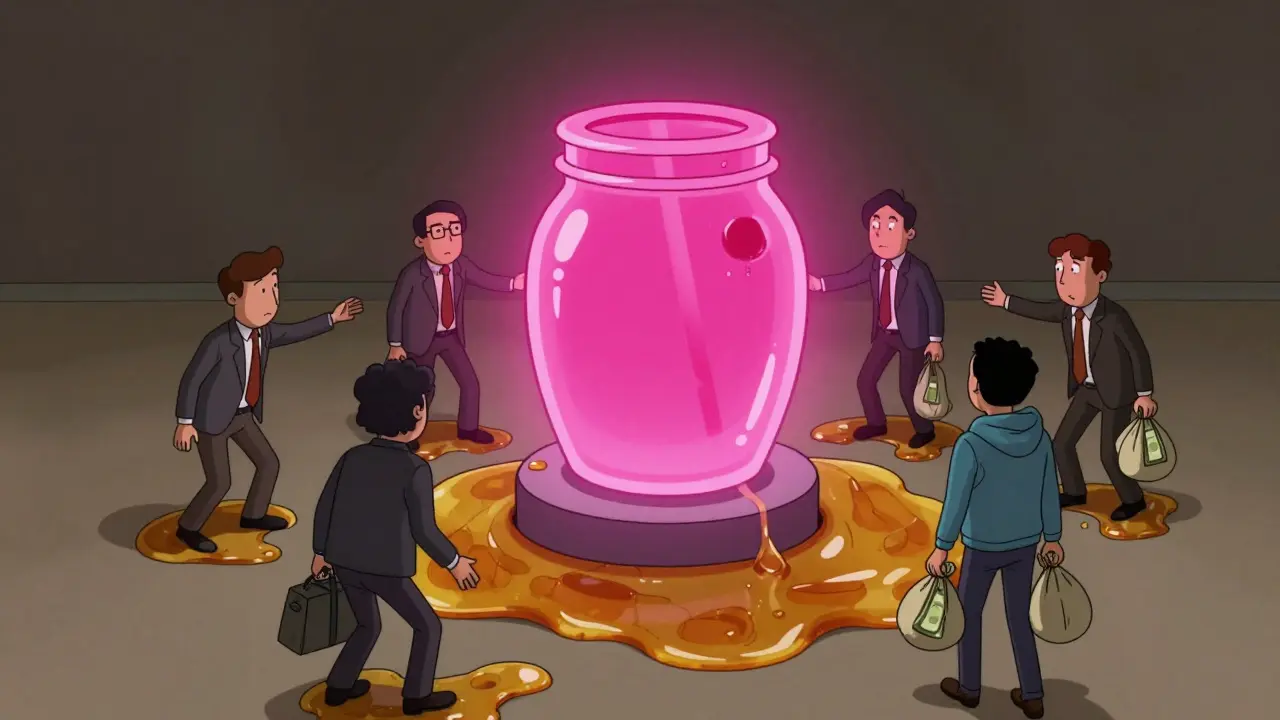
If liquidity pulls are blunt instruments, honeypots are surgical traps. A honeypot token is designed so that anyone can buy it, but only specific addresses (usually the developer's) can sell it. This creates a false sense of security and artificial scarcity.
The technical implementation relies on malicious functions within the token’s smart contract code. Developers insert checks that verify the sender's address before allowing a transfer or sale. If the address is not on a pre-approved whitelist, the transaction reverts. To the average user looking at a chart, the price looks like it is skyrocketing because there is zero selling pressure. In reality, everyone else is stuck.
The SQUID Game token is the most infamous example. During its brief life, the price surged dramatically. However, when holders tried to sell, the transactions failed. The developers had programmed the contract to block all sell orders except those from their own wallets. This allowed them to manipulate the price upward indefinitely while preventing any exit for regular investors. Eventually, they sold their holdings, crashing the price to near zero.
Detecting a honeypot requires more than just looking at the price chart. You must audit the smart contract code or use specialized detection tools. Look for functions like _transfer or _sell that contain conditional statements restricting who can execute them. If the code says "only owner can sell," run away immediately.
Pump and Dump: The Soft Rug Pull
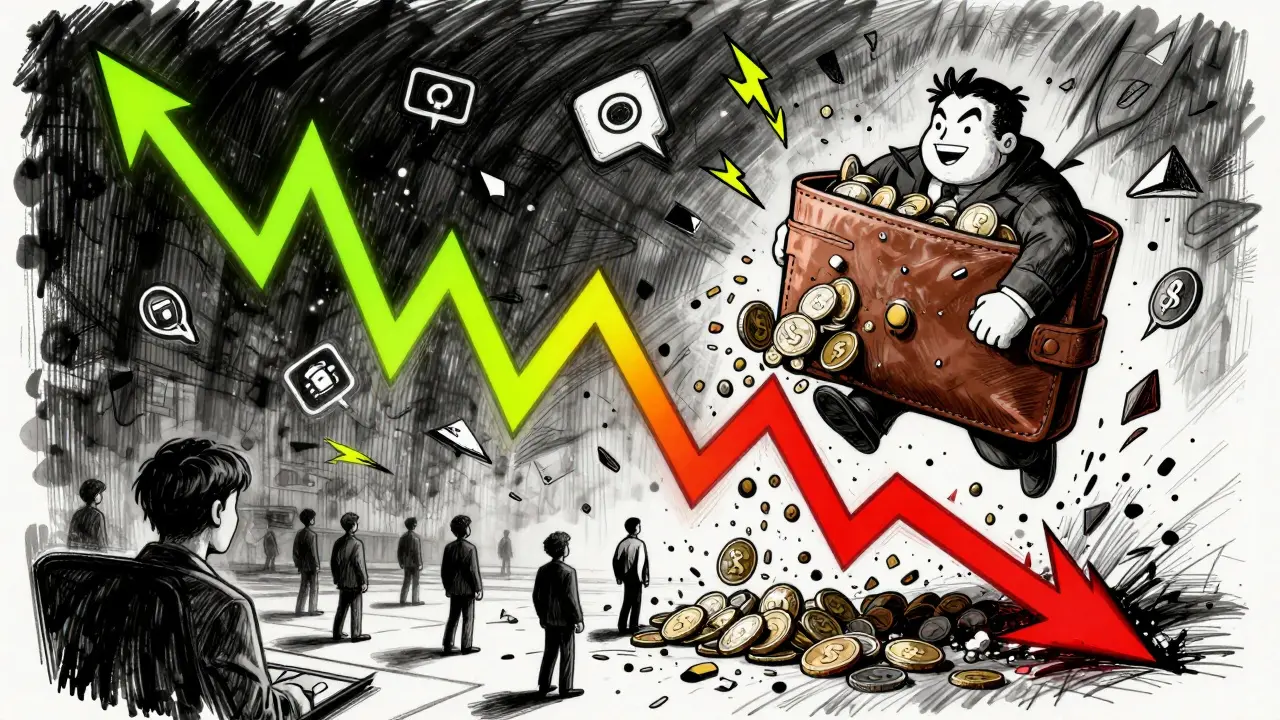
Not all rug pulls require complex code manipulation. Some rely entirely on psychology and market dynamics. These are known as pump-and-dump schemes, or "soft" rug pulls. The smart contract itself might be perfectly fine, but the distribution model is rigged.
In this scenario, the developer allocates a massive portion of the total token supply to themselves during the launch phase. While they might claim the token is fair-launched, insider wallets often control 70% to 80% of the supply. They then launch aggressive marketing campaigns, often leveraging influencers or even high-profile endorsements to generate Fear Of Missing Out (FOMO).
The LIBRA token case in February 2025 highlighted this evolution. Promoted by Argentinian President Javier Milei, the token saw a speculative frenzy. Insiders controlled an estimated 82% of the supply. When the hype peaked, they executed cascade sell orders, dumping their massive holdings onto the market. The sudden oversupply crushed the price by 95% within hours, extracting over $107 million before retail investors realized what was happening.
This method doesn't lock you out of selling; it just makes selling pointless because the value has been destroyed by the sheer volume of tokens being dumped. It exploits the natural mechanics of supply and demand rather than breaking the rules of the smart contract.
Comparing Rug Pull Mechanisms
Understanding the differences between these mechanisms helps you identify which red flags to look for. Each type has distinct technical requirements and detection challenges.
| Mechanism Type | Technical Complexity | Primary Exploit | Detection Difficulty | Key Warning Sign |
|---|---|---|---|---|
| Liquidity Pull | Low | Unlocked liquidity pools | Medium | No liquidity locks; anonymous team |
| Honeypot | High | Sell restrictions in code | Hard (requires code audit) | Price goes up but volume drops to zero |
| Pump & Dump | Low | Insider wallet concentration | Medium | Top holders own >50% of supply |
Red Flags Every Investor Must Check
You don't need to be a programmer to spot a potential rug pull. There are several critical warning signs that appear long before the scam executes. Ignoring these is gambling, not investing.
- Anonymous Teams: Legitimate DeFi projects usually have public teams with verifiable identities. If the developers are completely anonymous and have no track record, the risk skyrockets.
- Missing Liquidity Locks: Trustworthy projects lock their liquidity for months or years using third-party services. If you cannot find a link to a liquidity lock service, assume the developer can pull the funds anytime.
- Excessive Admin Privileges: Check if the contract allows the owner to mint unlimited tokens, blacklist addresses, or pause trading. These powers enable rug pulls.
- Concentrated Supply: Use blockchain explorers to check the top holders. If the top five wallets hold more than 50% of the total supply, a single seller could crash the price instantly.
- Unrealistic Promises: If a project promises guaranteed daily returns without a clear business model, it is likely a Ponzi scheme disguised as a DeFi protocol.
Why Recovery Is Nearly Impossible
One of the hardest lessons in crypto is accepting loss. Unlike bank fraud, where you can file a chargeback, blockchain transactions are immutable. Once a rug pull mechanism executes, the funds move to the attacker's wallet. They often wash the money through mixers or convert it to privacy coins, making tracking difficult.
User experiences on forums like Reddit and Telegram show a consistent pattern: initial excitement followed by panic when sells fail or liquidity disappears. Community members report losses ranging from hundreds to millions. The psychological impact is severe, leading many to lose trust in legitimate DeFi protocols. Remember, the decentralization that protects your freedom also removes the safety net of customer support.
Protecting Yourself in 2026
The landscape of rug pulls continues to evolve. Scammers are getting better at social engineering and hiding their tracks. However, defensive tools are improving too. Always use automated detection platforms that scan smart contracts for known vulnerabilities. Never invest more than you can afford to lose in early-stage tokens. And always do your own due diligence-verify the contract address, check the liquidity status, and read the code if possible. In DeFi, caution isn't just a strategy; it's survival.
What is a smart contract rug pull?
A smart contract rug pull is a fraudulent scheme in decentralized finance where developers exploit vulnerabilities or backdoors in a token's smart contract to steal investor funds. This can involve draining liquidity pools, preventing users from selling tokens, or dumping large insider holdings to crash the price.
How can I tell if a token is a honeypot?
A honeypot token allows buying but blocks selling for most users. Signs include a rising price with little to no sell volume, and smart contract code that whitelists specific addresses for transfers. Tools like Honeypot.is can simulate trades to detect these restrictions before you invest.
What is a liquidity pull?
A liquidity pull occurs when developers remove the paired assets (like ETH or BNB) from a decentralized exchange's liquidity pool. Without this backing value, the token becomes unsellable and worthless. This happens when liquidity is not locked by a third-party service.
Can I recover funds lost to a rug pull?
Generally, no. Blockchain transactions are irreversible. Once the smart contract executes the withdrawal or transfer, the funds are moved to the attacker's wallet. While law enforcement may investigate, recovery rates for individual victims are extremely low.
Are all anonymous crypto projects scams?
Not necessarily, but anonymity significantly increases risk. Many legitimate open-source projects prioritize code over identity. However, anonymous teams combined with unlocked liquidity and unelected admin privileges are major red flags for potential rug pulls.
What is the difference between a hard and soft rug pull?
A hard rug pull involves technical exploitation, such as draining liquidity or locking sells via code. A soft rug pull, often a pump-and-dump, relies on market manipulation where insiders sell off large holdings to crash the price, without necessarily altering the smart contract's core functionality.
How do liquidity locks prevent rug pulls?
Liquidity locks use a third-party smart contract to hold the liquidity provider tokens for a set period. During this time, even the original developers cannot withdraw the liquidity, ensuring that traders can always sell their tokens at market price.
Is the SQUID token still active?
No. The SQUID token was a famous honeypot rug pull in 2021. The developers drained the liquidity and blocked all sales, rendering the token worthless. It serves as a primary case study for honeypot mechanisms.
What role do smart contract audits play in prevention?
Audits review the code for vulnerabilities, backdoors, and excessive admin rights. While an audit doesn't guarantee safety, it identifies obvious traps like honeypot functions or unlimited minting capabilities that scammers often leave behind.
Why did the LIBRA token crash in 2025?
The LIBRA token crashed due to a pump-and-dump scheme. Insiders controlled approximately 82% of the supply. After generating hype through high-profile endorsements, they dumped their holdings simultaneously, causing a 95% price drop and extracting over $107 million.


Jan Gilmore
Let me save you all the time of reading this entire article because I already know everything about DeFi and smart contracts. The concept of a liquidity pull is so basic that even my grandmother could understand it if she wasn't so busy knitting. You don't need an article to tell you that anonymous teams are bad news. It's literally common sense in the crypto space. If you can't find who made the token, they're probably going to steal your money. And honeypots? Please. Any self-respecting investor checks the contract code before putting in a single satoshi. But sure, keep writing these beginner guides for people who refuse to do their own homework. It's embarrassing how many people still fall for these tricks. The LIBRA case was obvious from day one with that insider concentration. Anyone with half a brain saw the wallet distribution and ran away screaming. Stop acting like victims when you're just lazy.