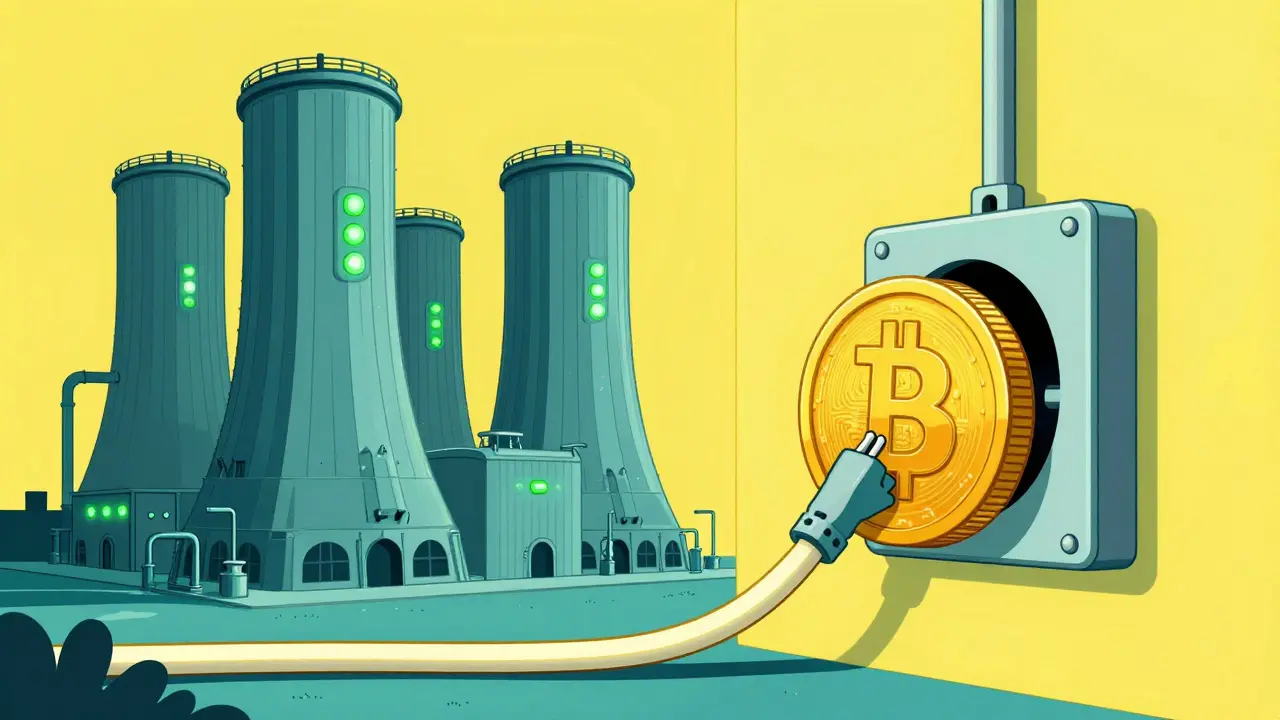
Imagine having a massive power plant running at barely 15% capacity while your citizens struggle with high energy bills. It sounds like a waste, right? For Pakistan, this paradox became the foundation for one of the most daring economic experiments in the digital age. By allocating 2,000 megawatts (MW) of surplus electricity specifically for cryptocurrency mining and AI data centers, the country isn't just trying to make some Bitcoin-it's attempting to turn an industrial inefficiency into a national revenue stream.
The Big Bet: Turning Idle Power into Digital Gold
The core of this strategy is a simple but aggressive play on energy. Pakistan currently maintains about 7,000 MW of surplus electricity. Instead of letting that capacity sit idle, the government decided to carve out nearly 30% of it for the energy-hungry world of blockchain. This move was officially unveiled at the Bitcoin 2025 conference in Las Vegas, signaling to the world that Pakistan is open for business.
To manage this, the government created the Pakistan Crypto Council (PCC), a specialized body under the Ministry of Finance. Led by figures like Finance Minister Muhammad Aurangzeb and Bilal Bin Saqib, the PCC is tasked with bridging the gap between traditional power grids and the high-tech requirements of Bitcoin mining. The goal? Generate a massive influx of foreign currency and create thousands of technical jobs in a country eager for a digital economic reboot.
How the Numbers Stack Up
Mining isn't about the software; it's about the cost of power. To attract global players, Pakistan proposed a subsidized electricity rate of around 23-24 Pakistani rupees (roughly $0.08) per kilowatt-hour (kWh). When you compare this to the global average, which can swing wildly from $0.03 to $0.15, Pakistan's offer is highly competitive.
The potential payout is staggering. According to calculations by researcher Daniel Batten, this 2,000 MW allocation could realistically produce about 17,000 BTC annually. At current market prices, we're talking about a potential $1.8 billion in annual value. For a country facing significant economic headwinds, that's not just a "tech project"-it's a lifeline.
| Feature | Pakistan Initiative | Global Average / Others |
|---|---|---|
| Power Allocation | 2,000 MW (Surplus) | Varies (often competes with residential) |
| Estimated Rate | ~$0.08 / kWh | $0.03 - $0.15 / kWh |
| Government Stance | State-Supported | Mixed (e.g., China's Ban, US Private) |
| Primary Goal | GDP Growth & FX Reserves | Private Profit / Institutional Hedging |
The Infrastructure: More Than Just Plug-and-Play
You can't just plug a few thousand miners into a wall and call it a national strategy. The project requires a robust backbone of data centers. Currently, Pakistan has 22 facilities spread across the major hubs of Lahore, Karachi, and Islamabad. Operators like PTCL, Multinet, and Cybernet are already in the mix, providing the necessary connectivity and cooling infrastructure.
We're also seeing a shift toward localized, sustainable power. For example, the University of Turbat recently launched a data center coupled with a 1MW solar project. This suggests that while the 2,000 MW plan starts with the existing grid (largely coal-fired), the long-term vision likely involves integrating Renewable Energy to further lower costs and appeal to "green mining" standards.

The Elephant in the Room: The IMF Conflict
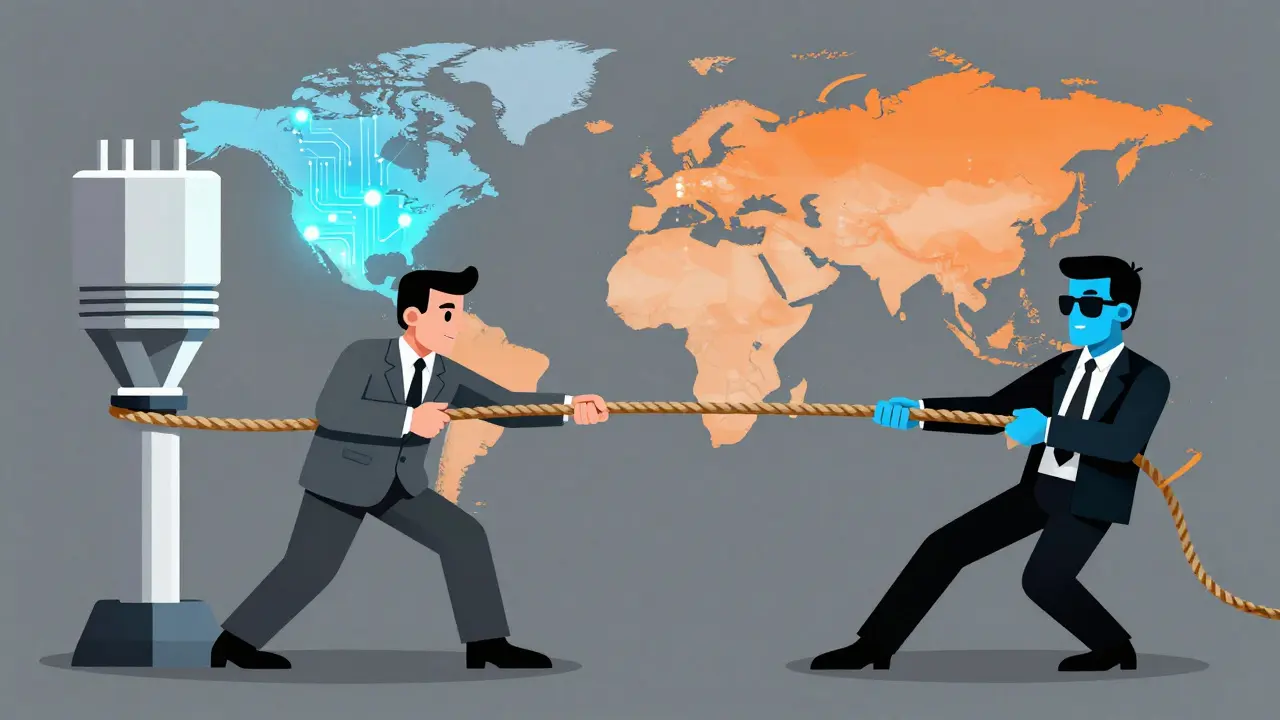
It's not all smooth sailing. The International Monetary Fund (IMF) has been the loudest critic, or at least the most cautious observer. The IMF's main gripes aren't with Bitcoin itself, but with the subsidies. They've questioned why the government is giving crypto miners a break on electricity prices while other sectors of the economy are forced to pay market rates.
Secretary of Power Dr. Fakhray Alam Irfan noted that the IMF is worried about the transition. If the government subsidizes power today, how do they hike the prices tomorrow without crashing the mining operations? It's a classic policy trap: provide a subsidy to attract investment, but risk a financial crisis if those subsidies become unsustainable. Despite this, negotiations continue, and the appointment of Binance co-founder Changpeng Zhao as a strategic adviser to the PCC shows that the industry's heaviest hitters are still betting on Pakistan's success.
Strategic Positioning in the Global Market
Timing is everything. After China banned cryptocurrency mining in 2021, the global hash rate shifted toward North America and Kazakhstan. Pakistan is trying to insert itself into this new geography. By positioning itself as a "digital bridge" between Asia, Europe, and the Middle East, Pakistan offers more than just cheap power-it offers a strategic geographic hub for AI data centers and blockchain nodes.
This initiative is part of a larger "Phase 1" digital economy push. It's not just about mining; it's about creating a regulatory environment where digital assets can actually function. In April 2025, the country introduced its first official policy framework for crypto operations. By combining a legal framework with a physical power allocation, Pakistan is attempting to remove the two biggest hurdles for miners: regulatory uncertainty and high energy costs.
Potential Pitfalls and the Road Ahead
Is this a guaranteed win? Not quite. There are a few major risks that could derail the plan:
- Grid Stability: Adding 2,000 MW of constant load can stress an aging power grid if not managed perfectly.
- FATF Compliance: Pakistan is working hard to stay off the Financial Action Task Force (FATF) grey list. Any association between crypto mining and illicit financial flows could jeopardize this.
- Price Volatility: If Bitcoin's price crashes, the "$1.8 billion annual revenue" estimate disappears, leaving the government with a bunch of expensive, subsidized power users who aren't bringing in enough value.
However, the move toward a government-led strategic Bitcoin reserve-announced in May 2025-shows that the state is moving from "trying it out" to "fully embracing it." If they can satisfy the IMF and keep the lights on, Pakistan could very well become the new global capital for industrial-scale mining.
Why is Pakistan allocating electricity specifically for crypto mining?
Pakistan has a significant energy paradox: it possesses about 7,000 MW of surplus electricity capacity, yet many of its power plants (especially coal) operate at low capacity (around 15%). By allocating 2,000 MW to mining, the government can monetize this wasted capacity, attract foreign investment, and generate significant revenue in foreign currency.
What is the cost of electricity for miners in this program?
The government proposed subsidized rates of approximately 23-24 Pakistani rupees, which is roughly $0.08 per kilowatt-hour (kWh). This is designed to be competitive with global mining hubs where costs typically range between $0.03 and $0.15 per kWh.
Who is the Pakistan Crypto Council (PCC)?
The PCC is a government-backed body established in March 2025 under the Ministry of Finance. It is responsible for implementing the crypto mining strategy, coordinating with power companies, and developing the regulatory framework for digital assets in Pakistan.
Why does the IMF object to this plan?
The IMF is primarily concerned with the electricity subsidies. They argue that providing cheap power to crypto miners creates an uneven playing field for other private sector participants and question the long-term sustainability of these concessions.
How much Bitcoin could this project actually produce?
Estimates from researchers like Daniel Batten suggest that the 2,000 MW allocation could generate up to 17,000 BTC per year, which would be worth roughly $1.8 billion depending on the current market price of Bitcoin.
Next Steps for Stakeholders
If you're an international investor or a mining firm, the focus should be on the evolving regulatory framework. Keep a close eye on the PCC's updates regarding the transition from subsidized to market rates, as this will dictate your long-term ROI. For domestic tech entrepreneurs, now is the time to look into data center partnerships in Lahore, Karachi, and Islamabad, as the demand for supporting infrastructure-cooling, security, and high-speed fiber-will skyrocket as Phase 1 scales up.







Gloris Young
This is honestly such a creative way to handle wasted energy. Love seeing countries think outside the box to boost their economy!