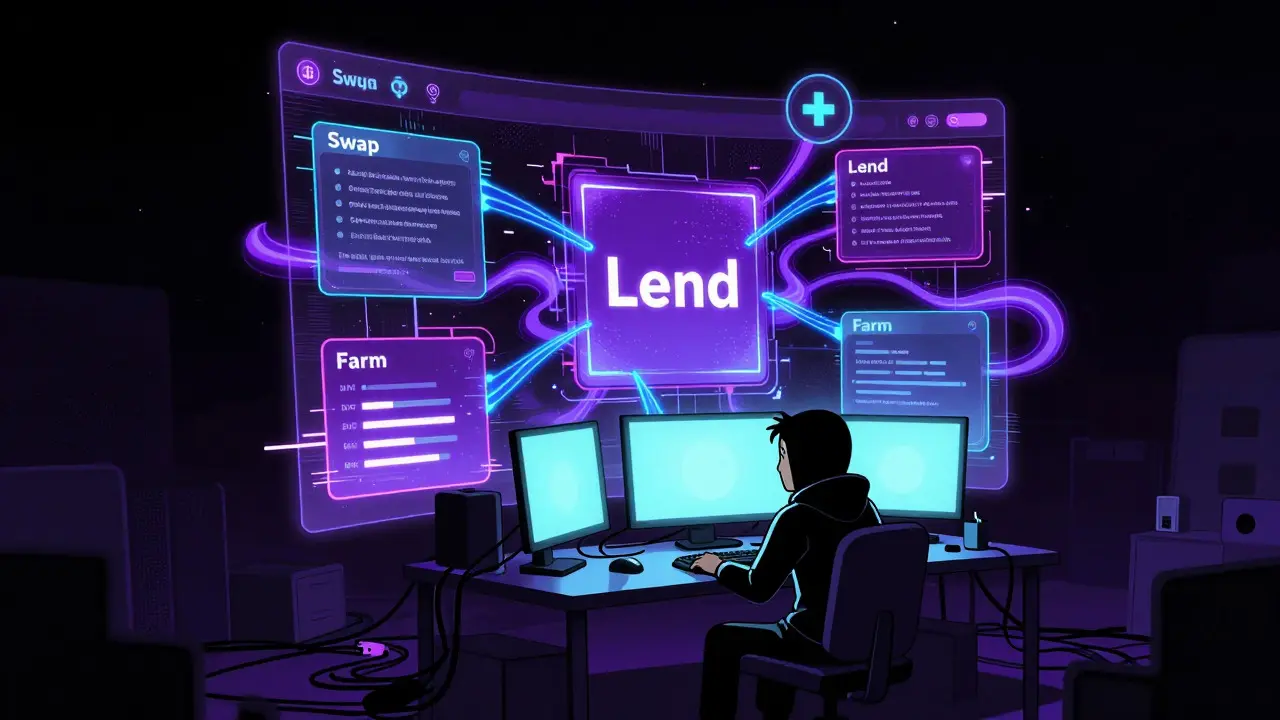
Have you ever felt like a decentralized exchange (DEX) is just a swap button with a side of gas fees? That was the standard for years. But what if your exchange could also lend, farm yield, and bridge assets across chains without you leaving the interface? That is exactly the promise behind Ēnosys. It is not just another place to trade tokens; it is a full Web3 software house built on the Flare Network, a blockchain designed for smart contract capabilities and data connectivity. If you are looking at Ēnosys in mid-2026, you need to know one thing first: it is an ecosystem, not a single tool. You get trading via their DEX V3, lending through their Loans protocol, and yield farming that taps into Layer 1 rewards from the network itself. This interconnected approach can boost your returns significantly, but it also adds complexity. Let’s break down whether this platform is right for your portfolio or if you should stick to simpler options.
What Is Ēnosys? Beyond the Basic Swap
Most people search for "Ēnosys crypto exchange" because they want to trade. While trading is central, calling it just an exchange misses the point. Founded in 2021 by a team of scientists and engineers, Ēnosys launched on the Flare Network mainnet with a parallel experimental version on the Songbird Canary Network. Their goal was to create a gateway where blockchain services work together seamlessly. Think of it like a financial super-app, but non-custodial. Instead of opening five different tabs for swapping, borrowing, bridging, and buying NFTs, Ēnosys integrates these functions. The core suite includes:
- DEX V2 and V3: Automated market makers for swapping tokens. V3 introduces concentrated liquidity, letting you provide capital within specific price ranges for higher efficiency.
- Loans: A collateralized debt position protocol allowing interest-free borrowing against your crypto assets.
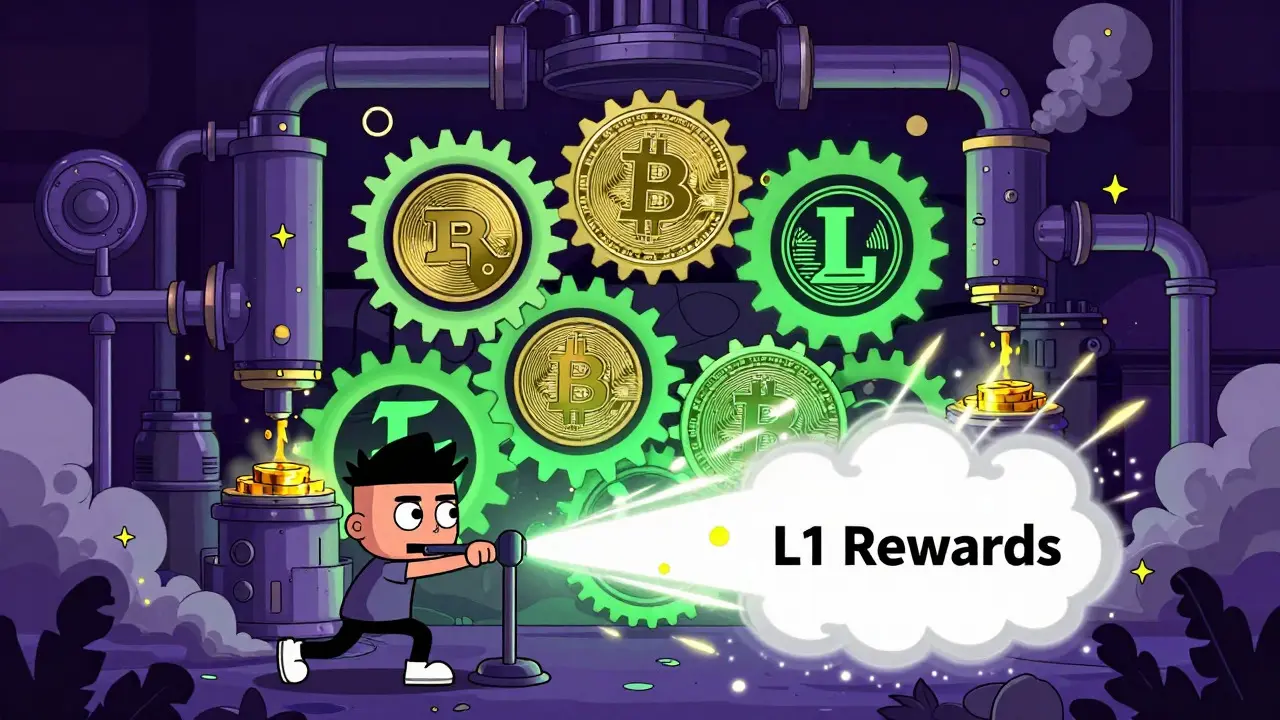
- Farms: Non-custodial yield farming that distributes Layer 1 rewards from the Flare Network alongside standard trading fees.
- Bridge: A cross-chain asset bridge supporting major networks like Ethereum, BNB Chain, and Polygon.
How Does the Technology Work? EVM Compatibility and L1 Rewards
The technical backbone of Ēnosys is its compatibility with the Ethereum Virtual Machine (EVM). This means if you have used MetaMask or Trust Wallet before, you will feel right at home. However, the magic happens with how it leverages the Flare Network's unique features. Unlike many DEXs that rely solely on trading fees, Ēnosys integrates L1 Rewards. When you provide liquidity or stake in their farms, you earn a portion of the Flare Network’s native token rewards. According to comparative analysis from CoinCodex in late 2025, this integration can increase yields by 15-25% compared to similar DEXs on other networks. The platform also uses State Connector technology, which allows smart contracts to communicate securely with external data sources without traditional oracles. This reduces dependency on third-party price feeds, potentially lowering costs and increasing security. For developers and power users, there is also Skopos for blockchain data analysis and Oryy, a multi-signature self-custody vault for enhanced security.
Pros and Cons: The Honest Truth
No platform is perfect. To help you decide, let’s look at the real-world advantages and drawbacks based on user feedback and expert analysis from early 2026.
| Category | Pros | Cons |
|---|---|---|
| Yield Potential | L1 Rewards add 15-25% extra yield; APYCloud aggregator distributes sustainable fees. | Yields fluctuate with market volatility; complex to calculate net returns manually. |
| User Experience | Seamless integration between swapping, lending, and farming. | Steep learning curve (8-10 hours onboarding); mobile interface rated poorly (clunky). |
| Security | 17 independent audits (Quantstamp, OpenZeppelin); rigorous testing in 11 environments. | Cascading liquidation risks during extreme volatility due to interconnected protocols. |
| Token Selection | High-quality, vetted pairs; strong focus on Flare ecosystem tokens. | Limited selection: only 127 pairs on DEX V3 vs. Uniswap’s 1,842+ pairs. |
| Cross-Chain | Bridge supports 7 major networks including Ethereum and Polygon. | Bridge downtime reported during congestion (e.g., August 2025 incident causing $87k lost arbitrage). |
One major concern raised by David Shin, Chief Analyst at Delphi Digital, is the single-point-of-failure risk. Because Ēnosys is heavily tied to the success of the Flare Network, if Flare fails to gain mainstream adoption, Ēnosys’ cross-chain advantages diminish significantly. Conversely, Dr. Elena Rodriguez from MIT praised the APYCloud aggregator model as a solution to the "vampire attack" problem common in yield farming, suggesting long-term sustainability.
Is Ēnosys Safe? Security and Audits Explained
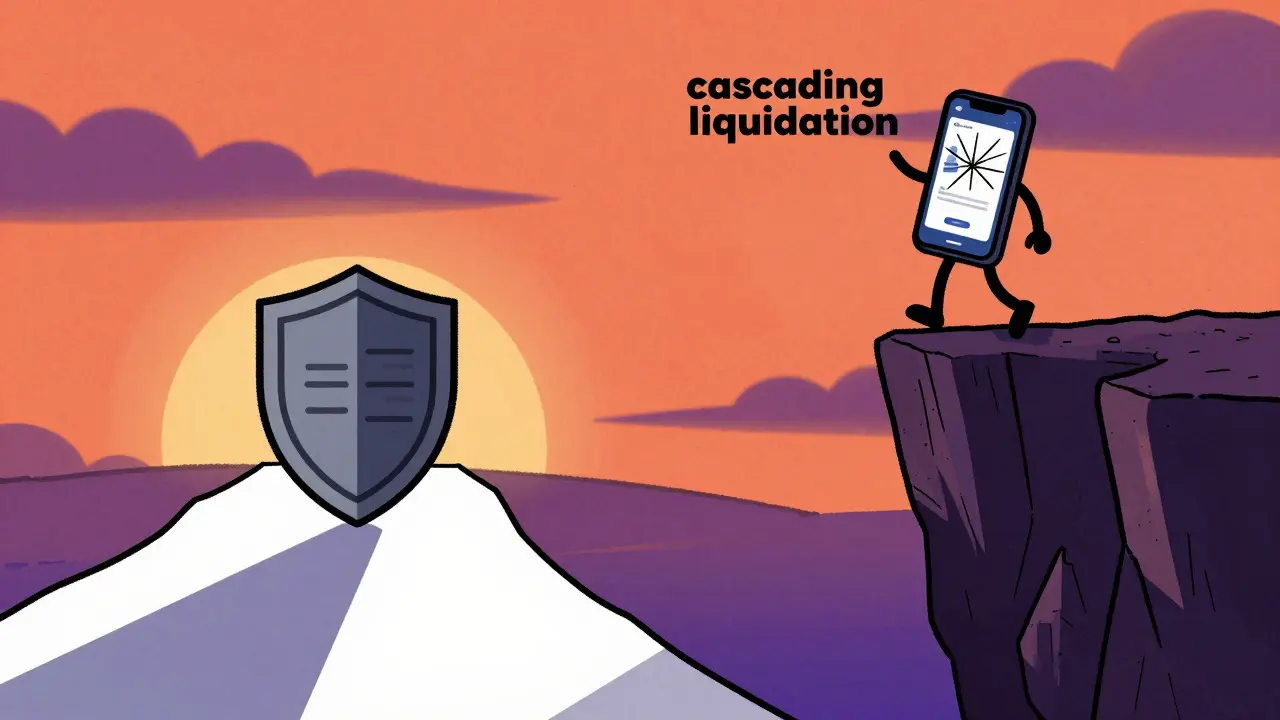
Security is paramount in DeFi. Ēnosys has taken this seriously, undergoing 17 independent security audits by top firms like Quantstamp and OpenZeppelin. They also test every release across 11 different environments before going live. This rigorous process helps catch bugs before they can be exploited. However, safety isn’t just about code. It’s also about design. The interconnected nature of Ēnosys protocols means that a crash in one area can ripple through others. During the March 2024 crypto market crash, some users experienced cascading liquidations because their borrowed positions in the Loans protocol were affected by drops in the DEX pools they provided liquidity to. Always use stop-losses and monitor your health factor closely when using the Loans feature. Also, note that while the protocols are non-custodial, you are responsible for securing your own wallet. Use hardware wallets like Ledger or Trezor for large amounts, rather than keeping funds in hot wallets like MetaMask.
Getting Started: A Step-by-Step Guide
If you decide to try Ēnosys, here is how to set up your account and make your first transaction. Expect to spend about 6-8 hours becoming proficient if you are new to DeFi.
- Connect Your Wallet: Go to the Ēnosys website and connect a Web3 wallet. MetaMask, Trust Wallet, and Flare Wallet are supported. About 87% of users report successful initial connections.
- Fund Your Wallet: You will need FLR (Flare) or FTM (Songbird) for gas fees. If you are on Ethereum, use the Bridge to move assets to the Flare Network. Note: Bridging can take 45+ minutes during high congestion.
- Explore the DEX: Start with small swaps on DEX V3. Check the slippage tolerance settings, especially for less liquid pairs.
- Provide Liquidity: If you want to earn, provide liquidity to a pool. Choose a pair with stable volume to minimize impermanent loss. Remember, you will earn both trading fees and L1 Rewards.
- Join the Community: Join the Discord server (14,300+ members) and attend weekly "Governance 101" sessions to understand the dual-token system (HLN and APS).
A pro tip: Start with the Desktop version. The mobile interface is currently lacking features and has been criticized for being clunky. A complete UI/UX overhaul is scheduled for Q2 2026, so keep an eye out for updates.
Who Should Use Ēnosys?
Ēnosys is not for everyone. Here is who fits best:
- DeFi Power Users: If you understand liquidity provision, impermanent loss, and cross-chain bridging, you will love the integrated ecosystem.
- Flare Network Believers: If you believe in the long-term potential of Flare, Ēnosys is the primary way to capture value from the network.
- Yield Farmers: Those seeking higher-than-average APYs through L1 Rewards integration will find attractive opportunities here.
It is not recommended for:
- BEGINNERS: The complexity and risk of cascading liquidations make it too risky for those new to crypto.
- High-Frequency Traders: Limited token pairs (127 vs. thousands on Uniswap) mean you won’t find every obscure meme coin here.
- Mobile-Only Users: Until the Q2 2026 update, the mobile experience is subpar.
Final Verdict: Is It Worth It?
Ēnosys stands out in the crowded DeFi space by offering more than just swaps. Its integration of L1 Rewards, lending, and cross-chain bridging creates a powerful toolkit for sophisticated users. With a TVL of $257 million and growing at 37% quarterly, it is clearly gaining traction. However, you must weigh the benefits against the risks. The reliance on Flare Network’s success is a double-edged sword. If Flare thrives, Ēnosys wins big. If it struggles, the platform’s value proposition weakens. Additionally, the steep learning curve and current mobile limitations are hurdles. For now, I recommend starting small. Allocate a portion of your portfolio to test the waters. Use the desktop site, join the Discord, and learn the ropes before committing significant capital. Keep an eye on the upcoming DEX V3 updates and the planned UI overhaul in mid-2026, which may address many current usability issues.
Is Ēnosys a centralized or decentralized exchange?
Ēnosys is a decentralized exchange (DEX) and DeFi ecosystem. It is non-custodial, meaning you retain control of your private keys and assets at all times. There is no central authority holding your funds.
What is the minimum amount to start using Ēnosys?
There is no official minimum deposit. However, you need enough FLR or FTM in your wallet to cover gas fees for transactions. These fees are generally low on the Flare Network, often costing fractions of a cent.
Can I use Ēnosys on my phone?
Yes, but the experience is currently limited. Many users report a clunky interface with missing features compared to the desktop version. A major UI/UX overhaul is planned for Q2 2026 to improve mobile usability.
How do L1 Rewards work on Ēnosys?
L1 Rewards are incentives distributed by the Flare Network to users who participate in the ecosystem. When you provide liquidity or farm yields on Ēnosys, you receive a portion of these native network tokens in addition to standard trading fees, boosting your overall APY.
Is Ēnosys safe from hacks?
While no platform is 100% immune, Ēnosys has undergone 17 independent security audits by firms like Quantstamp and OpenZeppelin. They also test releases in 11 different environments. However, users should always practice good security hygiene, such as using hardware wallets.
What tokens can I trade on Ēnosys?
As of early 2026, DEX V3 supports 127 token pairs. This is fewer than major competitors like Uniswap, but the selection focuses on high-quality assets within the Flare and broader EVM ecosystems.
Does Ēnosys support KYC?
The DeFi protocols themselves are non-custodial and do not require KYC. However, if you use fiat on-ramps through partner exchanges, KYC may be required depending on the provider and local regulations.
What happens if Flare Network fails?
Experts warn that Ēnosys is heavily reliant on Flare Network's success. If Flare fails to achieve mainstream adoption, Ēnosys' cross-chain advantages and L1 reward mechanisms would be severely diminished, impacting its value proposition.